


"As long as we are concerned with the realistic reproduction of sound, the original sound must stand as the criterion by which the reproduction is judged!"
Acoustical Basics and Why the Room Matters More Than You Might Think
Never underestimate the power of acoustics. There is no silver bullet, no universal recipe for perfect sound. If there were, every studio, concert hall, and listening room would sound equally convincing. They're not. What they share instead is compromise, shaped by physics, materials, and human perception.
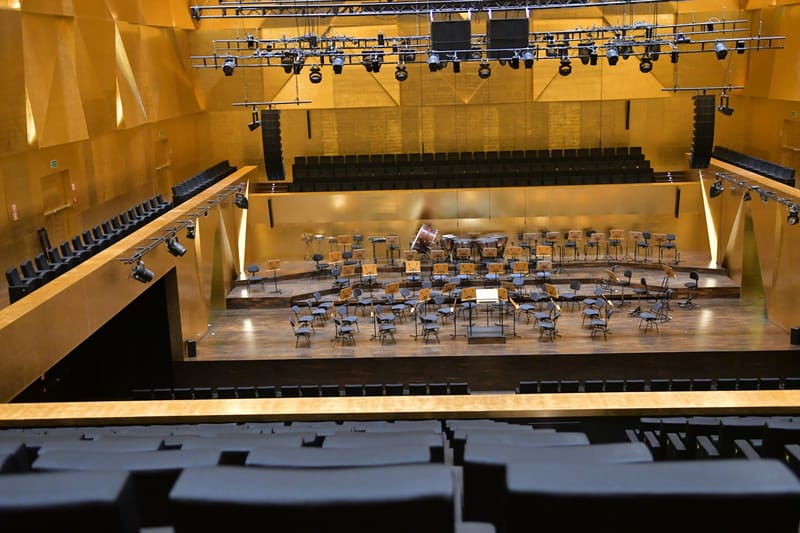
We are all aware, consciously or subconsciously, of sound and its effect on us. At work, at home, and in nature, acoustics influence comfort, clarity, and emotional response. In music playback, that influence is decisive. No matter how advanced the electronics or loudspeakers, the room remains the dominant variable.
Some listeners have the luxury of building a dedicated room from the ground up, but this is rare. Most listening spaces were never designed for accurate musical reproduction. They impose their own acoustic signature on the sound, altering timbre, balance, and spatial cues. In practice, a modest system in a well-controlled room will almost always outperform a reference-grade system struggling against poor acoustics.
The goal, then, is not perfection but balance. If one could "lose" the room, one would lose most of the problems inherent to it. Since that is impossible, the task becomes minimizing the room's contribution so that what remains is the recording, not the space enclosing it.
Room Proportions and the Starting Point
Room dimensions matter. They determine how sound waves interact with boundaries and how resonances develop. Certain dimensional ratios distribute these resonances more evenly, resulting in a smoother and more predictable response.
A proven starting point uses height as the reference dimension:
| Small | Average | Long | Large | |
|---|---|---|---|---|
| Height | 1 | 1 | 1 | 1 |
| Width | 1.26 | 1.59 | 1.59 | 2.52 |
| Length | 1.59 | 2.52 | 3.18 | 3.18 |
These ratios are based on fractional octave relationships, roughly aligned with one-third octave spacing. When applied correctly, they reduce coincident resonances and help avoid severe peaks and nulls. They are not a cure-all. Materials, furnishings, and construction details remain equally influential.
A room with identical dimensions, such as a cube, represents the worst possible case. A square room follows closely behind. In both, reflections arrive with similar delays, reinforcing and canceling the same frequencies repeatedly.
Acoustic Distortion: The Overlooked Enemy
Audiophiles rightly obsess over electronic distortion, yet acoustic distortion is neglected while it is often more damaging. Acoustic distortion alters frequency response, phase relationships, and spatial information. It directly affects how music feels, not just how it measures.
Rooms generate distortion through resonances known as room modes. These are not flaws in equipment but predictable consequences of sound interacting with enclosed space.
There are three primary types:
Axial modes: The strongest and most influential. They occur between opposing surfaces such as floor and ceiling or parallel walls and dominate low-frequency behavior.
Tangential modes: Roughly half as strong as axial modes. They involve four surfaces and often intrude into the midrange, where the ear is most sensitive.
Oblique modes: The weakest, involving all six room boundaries. When axial and tangential modes are properly controlled, oblique modes are usually of minor consequence.
Beyond these, there is interference between the loudspeaker and the room itself. Reflections from nearby boundaries combine with the direct sound, particularly in the low and mid-bass, creating repeating response patterns and false spatial cues. Furniture and other objects further modify the sound before it reaches the listener.
Equalization can smooth measured frequency response, but it does not address the physical causes. Peaks and dips caused by time-domain interactions remain, often at the expense of clarity and dynamics.
Reflections, Comb Filtering, and Perception
In addition to the direct sound, listeners hear reflections from every surface: front wall, side walls, ceiling, floor, and rear wall. Each arrives with a time delay.
If a reflection arrives within the ear's fusion time, typically between 4 and 20 milliseconds depending on the individual, it is perceived not as a discrete echo but as a change in tonal balance. This interaction creates comb filtering, a pattern of cancellations and reinforcements that reduces definition and intelligibility.
Reflections arriving later are heard as echoes. These may add a sense of space, or they may smear transients and obscure detail. Reflections with energy close to that of the direct sound are especially problematic, particularly when multiple reflections arrive simultaneously.
This is why loudspeaker placement matters. Distances to side and rear walls should not be identical. There is no universal formula. Patience and incremental adjustment remain the only reliable method, as dispersion, cabinet geometry, and room geometry all interact.
Standing Waves
Standing waves are stationary, repeating patterns of high and low pressure areas that occur when sound waves interact with room boundaries, particularly at low frequencies. They are also known as room modes or resonances.
At their peaks, sound levels are greatly amplified. In their nulls, they are drastically reduced. The result is uneven frequency response, which can color the sound in the room, making certain notes sound louder or quieter than they should. Standing waves are typically most problematic in smaller rooms with parallel walls.
Damping Standing Waves
The most effective way to address standing waves is through damping, which involves using materials to absorb sound energy and reduce the amplitude of the waves.
- Corner bass traps are designed to be placed in the corners of a room, where standing waves tend to be most pronounced. They are typically made of dense, absorptive materials like fiberglass or mineral wool, and can be highly effective at reducing low-frequency buildup.
- Panel absorbers are flat panels that absorb sound energy over a wider range of frequencies. They are typically made of a thin, flexible material like plywood or MDF, attached to a frame with an air gap behind it. When sound waves strike the panel, it vibrates and absorbs some of the sound energy.
Sound Isolation
The goal of sound isolation is to prevent sound from entering or leaving a space. This is typically achieved through a combination of techniques:
- Sealing gaps and cracks in walls, floors, and ceilings.
- Using dense, heavy materials like concrete or brick to block sound transmission.
- Decoupling walls, floors, and ceilings from each other to reduce vibration transmission.
- Adding damping materials to walls, floors, and ceilings to absorb sound energy.
Absorption, Diffusion, and Diffraction Control
Acoustic treatment is often misunderstood, especially absorption. Absorptive materials convert sound energy into heat, reducing reflections and reverberation time. Used judiciously, they improve intelligibility and focus. Used excessively, they strip music of life.
Broadband absorbers address midrange and upper bass energy, while tuned absorbers target specific low-frequency modes. In practice, listeners first notice improvements in vocal clarity and transient precision. Overuse results in a dull, airless presentation.
Diffusion addresses a different problem. Rather than removing energy, it redistributes it. A diffuse sound field spreads reflections evenly, preventing hotspots while preserving high-frequency vitality. Human hearing is well adapted to diffusion. It allows us to perceive space between notes and to follow natural decay.
Diffraction management is subtler but no less important. Sharp edges on loudspeakers and furniture create secondary sound sources that blur imaging. Rounded baffles, edge treatments, and thoughtful placement reduce these effects and preserve phase coherence.
True phase coherence enhances clarity, imaging stability, and a believable sense of space. It is not an abstract ideal but an audible condition that arises when reflections, resonances, and boundary interactions are kept in balance.
Practical Implementation
In most rooms, low frequencies deserve priority. Bass traps placed in corners address the highest pressure zones and stabilize the foundation of the sound. First reflection points on side walls and ceiling benefit from broadband absorption to reduce comb filtering. Rear walls often respond best to a combination of light absorption and diffusion.
Diffusers require distance to work properly, typically several feet from the listener. They are most effective on rear walls or behind loudspeakers, especially in live-end, dead-end layouts where control precedes spaciousness.
Floors should ideally be mechanically decoupled from walls, introducing a degree of elasticity between floor and ceiling. This reduces structural interaction and helps control wave propagation.
Measurement tools can guide the process, but final judgment must come from listening. Adjust one variable at a time. Familiar recordings remain the most reliable reference.
In Summary
Rooms for music playback are problematic by nature. They impose themselves on the sound whether invited or not. The objective is not to eliminate the room, but to neutralize its influence to the greatest extent possible.
When absorption, diffusion, and diffraction control are applied with restraint and understanding, even an ordinary room can approach the illusion of hearing past its walls. At that point, the system stops sounding like a system. What remains is music, unencumbered by the space that contains it.
Questions about Room Acoustics
Why does room acoustics matter more than audio equipment? +
The listening room is the dominant variable in any audio system. Reflections, standing waves, and resonances interact with every sound before it reaches your ears. A modest system in a well-treated room will consistently outperform a reference-grade system in an untreated space. No cable or component upgrade can compensate for poor room acoustics.
What are the best room proportions for a listening room? +
Room dimensions based on fractional octave relationships distribute resonances more evenly. Using height as the reference unit, proven ratios include width at 1.26–1.59× height and length at 1.59–3.18× height. Identical dimensions (a cube or square room) are the worst case, as reflections reinforce and cancel the same frequencies repeatedly.
What are axial, tangential, and oblique room modes? +
Axial modes are the strongest, occurring between two opposing parallel surfaces (floor/ceiling, side walls, front/rear walls). Tangential modes involve four surfaces and are roughly half as strong. Oblique modes involve all six boundaries and are the weakest. Axial modes dominate low-frequency behavior and are the primary target for bass trap treatment.
How do bass traps work? +
Bass traps are dense absorptive panels - typically fiberglass or mineral wool - placed in room corners where standing wave pressure is highest. They convert low-frequency sound energy into heat, reducing bass buildup and smoothing the low-frequency response across the room.
Where should I place bass traps in my listening room? +
Floor-to-ceiling corner bass traps are most effective, as all three axial modes converge in corners. Priority corners are those behind the loudspeakers and the two front corners. First reflection points on side walls and the ceiling also benefit from broadband absorption to reduce comb filtering.
What is the difference between acoustic absorption and diffusion? +
Absorption converts sound energy into heat, reducing reflections and shortening reverberation time. Used in excess, it creates a dull, lifeless presentation. Diffusion redirects energy without removing it, spreading reflections evenly and preserving a sense of space. An effective room treatment combines both: absorption for control, diffusion for life.
What is comb filtering and how does it affect sound? +
Comb filtering occurs when a reflected sound arrives at the listening position within 4–20 milliseconds of the direct sound. The two signals combine with partial cancellations and reinforcements at regular frequency intervals, reducing definition and tonal accuracy. Treating first reflection points with absorption reduces comb filtering significantly.
Can equalization replace acoustic treatment? +
No. Equalization can smooth measured frequency response but cannot address the time-domain effects of room reflections. Peaks and dips caused by acoustic interference remain even after EQ correction, often at the cost of dynamics and clarity. Physical acoustic treatment should always precede any corrective EQ.