


"The device that stands between the signal and the loudspeaker: the power amplifier. If the loudspeaker is the instrument that determines what you ultimately hear, the amplifier is the intelligence that decides how faithfully the instruction reaches it."
The history of amplifier design is a history of competing convictions about what faithfulness means, how it should be measured, and whether the measurements themselves tell the whole truth. It is also a history of topology wars that have never been fully resolved, and of individual engineers whose refusal to accept compromise produced some of the most important audio instruments ever built.
The Foundations: Tubes, Transformers, and the First Ideal
Before transistors, before integrated circuits, before any of the vocabulary of modern high-fidelity amplifier design had been established, there was the triode. The thermionic valve amplifier was not invented for music. It was invented for telecommunications, for signal boosting across long distances, for the early radio industry. That it happened to be capable of amplifying audio with a naturalness that subsequent technologies have spent seventy years attempting to match is one of the more ironic facts in the history of electronics.
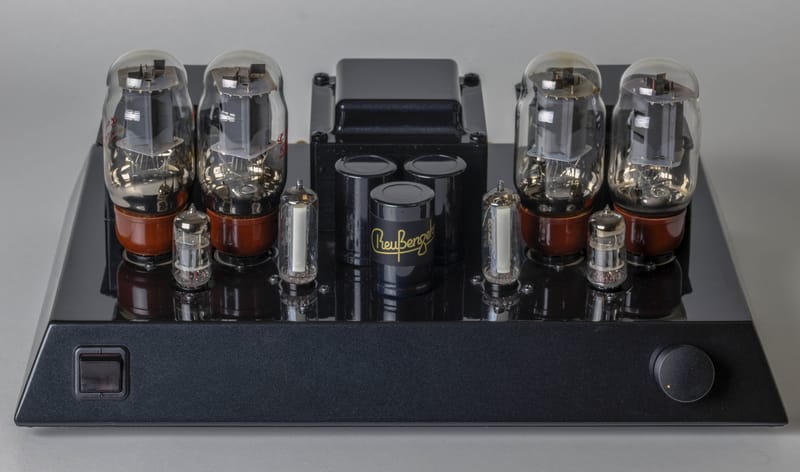
The triode's behavior is not that of a perfect gain device. Its output impedance is high, its power delivery is limited, and it requires an output transformer to match its characteristics to a loudspeaker load. Those transformers are themselves imperfect: they introduce phase shift, frequency-response anomalies, and magnetic saturation effects that degrade the signal in ways that the best solid-state amplifier never would. And yet the triode amplifier, driven gently and matched carefully to its load, produces a form of distortion that is predominantly second-harmonic: a coloration that is musical in character, consonant with the harmonics of natural instruments, and easily resolved by the ear into something it can accept as truthful.
This is not a defense of distortion. It is an acknowledgment that the character of an error matters as much as its magnitude, and that the engineers who built the great valve amplifiers of the 1950s were solving a problem in psychoacoustics without knowing that was what they were doing.
Western Electric built amplifiers for cinema and telecommunications throughout the 1930s and 1940s whose engineering quality was so far ahead of anything available in the domestic market that they remain, to this day, objects of reverence among those who have heard them at their best. The 91A and the 300B single-ended triode amplifier that drives it represent a standard of naturalness that informs the work of every single-ended designer who has followed.
Williamson published his design for a triode push-pull amplifier in the pages of Wireless World in 1947, and the result was one of the most widely replicated amplifier circuits in the history of audio. By using triode-connected output pentodes in an ultra-linear configuration, with generous loop feedback applied to reduce distortion to levels the single-ended designs could not approach, Williamson demonstrated that measured performance and musical quality were not necessarily in opposition. The Williamson circuit produced perhaps fifteen watts with a frequency response and distortion figure that contemporary solid-state amplifiers would recognize as adequate, and it did so with a transparency in the midrange that solid-state amplifiers of equivalent output power still find difficult to match.
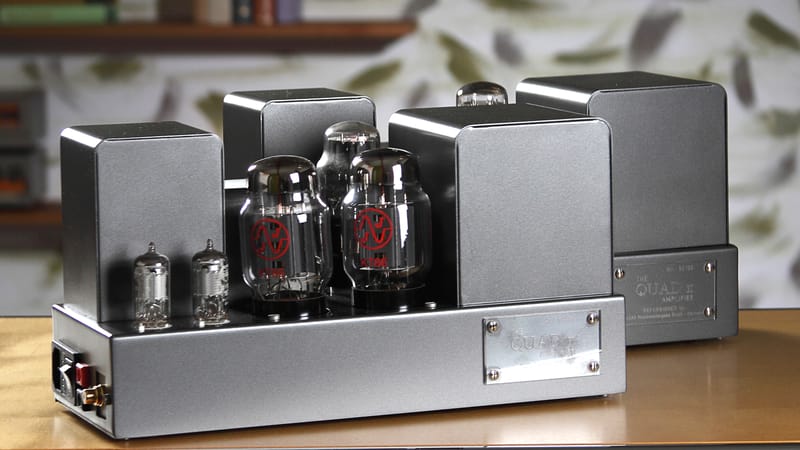
Radford in Britain, Marantz in America, and McIntosh in the United States each developed the valve amplifier into its mature commercial form during the 1950s and early 1960s.
Sidney Harman's Marantz brought engineering elegance and commercial ambition to valve amplification. The Model 2 preamplifier and the Model 8B power amplifier were instruments of a quality that no competitor at their price could approach, and the 9 monoblock, with its EL34 output valves in an ultra-linear push-pull configuration, remains one of the great amplifiers of the valve era in terms of measured and subjective performance alike.
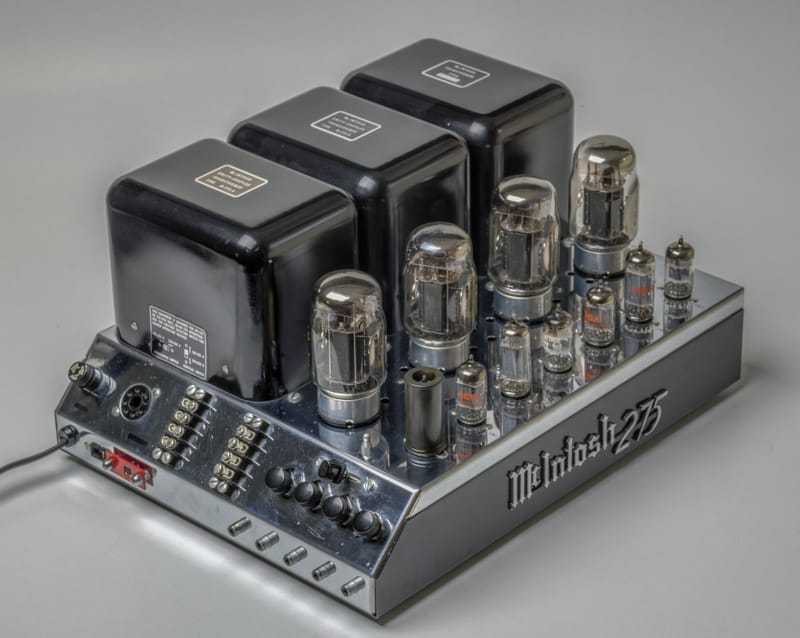
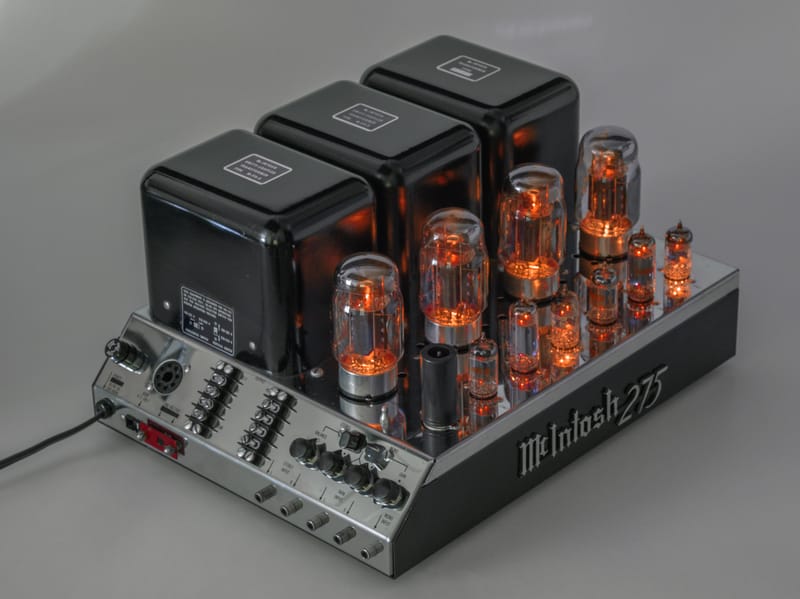
Frank McIntosh's company in Binghamton, New York, addressed the fundamental problem of the output transformer with the Unity Coupled Circuit, a patent topology that applied negative feedback around the entire output transformer rather than the driver stage, dramatically reducing the transformer's contribution to distortion. The result was amplifiers of genuinely extended frequency response and low distortion that combined professional reliability with a sonic refinement that earned McIntosh a devoted following in both studio and domestic markets that has not diminished over seventy years.
The Transistor Arrives: Promise, Disappointment, and Recovery
The transistor amplifier promised, in the early 1960s, everything the valve could not deliver: unlimited power, negligible warm-up time, freedom from the fragility of heated filaments, and output stages that required no transformer. The reality, for the first decade of solid-state audio, was a prolonged disappointment.
Early transistors were germanium devices whose characteristics were difficult to control, whose noise performance was mediocre, and whose distortion profile was dominated by odd-order harmonics: the third, fifth, and seventh, which are musically dissonant and to which the ear is acutely sensitive. The first solid-state amplifiers from major manufacturers sounded, to many listeners, thin, bright, and uncomfortable. The valve amplifiers they replaced had their own colorations, but those colorations had been absorbed into the listener's expectation of what recorded music sounded like. The transistor amplifier's colorations were different, unfamiliar, and harder to overlook.
The resolution of this crisis occupied the best amplifier designers of the late 1960s and 1970s and produced some of the most important circuit innovations in the history of amplification.
Quad under Peter Walker's leadership produced the Quad 33/303 system in 1967, which was the first successful application of current-dumping to a commercial power amplifier. The current-dumping topology eliminated the output stage's conventional class AB bias arrangement, instead using a high-quality but low-power class A amplifier as a reference signal source and a crude but highly efficient switching stage to deliver current. The distortion of the switching stage was continuously corrected by the class A reference, producing a measured performance that was better than any other amplifier of its power and price. Whether it sounded as good as it measured was a question that divided the audio press for years, but the elegance of the topology was incontestable.
The Class A Imperative
No concept in amplifier design has generated more passionate advocacy, more commercial mythology, and more genuine listening evidence than Class A operation. Understanding what it means, and why it matters, is essential to understanding the amplifier's history.
In a Class A amplifier, the output devices — whether valves or transistors — conduct current continuously throughout the entire 360 degrees of the audio waveform. The bias current flowing through the output stage is always greater than the peak signal current. This means that the output devices never switch off, never transition from conducting to non-conducting, and never cross the region of their transfer characteristic where nonlinearity is highest. The crossover distortion that afflicts class B and class AB designs — the discontinuity at the zero-crossing point where one device transitions to the other — is entirely absent.
The cost of this purity is severe. A class A amplifier dissipates as much power at idle as it does at full output; it runs hot continuously; its efficiency rarely exceeds 25 percent; and the output devices must be conservatively rated and carefully matched. A class A amplifier of 25 watts output requires output devices capable of dissipating 100 watts or more, continuously.
These constraints explain why class A amplifiers are expensive, large, and thermally demanding. They do not explain away the listening evidence. In a well-executed class A design, the elimination of crossover distortion and the consistency of the operating point throughout the signal cycle produce an ease in the treble, a smoothness in the midrange at moderate levels, and a naturalness of transient decay that class AB amplifiers, even very good ones, find difficult to replicate. The difference is not large. It is audible.
The engineers who have understood this most thoroughly, and built to its conclusions without compromise, are among the most important figures in the history of amplifier design.
Nelson Pass and the First Watt Foundation
No single designer has contributed more to the modern understanding of class A amplification, or communicated that understanding more generously to the wider audio community, than Nelson Pass.
Pass began his professional career at Threshold Audio in the early 1970s, where he developed a series of class A and class A-biased amplifiers that established a new standard for solid-state power amplification. The Threshold 800A and the subsequent Stasis series applied a topology in which the input and driver stages operated in true class A while the output stage maintained class A operation under virtually all listening conditions. The result was amplifiers of exceptional transparency, low noise, and a quality of musical reproduction that the audio press received with a consensus unusual in a field not given to agreement.
Pass left Threshold to found Pass Laboratories in California in 1991, and the amplifiers that followed — the Aleph series, the X series, and the XA series — represent a sustained and systematic exploration of what single-ended, single-gain-stage class A amplification can achieve when pursued with rigorous engineering discipline and no concessions to commercial convenience.
The Aleph series, in particular, represented a genuine theoretical advance. By operating the output stage in single-ended class A — a single bank of MOSFETs conducting continuously, with no complementary pair — Pass eliminated the differential distortion mechanisms that push-pull topologies introduce at the crossover point, even when that crossover point is deeply biased into class A. The simplicity of the signal path, the consistency of the operating point, and the deliberate rejection of global negative feedback produced amplifiers that sounded unlike anything the solid-state tradition had previously offered: warm, extended, spatially generous, and utterly free of the brittleness that had characterized transistor amplifiers in less enlightened hands.
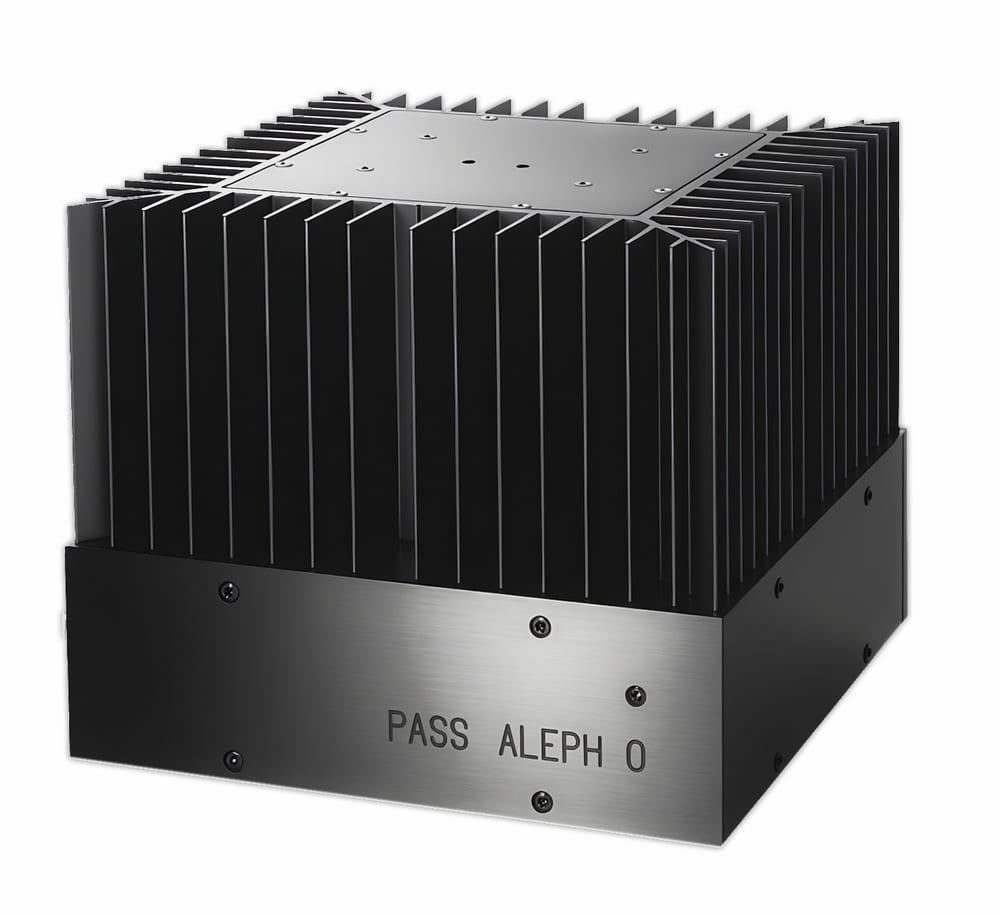
It was Pass who first articulated, systematically and publicly, what has become known as the First Watt doctrine: the observation that in the vast majority of real listening environments, with loudspeakers of normal sensitivity, the music is reproduced almost entirely within the first watt of the amplifier's output. High-power amplifiers, by this reasoning, are spending most of their budget solving a problem that rarely exists in practice, while the portion of the amplifier's performance that matters most — its behavior in the lowest decade of its power range — receives proportionally less attention.
The First Watt company, which Pass established as a subsidiary of Pass Laboratories, exists to test this proposition to its limit. Each First Watt amplifier is a different architectural experiment in the amplification of very small signals with maximum fidelity: the F1 is a current-source amplifier; the F2 eliminates voltage gain from the output stage entirely; the J2 uses single-ended JFET output devices; the SIT series employs static induction transistors whose transfer characteristic approximates the triode valve's in its most musically favorable region.
None of the First Watt amplifiers produces more than a few watts. All of them require high-sensitivity loudspeakers to work in. And all of them, when matched correctly, demonstrate the truth of the First Watt proposition: that the quality of those first few watts of amplification determines whether music sounds real, and that the pursuit of that quality in isolation from the distraction of power ratings produces results that no conventional high-power design can match watt for watt.
Pass has published the circuit diagrams of most of his designs openly, discussed his engineering decisions in public forums in detail that his competitors have never approached, and educated an entire generation of amplifier designers in the principles that govern first-class class A topology. His contribution to the field is simultaneously technical, pedagogical, and philosophical, and it is not yet complete.
Nelson Pass at Nakamichi: The Stasis Amplifier in a Japanese Context
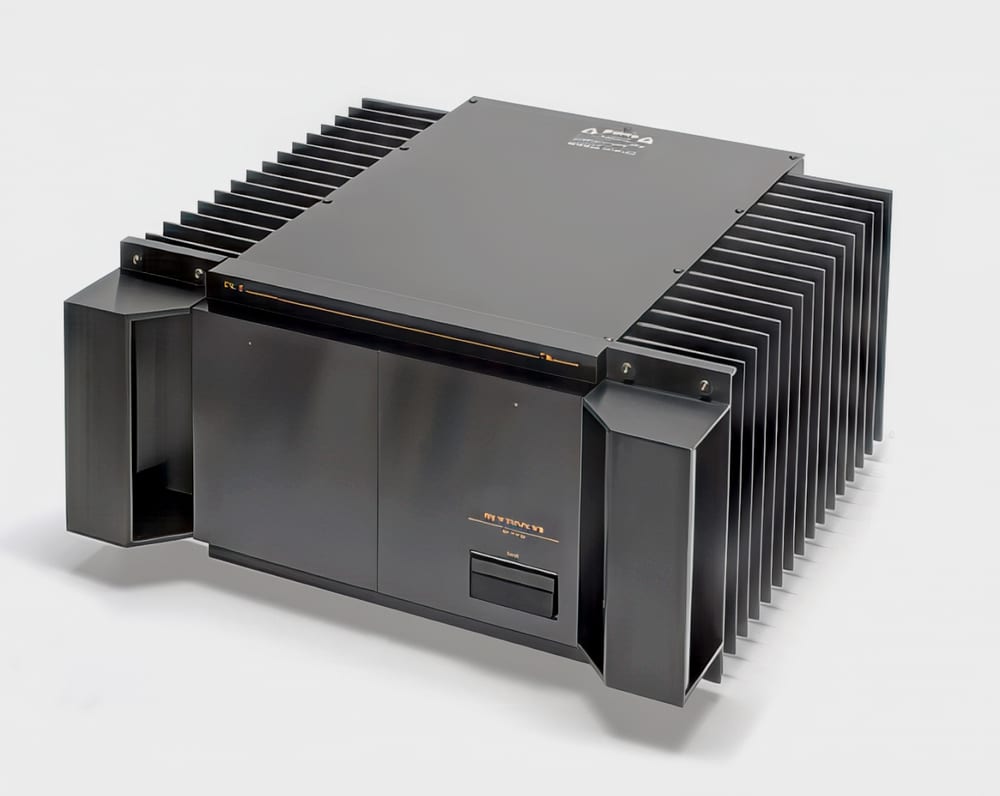
Before founding Pass Laboratories, and during the period in which Threshold was establishing the class A solid-state standard, Pass undertook a collaboration with Nakamichi that produced one of the least celebrated and most technically accomplished amplifier series of the 1980s.
Nakamichi, primarily known for its cassette tape decks of extraordinary mechanical precision, commissioned Pass to apply the Stasis topology to a range of amplifiers that would complement its source components. The resulting PA-7 and CA-7E represented an unusual convergence: Pass's class A engineering philosophy executed with the manufacturing precision and materials discipline that Nakamichi brought from its tape recorder tradition.
The Stasis topology's key insight — that the output stage's current demands could be predicted and supplied by a tracking class A driver stage, eliminating the abrupt transitions that conventional class AB output stages undergo — produced an amplifier whose behavior under dynamic musical transients was qualitatively different from anything available at its price. The PA-7 in particular offered a combination of authority, transparency, and absence of mechanical harshness that distinguished it immediately from the mainstream Japanese amplifiers of its era, and that rewarded careful loudspeaker matching with a quality of reproduction that the subsequent decade's Threshold and Pass Laboratories products would recognize as their direct ancestor.
John Curl and the Differential Legacy
John Curl's career in amplifier design began with work on the original Mark Levinson amplifiers in the early 1970s and has continued, in various forms, for more than half a century. Curl's contribution to the understanding of amplifier noise, distortion mechanisms, and the sonic consequences of circuit topology is as substantial as any in the field, and his influence on the designs of others — through collaboration, consultation, and published analysis — extends far beyond the specific products bearing his name.
The Parasound Halo amplifiers, developed with Curl's circuit design, represent the practical application of his theories at a price accessible to a broad audience. The JC 1 and JC 5 amplifiers operate in class A for the first portion of their power range — typically the first ten to twenty-five watts, which, as Pass had established, encompasses the great majority of real musical content — and transition to class AB only for transient peaks that exceed this threshold. The result is the temporal and tonal character of class A operation during sustained musical passages, with the dynamic headroom of a class AB amplifier available for the peaks that require it.
Curl's insistence on the sonic consequences of seemingly small circuit decisions — the type of resistors used in critical positions, the geometry of the circuit board, the mutual inductance of closely placed components — has been influential in establishing that the engineering of an amplifier extends far beyond its gain stage topology, to every detail of how that topology is physically realized.
Mark Levinson and the American High End
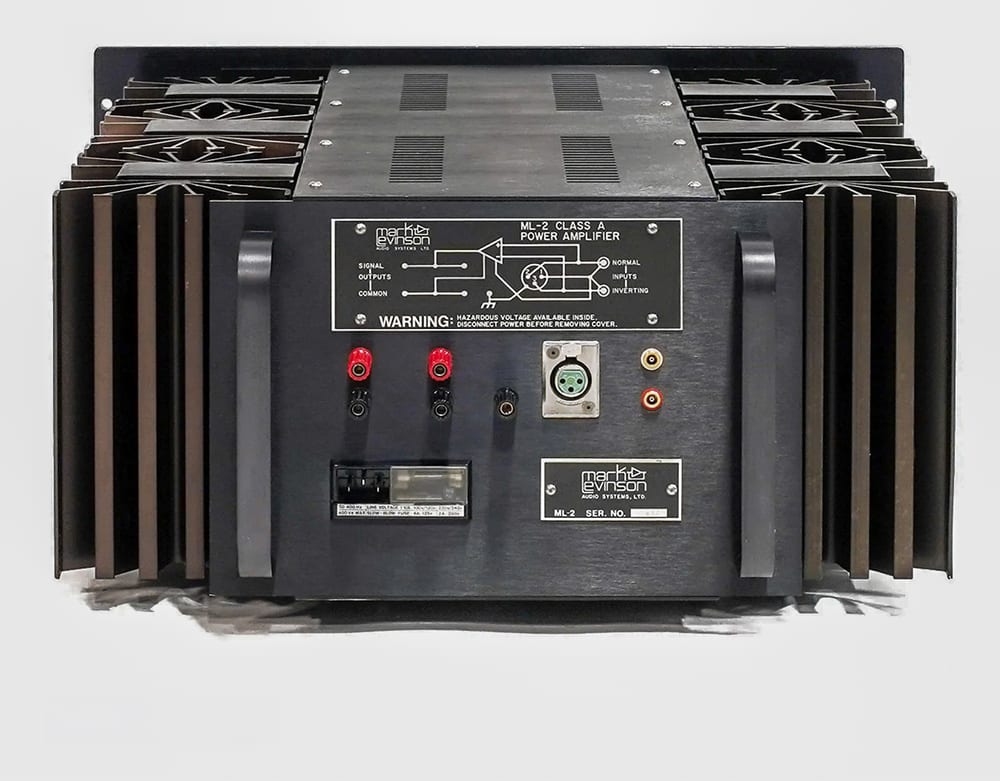
Mark Levinson's first amplifiers, produced from a small facility in Connecticut in the early 1970s, established the standard against which the American high-end tradition has been measured ever since. The No. 20 mono-block, introduced in 1984, was a class A amplifier of 100 watts that represented the most complete synthesis of measured performance and musical quality that solid-state technology had yet achieved at any commercial scale.
Its successor designs — the No. 33H, the No. 53, and the current No. 536 — have maintained the engineering convictions that Levinson established: true balanced circuitry throughout, conservative operating points, meticulous power supply design, and the elimination of every source of noise and distortion that measurement and listening can identify.
The Mark Levinson brand, under successive ownership, has maintained a position at the absolute summit of the solid-state amplifier market, and its products continue to serve as reference standards in professional mastering facilities and domestic listening rooms alike.
Krell and the Big Class A Statement
Dan D'Agostino founded Krell Industries in Connecticut in 1980 with the conviction that class A operation, previously reserved for amplifiers of modest power output, could be scaled to deliver the dynamic authority and bass control that the most demanding loudspeakers and musical material required.
The Krell KSA-100 of 1980 was among the first commercially successful 100-watt class A solid-state amplifiers, and its successors — the KSA-200, the MDA-300, and eventually the KPS series mono-blocks — pushed class A power output to levels that their competitors regarded as technically unnecessary and commercially impractical.
D'Agostino's insight was that the subjective quality of class A operation, observable at low signal levels, does not disappear at higher levels. The absence of crossover distortion and the consistency of the output stage's operating point matter throughout the amplifier's power range, not merely in its first watt. A loudspeaker that plays orchestral music at realistic levels, with its peaks reaching 95 or 100 decibels at the listening seat, requires power in quantities that the modest single-ended class A amplifier cannot provide; and if those peaks are to be reproduced with the same purity as the quiet passages, the amplifier must remain in class A throughout its operating range.
This argument is not universally accepted. Its practical implications — amplifiers of extraordinary size, weight, thermal output, and cost — place it beyond the reach of most listeners. But as a statement of engineering principle it is coherent, and the Krell amplifiers that embodied it produced a form of bass control and dynamic authority combined with treble refinement that was genuinely without precedent in the solid-state tradition.
D'Agostino subsequently left Krell to found his eponymous company, whose Momentum and Progression series represent the maturation of his philosophy in the current era.
Audio Research and the Valve Renaissance
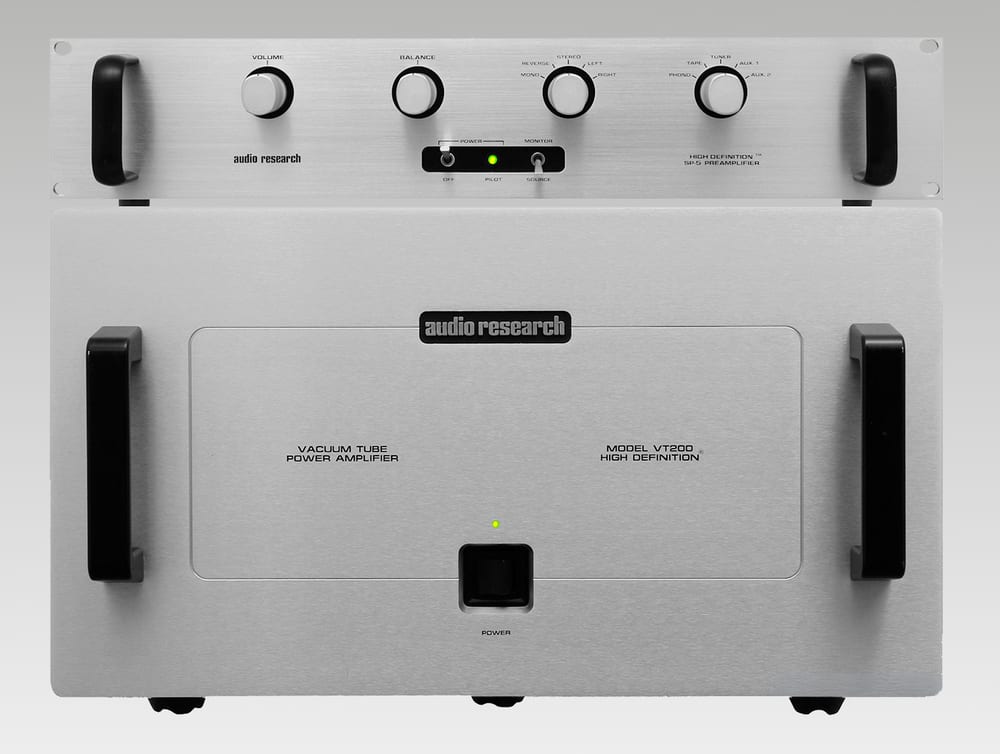
While the solid-state tradition was developing its own internal logic, the valve amplifier was not standing still. William Z. Johnson founded Audio Research in Minnesota in 1970 with the conviction that the valve's sonic virtues had not been exhausted, and that the application of modern engineering rigor to thermionic technology could produce amplifiers whose measured and subjective performance surpassed anything that the 1950s had achieved.
The Audio Research SP3 preamplifier and the D51 power amplifier established the company's voice: extended, neutral, detailed, with the spatial qualities and harmonic naturalness associated with the best valve designs, but without the rolled-off treble and compressed dynamics of conventional push-pull valve amplifiers driving too much output transformer.
Audio Research's D79 and subsequently the Reference series mono-blocks demonstrated that valve amplifiers could deliver the current and dynamic range required by modern low-sensitivity loudspeakers without sacrificing the transparent midrange and three-dimensional imaging that made valves desirable in the first place. The application of careful transformer design, conservative operating points, and selective use of negative feedback produced amplifiers that occupied a sonic position no solid-state design of equivalent price could claim.
Conrad-Johnson in Virginia pursued a parallel course, with a distinct sonic philosophy that favored warmth and musical richness over the last degree of treble extension: a different calibration of the valve's inherent character, equally valid on its own terms.
Luxman and the Japanese Class A Standard
The Japanese audio industry's contribution to amplifier design has been undervalued in Western audio literature, partly because its greatest achievements were never fully distributed outside Japan and partly because the narrative of high-end audio was, for many years, written in English.
Luxman's history extends to the 1920s, but it is the company's work from the 1970s onwards that earned its position in any serious account of amplification. The C-1000f preamplifier and M-800A power amplifier represent the highest expression of a design philosophy that combines class A output operation with negative feedback architectures of exceptional sophistication, achieving measured performance figures that few competitors have surpassed.
The SQ-38u integrated amplifier, a valve design of great beauty and technical discipline, demonstrates that Luxman's commitment to class A extends across both technologies: it is a statement that class A operation is not a transistor virtue or a valve virtue but a circuit virtue, applicable wherever the engineering will support it.
Accuphase and the Precision of Controlled Feedback
Accuphase, founded in Japan in 1972 by former Kenwood engineers, established a design philosophy that differs from both the Nelson Pass minimal-feedback approach and the conventional high-feedback solid-state school. Accuphase's MCS (Multiple Circuit Summing) topology uses multiple parallel amplifier circuits whose outputs are summed, reducing the distortion of the combined output by a factor proportional to the square root of the number of parallel stages, without the phase-margin penalties and frequency-response compromises that high amounts of global negative feedback introduces.
The result is amplifiers of vanishingly low noise and distortion, exceptional channel matching, and a long-term reliability that is unmatched in the high-end industry. The E-800 integrated amplifier operates in class A throughout its rated power range and represents the most technically complete expression of the MCS philosophy yet produced: an amplifier that measures and sounds better than almost anything available at any price, delivered with a build quality that makes its competitors appear provisional.
Accuphase's contribution is the demonstration that engineering discipline and long-term commitment to a coherent design philosophy, pursued without the fashion-following that afflicts much of the industry, produces results that accumulate and compound over decades.
Gryphon and the Danish Statement
Flemming Rasmussen founded Gryphon Audio Designs in Denmark in 1985 with an ambition that the European high-end market had not previously seen expressed with quite such single-minded thoroughness: the construction of a full class A amplifier at reference power levels, with no concessions to convenience or cost.
The Gryphon Antileon, introduced in 1995, was a 100-watt class A stereo amplifier that weighed 70 kilograms and operated at a continuous quiescent dissipation that made its heatsinks the dominant thermal feature of any room it occupied. Its sonic qualities — a midrange richness, a bass authority, and a treble freedom that placed it among the finest solid-state amplifiers of its era — justified the inconvenience to the listeners prepared to accommodate it.
The Antileon EVO and the subsequent Mephisto series extended the philosophy to mono-block configurations of 250 watts in class A, amplifiers whose physical presence and thermal output require rooms designed around them. Gryphon's commitment has never wavered, and the Mephisto has maintained its position as one of the reference class A amplifiers by which other designs are measured.
Dartzeel and the Zero-Feedback Philosophy
Herve Deletraz founded Dartzeel in Switzerland with a circuit philosophy that represents one of the most radical positions in contemporary amplifier design: the complete elimination of global negative feedback from the signal path, at any operating class.
The argument against global negative feedback is well established in the literature: feedback reduces distortion in steady-state measurement but introduces a timing error between the correction signal and the original, an error whose consequences under transient conditions are difficult to measure accurately but whose sonic effects many listeners find audible. Malcolm Hawksford and others have formalized these concerns theoretically; Deletraz has pursued them to their practical conclusion.
The NHB-108 amplifier, operating in class A throughout its usable power range, achieves its distortion performance not through feedback correction but through the inherent linearity of its gain stages, which are designed and biased to be as linear as possible before any correction mechanism is applied. The result is an amplifier of exceptional transient fidelity and dynamic naturalness, whose sound has been described consistently by reviewers of different national traditions and different sonic priorities as among the most convincing solid-state reproductions of acoustic music available at any price.
The Lipinski L-401: Class A Active Monitoring and the Lipinski Square
Andrew Lipinski's contribution to amplifier design is inseparable from his contribution to the loudspeaker-amplifier system, and understanding the L-401 requires understanding what problem it was designed to solve.
The conventional active monitor places a crossover at line level and uses separate amplifiers for each driver section. The amplifiers in most such designs are class AB, chosen for their efficiency, their power density, and their reliability under the sustained high-power conditions that professional monitoring imposes. The sonic consequences of class AB operation — the crossover distortion, the bias-point instability under varying signal conditions, the subtle texturing of transient leading edges that careful listening reveals — are tolerated because the alternative has historically been regarded as impractical.
The Lipinski L-401 refuses this compromise. To the best of current technical knowledge, it is the world's only full class A active monitor: an active loudspeaker in which the amplification of every driver section operates in true class A throughout the entire dynamic range of the signal, not merely in its lower portion. This is not a marketing claim about "class A input stages" or "class A driver stages"; it is a statement about the output stage itself, the stage that delivers current to the voice coil, the stage whose operating class determines the character of the distortion that ultimately reaches the ear.
Achieving this required Lipinski to solve thermal management problems of an order that the conventional active monitor amplifier never faces, and to develop power supply architectures capable of sustaining true class A bias under the dynamic demands of monitored program material. The result is an instrument that professional engineers at institutions including Mobile Fidelity Sound Lab, Warner Bros., and Universal Music Group have chosen as a reference, not because it is technically exotic but because it tells them the truth.
The amplifier topology underlying the L-401 — and the amplifiers that drive the passive L-707 and L-505 monitors — is built around what Lipinski calls the Lipinski Square: a patented discrete operational amplifier topology constructed entirely from hand-selected class A devices. The Lipinski Square contains no integrated circuits, no electrolytic capacitors, no transformers, and no coils in the signal path. It is realized entirely from discrete components, each selected individually for the consistency of its characteristics, in a geometry whose symmetry is the physical expression of its mathematical balance.
The topology's name reflects its architecture: a square arrangement of complementary devices in which every node is the differential mirror of the one opposite it, with the result that even-order distortion products cancel by symmetry and the residual error is dominated by the amplifier's own noise floor rather than by nonlinear distortion. This is not a new principle — the long-tailed pair differential amplifier has exploited symmetry for distortion cancellation since the 1930s — but the rigour with which Lipinski has pursued it, the insistence on discrete rather than integrated realization, and the extension of the class A operating condition through the output stage, represents a synthesis of principles that the industry as a whole has not replicated.
The Lipinski Sound system architecture is modular: the passive L-707 monitor, the active L-401, and the Grand and Signature configurations that extend the system, are designed from the outset as components of a scalable system in which every stage maintains full phase integrity and tonal coherence. Modularity is not an afterthought but a condition of the design, and the result is a system architecture that can grow to meet the demands of the monitoring environment without the tonal discontinuities that arise when components designed independently are assembled into an unplanned whole.
What Lipinski has built is not merely an amplifier. It is the product of a career that began with the question of what a recording engineer actually needs to hear — not what is measurable, not what is impressive, but what is true — and proceeded, with the discipline of an electronic engineer and the ears of a musician, to build the instrument capable of answering that question honestly.
Integrated Amplifiers and the Wisdom of Simplicity
The history of the integrated amplifier is not a history of compromise. It is a history of the recognition that every connection in a signal path introduces an opportunity for degradation, and that the amplifier whose gain stages share a power supply and a chassis with its preamplifier has one fewer set of interconnects, one fewer set of contacts, and one fewer opportunity for ground-loop contamination than the equivalent separates combination.
Naim Audio, founded by Julian Vereker in Britain in 1969, developed an integrated amplifier philosophy that treated the power supply not as a component of the amplifier but as the amplifier's primary design variable. Naim's NAIT and subsequent NAC/NAP series demonstrated that the quality of the power supply's regulation, its impedance at audio frequencies, and its ability to deliver instantaneous current to the output stage under transient conditions determined the subjective quality of the amplification more than almost any other single factor. The resulting amplifiers were not class A — Naim's philosophy was rooted in the dynamics of class AB at its best — but they offered a rhythmic coherence and a sense of musical momentum that their competitors found difficult to match.
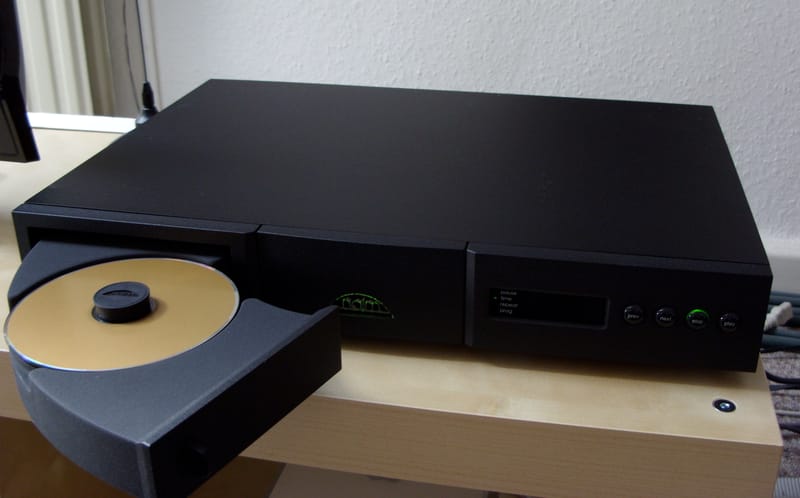
Luxman and Accuphase both offer integrated amplifiers that operate in class A throughout their rated output ranges: the Luxman L-590AXII and the Accuphase E-650 are among the finest integrated amplifiers currently manufactured, and each demonstrates that the integration of preamplifier and power amplifier functions in a single chassis, executed with the engineering discipline applied to the best separates, can produce results that the sum of separate components cannot guarantee.
The Digital Power Amplifier: Class D and Its Discontents
No development in amplifier design has generated more controversy, or more rapid commercial adoption, than the switching amplifier. Class D amplification — in which the output devices switch between fully on and fully off at rates far above the audio band, with the audio signal encoded in the duty cycle of the switching waveform — offers efficiencies approaching 95 percent. The output devices dissipate almost no power at idle; they run cool; they require no heatsinks of consequence; they can deliver hundreds of watts from a chassis that would fit in a jacket pocket.
The sonic consequences of this efficiency have been, for most of the technology's history, a compromise with treble smoothness, high-frequency noise performance, and the quality of the noise floor that class A and class AB amplifiers did not impose. The switching frequency's harmonics and intermodulation products, however carefully filtered, have proven audible to careful listeners in ways that measurements have sometimes failed to capture.
The work of Bruno Putzeys at Hypex Electronics and subsequently at Purifi Audio represents the most serious attempt yet made to solve these problems from first principles. Putzeys' NCORE and Eigentakt amplifier modules apply sophisticated feedback topologies that enclose the output filter within the feedback loop, dramatically reducing the distortion mechanisms that earlier class D designs could not suppress. The resulting amplifiers measure extraordinarily well and have earned the respect of listeners whose prejudice against switching amplification was formed by long experience of its limitations.
Whether class D, even in its most refined current form, equals the best class A amplification in all respects is a question on which expert opinion remains divided. What is not in dispute is that the gap has narrowed dramatically, and that Putzeys' work has moved the standard by which class D is judged from "adequately competent" to "genuinely competitive."
The Preamplifier: Gateway and Gatekeeper
The preamplifier occupies the most delicate position in the signal chain: it receives signals at the lowest levels and must amplify them, route them, and deliver them to the power amplifier without adding noise, coloration, or distortion in proportions the ear can detect.
Audio Research, Conrad-Johnson, and Mark Levinson established the standard for the high-end line preamplifier during the 1970s and 1980s. The Audio Research SP10, the Conrad-Johnson ART, and the Levinson No. 26 each represented, at their introductions, the most transparent pre-amplification then available in their respective technologies. They were also each expressions of the class A principle applied to gain stages rather than output stages: the preservation of the signal's character by ensuring that the devices amplifying it never transition to a nonlinear operating region.
The phonograph preamplifier — the RIAA equalizing stage that recovers the flat frequency response from the de-emphasized cut of the LP groove — presents additional demands. The Aesthetix Io, the Sutherland Phono Loco, and the professional-grade Lyra Connoisseur phono stages represent the state of the art in a domain where noise floors of a few microvolts and gain of 60 to 70 decibels must coexist without compromise.
Conclusion: The Operating Point Is Everything
The history of the power amplifier can be read as a history of the operating point: the conditions under which the active devices in the output stage conduct current and deliver power to the load. Every major engineering decision in amplifier design — the choice of topology, the depth of negative feedback, the degree of local versus global correction, the selection of active device technology — is ultimately a decision about how to manage the operating point's stability, its linearity, and its relationship to the signal it is asked to amplify.
Class A operation is the radical solution to this problem. It does not manage the operating point's excursions; it eliminates them. By ensuring that the output devices conduct continuously, at a fixed bias point, regardless of the signal level, class A amplification removes the operating-point instability that is the root cause of crossover distortion, bias-point modulation, and the subtle temporal errors that careful listeners associate with the distinction between live and reproduced sound.
The cost — in heat, in weight, in electricity, and in money — is real and should not be minimized. The argument that those costs are worth bearing has been made, by Nelson Pass, by Dan D'Agostino, by Flemming Rasmussen, by Andrew Lipinski, and by dozens of other engineers who have built their professional lives around the proposition, in the only way that ultimately matters: not in words, but in amplifiers that can be listened to.
Paul Klipsch said that the purpose of the loudspeaker was to let the signal through. The amplifier's obligation is the same. The question that the history of amplification poses, and that the class A amplifier answers more completely than any other topology, is simply this: what happens in the output stage when the music is quiet, and the level is low, and the device is barely conducting, and the ear is listening most carefully? That is the first watt. And the first watt is where the truth lives.
Capturing every meaningful contribution within the audio industry is neither practical nor necessary; the companies, designers, and products highlighted here are representative rather than exhaustive, standing in for a far broader body of work that collectively shapes the craft and its ongoing evolution.
This is part of a continuing series on milestones in high-fidelity audio.
Questions about Amplifier History
What is Class A amplification and why does it matter? +
In a Class A amplifier, the output devices conduct current continuously throughout the entire audio waveform. The bias current is always greater than the peak signal current, so the devices never switch off and never cross the nonlinear region that causes crossover distortion. This produces an ease in the treble, smoothness in the midrange, and naturalness of transient decay that Class AB amplifiers find difficult to replicate.
The cost is severe: a Class A amplifier dissipates as much power at idle as at full output, runs hot continuously, and rarely exceeds 25 percent efficiency. A 25-watt Class A amplifier requires output devices capable of dissipating 100 watts or more. These constraints explain the size, weight, and cost, but they do not explain away the listening evidence.
Who are the most important amplifier designers in audio history? +
Key figures include Peter Walker (Quad), Nelson Pass (Threshold, Pass Labs, First Watt), Mark Levinson, Dan D'Agostino (Krell), William Z. Johnson (Audio Research), Julian Vereker (Naim Audio), Flemming Rasmussen (Gryphon), Herve Deletraz (Dartzeel), Andrew Lipinski (Lipinski Sound), Bruno Putzeys (Hypex, Purifi), and John Curl (Parasound Halo).
Each contributed fundamental advances in amplifier topology, feedback theory, or Class A design. Their work spans from the earliest thermionic valve circuits through modern discrete solid-state and Class D switching architectures, and collectively represents the state of the art in power amplification.
What is the Lipinski Square topology? +
The Lipinski Square is a patented discrete operational amplifier topology developed by Andrew Lipinski. It contains no integrated circuits, no electrolytic capacitors, no transformers, and no coils in the signal path. It uses a square arrangement of complementary discrete transistors, each hand-selected, biased in pure Class A with minimal negative feedback.
The symmetry of the architecture causes even-order distortion products to cancel, leaving residual error dominated by the noise floor rather than nonlinear distortion. The Lipinski Sound system, including the L-707 monitors and L-401 active monitor, is built entirely around this topology and has become a reference in professional mastering studios worldwide.
How does Class D amplification compare to Class A? +
Class D switching amplifiers offer efficiencies approaching 95 percent, running cool with minimal heatsinks. However, for most of the technology's history, they compromised treble smoothness and noise performance. The work of Bruno Putzeys at Hypex and Purifi Audio has dramatically narrowed the gap with NCORE and Eigentakt modules.
Whether Class D equals the best Class A in all respects remains a question on which expert opinion is divided. What is not in dispute is that the gap has narrowed dramatically, and that Putzeys' work has moved the standard by which Class D is judged from "adequately competent" to "genuinely competitive."