


"The headphone, in its intimate relationship with the listener, offers possibilities for musical engagement that loudspeakers, constrained by room acoustics, cannot approach."
The headphone occupies a unique position in audio history. Originally conceived as practical devices for monitoring and communication, headphones have evolved into the reference transducers of choice for countless listeners who find in them the closest approach to live music. The journey from utility to ultimacy spans over a century, with each generation of designers contributing innovations that expanded both performance and possibility.
Understanding headphones requires understanding their fundamental nature. Unlike loudspeakers, which must fill rooms with sound, headphones must reproduce music within centimetres of the ear canal. This intimate relationship creates challenges and opportunities distinct from speaker design. The headphone designer must consider not only transducer technology but also ergonomics, isolation, and the psychoacoustic effects of sound arriving directly at the ear without room interaction.
The Dynamic Driver Foundation
The dynamic headphone driver operates on the same principle as dynamic loudspeakers: a voice coil attached to a diaphragm moves within a magnetic field, producing sound through air vibration. This mature technology, developed early in the twentieth century, continues to produce some of the finest headphones available.
Beyerdynamic: A Century of Innovation
Beyerdynamic, founded in 1924 in Berlin, established many of the foundations that continue to influence headphone design. In 1937, they introduced the DT48, the world's first stereo dynamic headphones. This remarkable product remained in continuous production until 2012, representing a 75-year production run that stands as the longest for any headphone model. The DT48 demonstrated that dynamic driver technology, properly implemented, could achieve lasting excellence.
The DT880, introduced in 1980, represented a significant advance. Beyerdynamic described it as the first dynamic headphone with electrostatic reproduction characteristics. This was not mere marketing: the DT880's design achieved a level of transparency and high-frequency extension previously associated only with electrostatic designs. The DT880 remains in production today, with the DT880 Edition offering enhanced materials and performance while maintaining the original design philosophy.
The DT990 followed in 1985 as Beyerdynamic's open-back reference. With 600-ohm impedance, the DT990 demanded more power than typical headphones but rewarded capable amplifiers with exceptional detail retrieval. Both DT880 and DT990 became standard references in recording studios worldwide, valued for their combination of accuracy and musical engagement.
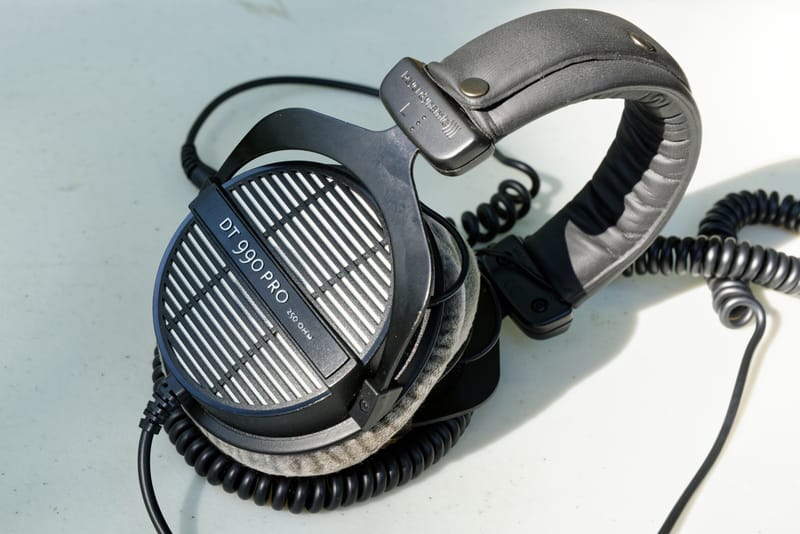
Beyerdynamic's Tesla technology, introduced with the T1 in 2009, represented a fundamental advance in dynamic driver design. By increasing magnetic flux density in the gap through innovative motor construction, Tesla headphones achieved efficiency levels previously impossible with conventional dynamic designs. The T1 and subsequent Tesla models demonstrated that dynamic drivers could compete with planar magnetic and electrostatic designs across all performance parameters.
The DT1990 Pro brought Tesla technology to a more accessible price point while introducing selectable EQ pads that allowed users to tune the headphone's response. This flexibility demonstrated Beyerdynamic's understanding that headphone performance must serve musical purposes rather than merely technical measurements.
Sennheiser: The German Standard
Sennheiser Electronic, founded in 1945, built their reputation on accurate transducers for professional applications. Their headphone evolution reflects this heritage, with each generation establishing new benchmarks for the industry.

The HD580, introduced in 1993, marked a turning point for audiophile headphones. Developed with diffuse-field equalization principles derived from their professional monitoring work, the HD580 offered a combination of technical accuracy and musical engagement that influenced subsequent designs throughout the industry. The HD580 established that professional engineering standards could translate directly to consumer applications.
The HD600, launched in 1996, refined the HD580's approach while maintaining its fundamental character. With its characteristic midrange clarity and extended high-frequency response, the HD600 became perhaps the most widely respected open-back headphone for critical listening. Over 25 years after its introduction, the HD600 remains a reference standard against which new designs are measured.
The HD650 followed in 2003, offering a warmer presentation while maintaining the HD600's resolution. The subtle voicing differences between these models demonstrated that small variations in transducer tuning could significantly affect musical character without compromising technical performance. Both HD600 and HD650 utilize 300-ohm impedance that requires dedicated headphone amplification for optimal results.
The HD800, introduced in 2009, represented Sennheiser's statement in dynamic headphone design. Its 56mm ring radiator driver, significantly larger than conventional designs, achieved unprecedented soundstage width while maintaining the resolution expected of a reference transducer. The HD800 and its subsequent revisions established new possibilities for what dynamic headphones could achieve.
Sennheiser's professional headphones, including the legendary HD25 introduced in 1988, established different standards. Used in broadcast, live sound, and DJ applications worldwide, the HD25 demonstrated that headphones could withstand professional use while maintaining audio quality. Its closed-back design provided isolation essential for monitoring applications.
AKG: The Vienna Tradition
AKG Acoustics of Vienna, founded in 1947, brought Austrian engineering traditions to headphone design. Their products emphasized musical refinement while achieving the accuracy required for studio applications.
The AKG K340, produced from 1979 to 1989, represented an innovative approach that anticipated hybrid designs by decades. The K340 combined a dynamic driver for bass frequencies with an electret element for treble, attempting to optimize each frequency range with the most appropriate transducer technology. This dual-driver approach achieved a combination of bass weight and high-frequency extension that conventional designs struggled to match.
The K240 Sextett and related models established AKG's studio monitoring credentials. The K240 Studio, in particular, became ubiquitous in recording applications worldwide. Its semi-open design offered a balance between isolation and spatial presentation that suited extended monitoring sessions.
The AKG K1000, introduced in 1989, represented a radical departure from conventional headphone design. Often called a "head speaker" rather than headphones, the K1000 featured full-size drivers mounted in open frames that sat against, but did not enclose, the ears. This configuration produced a spatial presentation that more closely approached loudspeaker listening than any conventional headphone design. The K1000 established benchmarks for soundstage width and imaging that subsequent designs have struggled to match.
The K701, introduced in the 2000s, brought AKG's studio expertise to consumer applications. Using revolutionary flat-wire voice coil technology, the K701 achieved the combination of low mass and high driving force that enabled exceptional transient response. The K702 and subsequent variants refined this platform, with the K712 Pro offering enhanced comfort for extended listening sessions.

The K812, as AKG's reference headphone, incorporated 1.5 Tesla magnet systems in drivers designed for maximum accuracy. The combination of Tesla magnet technology and the flat-wire voice coil represented the culmination of AKG's headphone development, demonstrating that dynamic driver technology continues to evolve.
Grado: The Brooklyn Handcraft
Grado Laboratories of Brooklyn, founded by Joseph Grado in 1955, built their reputation on handcrafted headphones that achieved musical engagement through unconventional approaches. The Grado house sound, characterized by warm midrange and dynamic punch, influenced countless listeners who found in it the emotional connection that more technically accurate designs sometimes lacked.
The Statement series represented Grado's reference expression. The RS1e and RS2e, with their mahogany housings and long-grain copper voice coils, achieved combinations of resolution and musicality that commanded devoted followings. The Statement series demonstrated that artisanal approaches to manufacturing could produce results competitive with mass-produced designs from larger manufacturers.
The SR60e and SR80e established Grado's accessibility credentials. At prices far below most audiophile headphones, these models offered approximately 90–95% of the Grado house sound, making the musical qualities that distinguished Grado designs available to listeners on limited budgets. This value proposition influenced how the industry thought about headphone pricing and performance.
Grado's heritage in phono cartridges informed their headphone approach. The same attention to stylus and cantilever design that produced their celebrated cartridges translated into voice coil and diaphragm engineering that achieved distinctive musical results.
Denon: The Japanese Craftsman
Denon's headphone development drew on their heritage in both consumer and professional audio. The AH-D7000, produced from the early 2000s, established Denon's credentials in audiophile headphones with its wood housing and sophisticated driver design.
The AH-D7200, with its American walnut housing and 50mm FreeEdge drivers, represented Denon's reference expression. The FreeEdge driver, using a nano-fiber diaphragm chosen for rigidity and low mass, achieved combinations of accuracy and musical engagement that competed with the finest dynamic headphones available. Denon's attention to cabinet resonance control, using wood materials selected for their damping properties, demonstrated their understanding that transducer performance depends on more than driver design alone.
The AH-D9200 brought Japanese bamboo housing to Denon's flagship position, with drivers made in Japan under quality standards established through decades of audio component manufacturing. The combination of exotic materials and refined engineering positioned the AH-D9200 among the finest closed-back headphones available.
Focal: The French Alternative
Focal-JMlab of Saint-Etienne, France, brought European engineering traditions to headphone design with their entry into the headphone market. The Utopia, as Focal's flagship, represented their statement in headphone performance, with beryllium drivers and sophisticated chassis design achieving benchmarks previously established by German and Japanese manufacturers.
The Elear, positioned below the Utopia, demonstrated Focal's engineering capabilities at more accessible price points. Using similar driver technology scaled for production efficiency, the Elear achieved performance that challenged headphones at significantly higher prices.
The Focal Clear occupied the middle position in Focal's lineup, offering balanced performance suitable for extended listening sessions. The Clear demonstrated Focal's recognition that headphone design must consider ergonomics and comfort alongside raw performance.
Ultrasone: The German Precision
Ultrasone of Munich developed headphones with distinctive character that appealed to listeners seeking alternatives to the neutral presentation of reference designs. Their Signature series, manufactured in Germany, achieved combinations of spatial presentation and resolution that distinguished them from competitors.
The Signature Pro represented Ultrasone's statement for professional applications. Using S-Logic Plus technology that positioned drivers to create more speaker-like sound radiation patterns, the Signature Pro achieved spatial presentations that escaped the "in-head" localization common with conventional headphones.
The Edition series extended Ultrasone's technology to luxury consumer applications, with exotic materials and premium construction justifying elevated pricing. The Edition 8 and subsequent models demonstrated that Ultrasone's engineering could achieve both technical performance and emotional engagement.
Electrostatic Headphones: The Ultimate Transparency
Electrostatic headphones represent the ultimate expression of transducer design, achieving principles that dynamic drivers approach but cannot fully attain. By using ultra-thin diaphragms driven by electrostatic forces rather than electromagnetic ones, electrostatic designs achieve levels of detail retrieval and transient response that define the performance boundaries for all headphones.
Stax: The Japanese Pioneer
Stax Industries of Japan, founded in 1938, developed the world's first electrostatic headphones. In 1959, they introduced the SR-1, which became the foundation for an ongoing lineage of electrostatic earspeakers. Stax's contribution extended beyond their own products: their standardized bias voltage and connector configurations became conventions that the entire electrostatic headphone industry adopted.
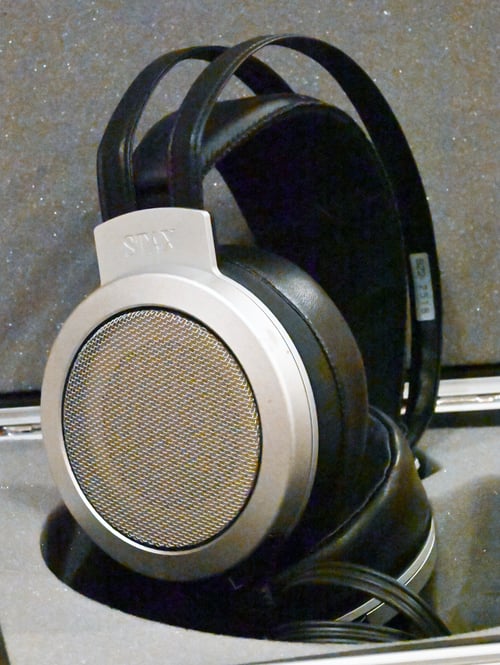
The Stax Lambda series, introduced in 1982 with the SR-Lambda Professional, established new benchmarks for electrostatic performance. The use of 580-volt bias represented a significant advance from earlier designs, enabling improved bass response and dynamic range. The Lambda series remained in production for decades, with continuous refinements maintaining its relevance against newer designs.
The SR-009 and SR-009S, as Stax's reference headphones, achieved performance levels that defined electrostatic possibilities. Their large diaphragm areas and sophisticated stators enabled soundstage presentations that approached loudspeaker listening more closely than any competing technology. The SR-009S, with its improved diaphragm materials and refined geometry, represented the culmination of Stax's decades of electrostatic development.
Stax's electrostatic headphones require dedicated amplifiers that provide both the audio signal and the high-voltage bias. This requirement creates a complete ecosystem where amplifier and headphone development proceed together, with each generation of amplifiers enabling advances in headphone performance.
The Sennheiser Orpheus Legacy
Sennheiser's Orpheus system, introduced in 1991, achieved legendary status that influenced headphone design for decades. The HE90 headphones and dedicated HA90 amplifier represented cost-no-object approaches to electrostatic reproduction, with each element optimized without regard to manufacturing practicality.
The Orpheus HE90 demonstrated that electrostatic headphones, properly amplified, could achieve combinations of resolution, dynamics, and spatial presentation that no other technology could match. The amplifier's use of vacuum tubes, chosen for their ability to provide both voltage swing and current drive, established principles that subsequent electrostatic amplifier designs would follow.
The HE60, as the "baby Orpheus," brought Orpheus technology to more accessible applications. While significantly less expensive than the HE90, the HE60 achieved much of its sibling's performance, demonstrating that the fundamental principles of electrostatic headphone design could scale to production realities.
The HE1, introduced in 2015, represented Sennheiser's recreation of the Orpheus legacy for the modern era. Using a solid marble housing for the amplifier section, the HE1 achieved unprecedented industrial design while maintaining the performance standards established by its predecessor. The HE1's electrostatic drivers with vaporized gold ceramic electrodes achieved frequency response extending beyond human hearing while maintaining the temporal accuracy that distinguishes electrostatic designs.
Beyerdynamic Electrostatic Designs
Beyerdynamic's ET1000, introduced in 1976, represented the only electrostatic headphones ever developed in Germany. Working with the N1000 power supply, the ET1000 achieved frequency response from 10Hz to 25,000Hz through electrostatic transduction principles refined for production efficiency.
The ET1000 demonstrated Beyerdynamic's recognition that electrostatic technology offered possibilities unavailable through dynamic driver development. While subsequent Beyerdynamic designs focused on advancing dynamic technology, the ET1000 established principles that influenced their broader headphone development.
Jecklin Float: The Swiss Experiment
Jecklin of Switzerland developed the Float headphones in the 1970s as an alternative to conventional headphone design. Using electrostatic drivers mounted in helmet-shaped Plexiglas frames, the Float positioned drivers away from the ears while maintaining electrostatic advantages.
The Float's unusual appearance, more reminiscent of science fiction than audio equipment, reflected its unusual engineering approach. The open design, with drivers suspended rather than sealed against the ears, created spatial presentations that escaped conventional headphone constraints.
Sonic assessments of the original Float have been mixed, with listeners noting bright presentation and limited bass extension. Later Jecklin designs, including the Float Signature, refined the original concept while maintaining its distinctive approach to headphone reproduction.
AKG Hybrid Experiments
The AKG K340 demonstrated that hybrid approaches could achieve results unavailable through single-technology designs. By combining dynamic drivers for bass with electret elements for treble, the K340 achieved combinations of low-frequency weight and high-frequency extension that conventional designs struggled to match.
This hybrid approach anticipated modern developments that continue to explore combinations of different transducer technologies. The K340's production run from 1979 to 1989 demonstrated that innovative approaches could achieve lasting success when properly implemented.
Planar Magnetic: The Modern Alternative
Planar magnetic headphones use a different approach to driver design, with voice coils printed directly onto thin diaphragm membranes rather than attached as separate elements. This configuration achieves more uniform driving force across the diaphragm surface, potentially reducing distortion while enabling large diaphragm areas previously impractical for dynamic designs.
Yamaha: The Orthodynamic Pioneer
Yamaha introduced the HP-1 in 1976, bringing orthodynamic (their term for planar magnetic) technology to consumer headphones. The HP-1 used polyester diaphragms approximately 12 micrometres thick, with aluminium voice coil traces providing the driving force.
The HP-1 established principles that subsequent planar magnetic designs would follow. Its success demonstrated that planar technology could achieve practical implementation outside professional applications. The HP-1's combination of technical performance and distinctive industrial design influenced subsequent Yamaha headphone development.
Yamaha's YH-1, YH-2, and YH-3 models continued orthodynamic development through the late 1970s. Modified names avoided trademark issues with Hewlett-Packard while maintaining the engineering principles established by the original HP-1.
HiFiMAN: The Modern Planar Standard
HiFiMAN, founded by Dr. Fang Bian, established planar magnetic technology as the foundation for modern high-performance headphones. Their development of thin-diaphragm planar drivers achieved combinations of low mass and high resolution that challenged electrostatic designs.
The HiFiMAN HE-500 represented an early milestone, demonstrating that planar magnetic technology could achieve reference-level performance at prices competitive with premium dynamic designs. The HE-500's success established HiFiMAN's credentials in the high-end headphone market.
The HE-6 introduced power requirements that distinguished planar magnetic designs from dynamic alternatives. The HE-6's low sensitivity demanded significant amplification, establishing expectations that subsequent HiFiMAN flagships would maintain.
The Susvara, as HiFiMAN's current reference, achieved recognition as one of the finest headphones available regardless of technology. Its demanding power requirements and premium pricing positioned the Susvara among statement-level transducers, with listeners finding in its presentation combinations of detail, dynamics, and musical engagement that justified its positioning.
The HiFiMAN Arya and Ananda brought planar magnetic technology to more accessible price points. The Arya, in particular, achieved performance approaching the Susvara at prices that enabled broader access to HiFiMAN's planar magnetic expertise.
Audeze: The American Planar Alternative
Audeze of California developed planar magnetic headphones using proprietary technologies that distinguished their products from competitors. Their Fluxor magnet arrays and Uniforce diaphragms achieved performances that positioned Audeze among planar magnetic leaders.
The LCD-3 established Audeze's reference credentials, demonstrating that American engineering could achieve performance competitive with the finest Asian designs. The LCD-3's warm presentation, distinguishing it from some competitors' brighter presentations, found favour among listeners seeking musical engagement alongside resolution.
The LCD-4, as Audeze's flagship, represented their ultimate expression of planar magnetic technology. Its large diaphragm area and sophisticated motor design achieved combinations of bass authority and high-frequency extension that redefined expectations for headphone performance.
The LCD-5 brought Symmetric Linear Acoustic Modulator technology to a more refined platform, with redesigned drivers and improved ergonomics that extended the LCD series' influence to new listeners. The LCD-5 demonstrated that planar magnetic technology continues to evolve, with each generation achieving advances over previous designs.
Dan Clark Audio: The California Craftsman
Dan Clark Audio of San Diego traces its origins to 2012, when audio engineer Dan Clark founded the company under the name MrSpeakers. His entry into headphone manufacturing followed decades in high-technology management alongside parallel work as a loudspeaker design consultant, including the development of the well-regarded Platinum Audio Series 2 loudspeakers. The transition to headphones began with modifications of the Fostex T50RP driver platform, work that rapidly established his reputation in the online enthusiast community.
The Mad Dog and Alpha Dog headphones, built on modified Fostex drivers, demonstrated that careful engineering of an existing platform could achieve results far exceeding the original design's intentions. The Alpha Dog attracted additional attention by being the first 3D-printed headphone brought to commercial production, earning recognition from The Absolute Sound as headphone of the year for 2013. Revenue from these designs funded the development of entirely original transducers.
The ETHER, released in 2015, represented the company's first ground-up planar magnetic design and established MrSpeakers as a serious manufacturer rather than a skilled modifier. Its combination of performance, low weight, and comfort attracted listeners who had found competing designs unwieldy for extended sessions. The subsequent ETHER C Flow and AEON series extended this approach across price points, with the AEON offering much of the ETHER's character in a more compact and portable format. Both designs incorporated proprietary technologies including V-Planar driver geometry, which introduced controlled creasing of the diaphragm to improve low-frequency displacement and reduce distortion, and TrueFlow magnet arrays that reduced acoustic turbulence within the motor structure.
In 2019, the company rebranded as Dan Clark Audio, a change that reflected both Dan Clark's personal recognition within the enthusiast community and the company's exclusive focus on headphone design. The new identity launched alongside the AEON 2, which brought substantially revised driver geometry and improved damping to the accessible tier of the lineup.
The Stealth, introduced in 2021, represented the company's statement in closed-back planar magnetic design. Its fourth-generation driver combined with a patent-pending Acoustic Meta-material Tuning System, a compact structure positioned between the transducer and the ear that incorporates waveguides, diffusion elements, and Helmholtz resonators to suppress standing waves and smooth high-frequency response. The EXPANSE followed as the open-back equivalent, sharing the Stealth's driver and AMTS technology while delivering a broader soundstage and richer lower midrange character. Both designs are built entirely in San Diego, a manufacturing commitment that has remained unchanged since the company's founding.
Dan Clark Audio has also entered the electrostatic category with the CORINA, demonstrating that the engineering principles developed across their planar magnetic work translate to a fundamentally different transducer technology.
Meze Audio: The Romanian Approach
Meze Audio of Romania developed planar magnetic headphones that achieved recognition for their combination of industrial design and sonic performance. The Meze Empyrean, using a hybrid magnet array with both planar and dynamic elements, demonstrated innovative approaches to headphone design.
The Meze Elite achieved further refinement, with improved driver technology and enhanced materials that elevated performance while maintaining the aesthetic values that distinguished Meze products. Meze's approach demonstrated that high-end headphone development could proceed from diverse geographic and cultural perspectives.
Ribbon Technology: The RAAL Innovation
RAAL-requisite introduced ribbon driver technology to headphone applications with the SR-1a and subsequent CA-1a models. Unlike conventional dynamic or planar magnetic designs, RAAL headphones use true ribbon drivers where the diaphragm itself is the voice coil, moving within magnetic fields to produce sound.
The SR-1a achieved recognition for combinations of speed, dynamics, and imaging that exceeded conventional headphone designs. Stereophile's review described its presentation as "agile, fast, super clean, and revealing," noting how it led listeners "deep into the music."
The CA-1a brought RAAL technology to a circumaural format that offered practical advantages over the original ear-field monitor design. The enclosed format maintained the ribbon driver performance while providing the isolation and comfort that extended listening sessions require.
RAAL's ribbon technology demonstrates that headphone development continues to explore approaches that challenge established categories. Their technology offers electrostatic-like performance from a self-contained driver that requires no external bias voltage, potentially enabling wider amplifier compatibility than electrostatic designs.
Headphone Amplifiers: The Essential Partner
Headphones require amplification optimized for their specific characteristics. The headphone amplifier must provide appropriate voltage and current, maintain low output impedance for damping control, and preserve signal integrity throughout the amplification chain.
Different headphone technologies present different amplifier requirements, creating specialized categories of amplification equipment.
Solid-State Amplifiers: Precision and Power
Solid-state amplifiers use transistor circuitry to provide amplification with low noise, high stability, and consistent performance. Modern solid-state designs can achieve specifications that exceed tube alternatives while maintaining reliability that tube equipment cannot match.
Lake People, established in Germany in 1986, built their reputation on professional audio equipment designed for studio applications. Their headphone amplifiers, developed initially for professional monitoring, achieved combinations of precision and power that translated directly to audiophile applications.
The Lake People G100 series established principles that their subsequent amplifiers would refine. The G109 and G111 provided reference-quality amplification suitable for the most demanding headphones, with the G108 offering true balanced operation through its four-channel amplifier topology.
The Violectric brand extended Lake People technology to consumer applications, with the V281 and related amplifiers achieving recognition among listeners seeking solid-state amplification without compromise. The Violectric approach demonstrated that German engineering could address both professional and consumer requirements through appropriately designed products.
Burson Audio of Australia developed headphone amplifiers using fully discrete circuitry and Class A operation. The HA-160 established Burson's credentials in headphone amplification, with its pure Class A design providing 250 milliwatts of output suitable for most headphones.
The Burson Soloist, introduced in 2005 and refined through multiple generations, achieved recognition as one of the finest headphone amplifiers available. The Soloist 3X, with its dual-mono topology and discrete op-amp modules, demonstrated that solid-state amplification could achieve musical qualities typically associated with tube designs.
Ferrum: The Polish Precision
Ferrum Audio, established in Warsaw in 2020 as the consumer audio brand of the engineering company HEM, brought a heritage of contract manufacturing and design work to the dedicated headphone amplifier market.
HEM's background included extensive work developing and producing equipment for Mytek Digital, experience that gave their engineering team deep familiarity with the demands of high-performance analogue circuitry. The name Ferrum, Latin for iron, reflects both the region's metallurgical history and a founding commitment to durability and substance over superficiality.
Their first headphone amplifier, the OOR, addressed the requirements of the most demanding modern planar magnetic designs with an output of 8 watts into 60 ohms balanced. The fully discrete, fully balanced circuit topology converts single-ended inputs to balanced operation internally, ensuring that the amplification chain maintains full balanced architecture from input to output regardless of the source. The OOR's industrial design, using Corten steel for the chassis and anodized aluminium for the front panel, established a visual identity distinct from both the utilitarian appearance of professional equipment and the conventional audiophile aesthetic of black or silver boxes.
The OOR's performance is further enhanced when paired with Ferrum's HYPSOS power supply, a hybrid design that combines linear and switching supply technologies to achieve both low noise and fast transient response. The proprietary Ferrum Power Link connection between OOR and HYPSOS uses a four-conductor cable in which two wires deliver power and two provide feedback, maintaining stable output voltage under dynamic loading conditions and improving transient response as a result. This pairing won the EISA award for best headphone amplifier of 2022–2023, recognizing that the OOR's performance in combination with its power supply represented a meaningful advance for the category at its price point.
Tube Amplifiers: Musical Warmth
Tube amplifiers use vacuum tubes for amplification, providing characteristics that many listeners find musically engaging. The tube sound, often described as warm and natural, reflects both the technical characteristics of tube circuitry and the psychoacoustic effects of the distortion products tubes produce.
Eddie Current, designed by Craig Uthus, achieved legendary status among tube headphone amplifiers despite limited production. The Black Widow and Balancing Act amplifiers demonstrated that tube headphone amplification could achieve combinations of resolution and musicality that challenged solid-state alternatives.
The Eddie Current approach, using carefully selected tubes and sophisticated circuit topologies, established principles that influenced subsequent tube headphone amplifier development. The attention to tube selection and matching demonstrated that tube amplifier performance depends significantly on component quality and assembly skill.
The Woo Audio WA7 and WA8 represented more accessible approaches to tube headphone amplification. Using single-ended triode circuits with no feedback, these amplifiers achieved tube characteristics without the complexity of more sophisticated designs.
Balanced Amplification: Maximum Performance
Balanced amplifier configurations use four amplifiers to drive both sides of a floating signal path, potentially achieving lower noise and higher power than single-ended designs. Balanced headphone connections use four conductors rather than three, enabling the headphone to receive the full benefits of balanced amplification.
The Chord Hugo and Hugo 2 established new benchmarks for portable headphone amplification while demonstrating that balanced operation could be achieved in compact formats. The Hugo's FPGA-based digital processing and sophisticated analogue output stage achieved performance competitive with dedicated home amplifiers.
The Chord Mojo demonstrated that portable amplification need not compromise on quality. Its combination of DAC and amplifier functions, with balanced operation available through optional cables, brought high-performance headphone amplification to portable applications.
The Chord DAVE, while primarily known as a DAC, includes headphone amplification that achieves reference-level performance. The DAVE's headphone stage benefits from the same FPGA-based processing and sophisticated output circuitry that defines its DAC performance.
Electrostatic Amplifiers: Specialized Requirements
Electrostatic headphones require amplifiers capable of providing high voltage swings at the frequencies necessary for electrostatic operation. The bias voltage, typically 580 volts for Stax headphones, must be provided alongside the audio signal. Stax produced dedicated electrostatic amplifiers that established benchmarks for the category. Their consistent attention to amplifier development ensured that electrostatic headphone performance would advance alongside driver technology.
The Sennheiser Orpheus amplifiers demonstrated that electrostatic headphone amplification could achieve excellence through different approaches. The original HE90 amplifier used tubes chosen for their ability to provide the necessary voltage swing while maintaining the musical qualities that distinguished the Orpheus system.
The HE1 amplifier built on this heritage with modern solid-state technology that achieved specifications impossible with tube designs while maintaining the musical engagement that distinguished the original Orpheus.
Mjolnir Audio: The Icelandic Atelier
Mjolnir Audio, operated from Iceland by Birgir Gudjonsson under the widely recognized name Spritzer, occupies a position in electrostatic amplifier development that no commercial manufacturer has replicated. Working in close collaboration with circuit designer Kevin Gilmore, Gudjonsson has spent nearly two decades developing, building, and selling hand-constructed electrostatic amplifiers, operating on the explicit principle that no unit will be sold at a profit above the cost of its materials and labour. This philosophy, inherited from the DIY community from which Mjolnir Audio emerged, has made sophisticated electrostatic amplification accessible to enthusiasts who would otherwise face the choice between mass-market designs and large commercial alternatives.
The KGSSHV and its Carbon variant represent the most widely distributed of Gudjonsson's designs. The Carbon, using silicon carbide MOSFETs for the output stage, achieves a sonic character that listeners describe as combining the resolution of solid-state with a tonal warmth that suits the occasionally bright presentation of modern Stax headphones. The pairing of a Carbon amplifier with the Stax SR-009 or SR-007 has become a reference combination for electrostatic enthusiasts, acknowledged by reviewers including Bob Katz, whose detailed published assessment of the combination brought Mjolnir Audio to wider attention.
Beyond the Carbon, Gudjonsson produces a range of designs spanning hybrid and all-tube topologies. The KGST, a hybrid design sharing circuit topology with the legendary Blue Hawaii Special Edition amplifier, uses tubes in the output stage to achieve a presentation that listeners find particularly well matched to the Stax SR-009. The Megatron, an all-tube design, represents an approach to electrostatic amplification that has become rare as solid-state designs have come to dominate the market. Each amplifier is built to order and individually measured, with Gudjonsson offering direct guidance to prospective buyers on which design best suits their specific headphones and listening preferences.
System Synergy: The Complete Picture
Headphone performance depends on system interaction between source, amplifier, and headphones. Different amplifier designs reveal different characteristics in the same headphones, while the same amplifier presents different aspects of different headphones. This interdependence explains why headphone selection must consider amplifier matching alongside headphone quality. The Sennheiser HD600 and HD650 demonstrate this clearly. Many listeners find that tube amplifiers reveal musical qualities in these headphones that solid-state amplifiers leave latent. Others find that the HD600's resolution demands solid-state precision to fully communicate musical information.
Electrostatic headphones present their own synergy requirements. The Stax SR-009 performs differently with different amplifiers from the same era, with tube and solid-state designs revealing distinct aspects of the headphone's capabilities.
Planar magnetic headphones often reveal significant amplifier differences. The HiFiMAN Susvara, with its demanding power requirements, performs optimally with amplifiers capable of significant current delivery. Less capable amplifiers leave its potential unexpressed.
Conclusion
The headphone's journey from utility to ultimacy spans over a century of development that continues today. Each technology, from dynamic drivers through electrostatic and planar magnetic designs, offers distinct approaches to the fundamental challenge of converting electrical signals into musical experiences.
The finest headphones of each technology achieve combinations of performance that approach theoretical limits. The Sennheiser HD800 and electrostatic Stax SR-009S demonstrate what dynamic and electrostatic technologies can achieve. HiFiMAN's Susvara and Audeze's LCD-5 establish planar magnetic possibilities. RAAL's CA-1a demonstrates that ribbon technology offers its own path to excellence.
The supporting equipment matters equally. Quality headphone amplifiers, whether solid-state or tube, balanced or single-ended, reveal capabilities that lesser electronics leave latent. The Lake People, Burson, and Ferrum amplifiers demonstrate what solid-state can achieve. Eddie Current and Woo Audio establish tube possibilities. Mjolnir Audio demonstrates that the most demanding electrostatic amplification can emerge from a single craftsman's workshop as readily as from a commercial factory.
For listeners exploring headphone audio, the range of possibilities spans from the affordable Grado SR80e to the statement-level Sennheiser HE1. Between these extremes, choices include legendary designs like the Sennheiser HD600, the Stax Lambda series, and countless others that offer distinct approaches to musical truth.
The headphone enthusiast community continues to evolve these technologies while exploring new approaches. The Jecklin Float's unusual configuration, the AKG K340's hybrid design, Dan Clark Audio's meta-material tuning system, and RAAL's ribbon innovation demonstrate that headphone development continues to challenge established categories.
What unites all these approaches is the fundamental goal: to create the most direct connection between recorded music and the listener's experience. Whether through dynamic, electrostatic, planar magnetic, or ribbon technology, whether amplified by tubes or transistors, the finest headphones achieve that goal with a directness that no other audio transducer can match. The headphone, in its intimate relationship with the listener, offers possibilities for musical engagement that loudspeakers, constrained by room acoustics, cannot approach.
Capturing every meaningful contribution within the audio industry is neither practical nor necessary; the companies, designers, and products highlighted here are representative rather than exhaustive, standing in for a far broader body of work that collectively shapes the craft and its ongoing evolution.
This is the second in a continuing series. See also: Milestones in High-Fidelity Audio and Tube Reference Guide.
Questions about Headphones
What is the difference between dynamic, planar magnetic, and electrostatic headphones? +
Dynamic headphones use a voice coil attached to a diaphragm moving within a magnetic field, the same principle as loudspeakers. They are the most common type and range from affordable models like the Grado SR80e to reference designs like the Sennheiser HD800. Planar magnetic headphones print the voice coil directly onto a thin diaphragm membrane, achieving more uniform force distribution and lower distortion. Leading examples include the HiFiMAN Susvara, Audeze LCD-5, and Dan Clark Audio Stealth.
Electrostatic headphones use an ultra-thin diaphragm driven by electrostatic forces, achieving the highest levels of detail retrieval and transient response. The Stax SR-009S and Sennheiser HE1 represent the pinnacle of this technology. Electrostatic designs require dedicated high-voltage amplification, making them a more specialized choice. Each technology offers its own path to musical truth, and the finest examples of each approach theoretical performance limits.
Why does the Sennheiser HD600 remain a reference headphone after more than 25 years? +
The Sennheiser HD600, launched in 1996, combined diffuse-field equalization principles from professional monitoring with exceptional midrange clarity and extended high-frequency response. Its 300-ohm impedance rewards dedicated headphone amplification, and its balance of technical accuracy and musical engagement has proven so durable that new designs continue to be measured against it.
The HD600 demonstrates that fundamentally correct engineering transcends generational equipment cycles. Its longevity parallels other enduring designs in audio history, such as the Linn Sondek LP12 turntable and the Quad ESL loudspeaker, products whose core engineering proved so sound that refinement, rather than replacement, has been the appropriate response.
Do headphones need a dedicated amplifier? +
Many high-performance headphones benefit significantly from dedicated amplification. High-impedance dynamic headphones like the Sennheiser HD600 (300 ohms) and Beyerdynamic DT990 (600 ohms) require more voltage than typical sources provide. Planar magnetic designs like the HiFiMAN Susvara demand significant current delivery for optimal performance.
Electrostatic headphones such as the Stax SR-009 require specialized amplifiers providing both audio signal and 580-volt bias. The choice of amplifier technology — solid-state, tube, or hybrid — also affects the musical character of the headphone. Matching amplifier to headphone technology is essential: the same headphone can sound remarkably different through different amplification.
What are the advantages of tube headphone amplifiers over solid-state designs? +
Tube headphone amplifiers produce harmonic distortion characteristics that many listeners find musically engaging, often described as warm and natural. The Sennheiser HD600 and HD650, for example, reveal musical qualities with tube amplification that solid-state designs may leave latent. Designs from Eddie Current, Woo Audio, and the tube-based Mjolnir Audio amplifiers demonstrate the range of what tubes can achieve.
Solid-state amplifiers offer lower noise, higher stability, greater power output, and consistent long-term performance. The Burson Soloist, Violectric V281, and Ferrum OOR represent the finest solid-state approaches. The choice depends on headphone matching and listener preference rather than absolute superiority of either technology. Many serious headphone listeners maintain both types to serve different musical needs.