


"Implementation matters more than architecture. The same chip can produce vastly different results depending on surrounding circuitry."
This is Part 2 of the Hi-Fi History series. Where Part 1 traced the broad arc of high-fidelity audio from the 1950s to the present, this article examines one of the most consequential developments in that story: the Compact Disc and its successor, the Super Audio CD. From the first commercial players in 1982 through the golden age of dedicated transports and the ongoing refinement of disc-based playback, the history of CD and SACD is a story of engineers who refused to accept that digital audio had reached its limits.
The Dawn of Digital Audio
The introduction of the Compact Disc in 1982 marked the most significant transformation in audio reproduction since the advent of stereo. For the first time, consumer music existed in digital form, stored as binary data rather than as continuous analog waves. The CD player became the gateway between this new digital world and the analog domain that amplifiers and speakers continued to inhabit.
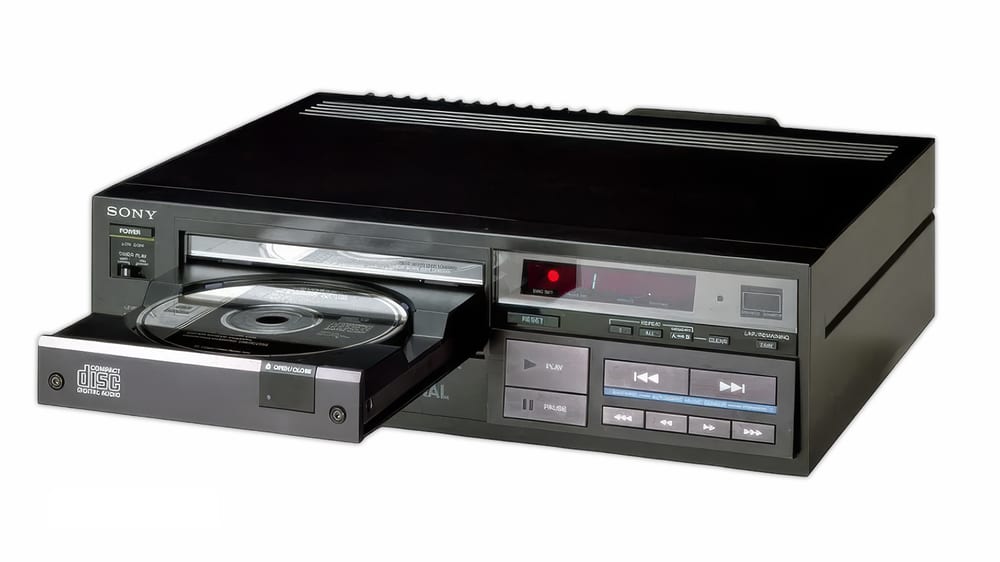
The story begins with two names: Sony and Philips. On October 1, 1982, Sony launched the CDP-101, the world's first commercially available CD player, priced at 168,000 yen in Japan. Just weeks later, Philips introduced their first player, and the format war that would determine the success of digital audio was underway. The CDP-101 used a single-bit conversion approach with early digital filtering, establishing architecture choices that would influence the industry for decades.
What distinguished those early Sony and Philips players from later generations was their direct relationship with the format's development. The engineers who created the CD standard also built the first players, meaning the implementation closely matched the theoretical ideal. Today, those original Sony and Philips players from 1982 and 1983 remain among the most highly regarded by collectors and enthusiasts who argue that first-generation digital simply sounds right.
The Emergence of High-End CD Playback
As the format matured, separate companies emerged to focus specifically on extracting the best possible sound from the CD. The recognition that digital playback quality varied enormously depending on implementation created a new category of specialized audio companies.
Wadia Digital, founded in 1988, became one of the first companies dedicated entirely to advancing high-performance digital audio reproduction. Wadia's approach emphasized sophisticated digital filtering and innovative power supply designs. Their products demonstrated that the CD transport mechanism, the error correction circuitry, and the power supply all contributed significantly to ultimate sound quality, not merely the DAC chip.
Theta Digital emerged the same year, introducing the DS Pre, the first outboard digital-to-analog converter offered to consumers. Theta's contribution to the art of digital playback extended beyond component design. Their proprietary jitter reduction circuitry, implemented in products like the Data Basic transport and DS Pro Generation series processors, established benchmarks for how digital signals should be handled before conversion. The Theta Data III transport, priced at $4,500 in the mid-1990s, became a reference for those building high-end digital systems.
The Meridian 500, 600, and later 800 series players established the British company as a leader in digital source components. Meridian's approach combined sophisticated DSP-based upsampling with carefully designed analog output stages. Their 800 Reference Series, introduced in 1997 and continuously refined through generations of updates, became one of the longest-running reference players in audiophile history. The Meridian 808 Signature Reference CD Player, hand-signed by the company's designers, represented the culmination of their digital expertise, with each generation incorporating lessons learned from professional studio applications.
The Marantz Legacy
No discussion of CD player history can proceed without extensive examination of Marantz, a company whose relationship with Philips shaped the industry for over a decade. During the 1980s, while owned by Philips, Marantz sold their well-received CD players manufactured in Japan, establishing a reputation for musical playback that continues to influence their designs today.
The Marantz CD-63, introduced in 1982, was among the first CD players sold to consumers. Its compact top-loading design set aesthetic standards that many still admire. However, it was the CD-94 that truly established Marantz as a reference-quality manufacturer. Ken Ishiwata, Marantz's legendary designer, recognized that the Philips TDA1541 chip, when properly implemented, could achieve performance far beyond its specifications. The CD-94 utilized dual TDA1541A chips in differential configuration, with carefully selected S1-grade specimens, resulting in a player that set standards for musicality.
The CD-94 remained Marantz's reference player for over ten years, and Stereophile's Sam Tellig praised it as representing the best of Philips-based design. Later versions, including the CD-94 MK2 with enhanced side panels and improved capacitors, further refined the formula. The CD-95 and CD-99 followed, incorporating the crown-marked TDA1541A S1 and double-crown TDA1541A S2 chips that represented the pinnacle of Philips' selection process.
The Marantz SA-1, introduced as their first Super Audio CD player, demonstrated how the lessons learned from CD playback could be applied to the new format. With four TDA1547 circuits per channel operating in monaural configuration, the SA-1 showed that SACD playback required attention to the same fundamental principles as CD: power supply quality, clock precision, and analog output stage design.
The Philips Family and LHH Series
Philips, as co-creator of the CD format, approached their own players with unique authority. The Philips LHH series represents perhaps the most sophisticated expression of Philips' CD technology, developed for both consumer and professional applications.
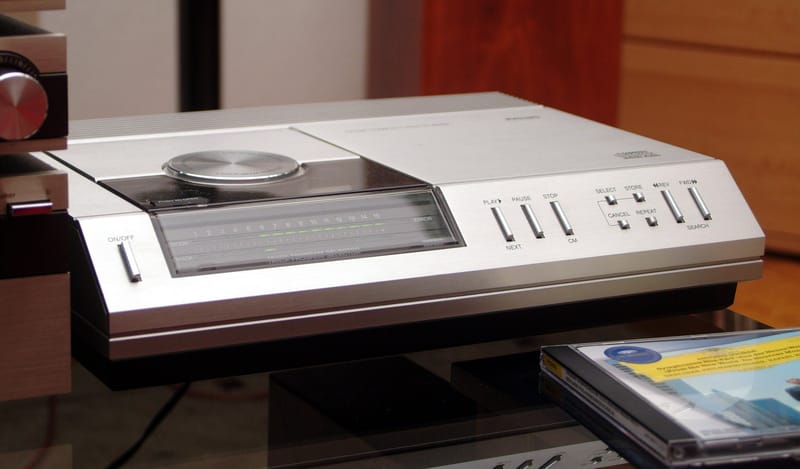
The Philips LHH1000, sold in Japan and closely related to the Marantz CD-12, utilized the finest Philips components available. For those who recognized that Marantz and Philips shared engineering resources, the LHH1000 and its siblings represented the ultimate expression of that shared technology.
The Philips LHH2000 stood apart as a professional reference player developed specifically for broadcast applications. Created in the mid-1980s with input from the Dutch broadcaster NOS, the LHH2000 was designed for reliability in studio environments where CD had become the primary source medium. Its separate transport and processor configuration allowed for optimal placement and isolation. The LHH2000 demonstrated that professional requirements for accuracy and durability could coexist with exceptional sound quality.
Philips also offered the LHH500 and LHH800 in their consumer lineup, each representing different points in the trade-off between cost and performance. The LHH500 introduced Philips' Bitstream (delta-sigma) architecture to their consumer line, previewing the direction the industry would ultimately take. However, those seeking the ultimate in Philips-based playback recognized that the multi-bit TDA1541 architecture, properly implemented, offered musical qualities that the Bitstream approach would struggle to match.
The Japanese Precision Manufacturers
Japan produced several manufacturers whose CD players achieved legendary status through obsessive attention to engineering detail.
Denon's flagship DCD-3520, introduced in 1989, represented the Japanese giant's statement in digital playback. With 20-bit conversion and Denon's proprietary technologies, the DCD-3520 weighed 17 kilograms, reflecting the substantial power supplies and transformer required for reference-quality performance. Contemporary reviews praised its combination of precision and musical engagement, establishing Denon as a serious contender in high-end digital playback.
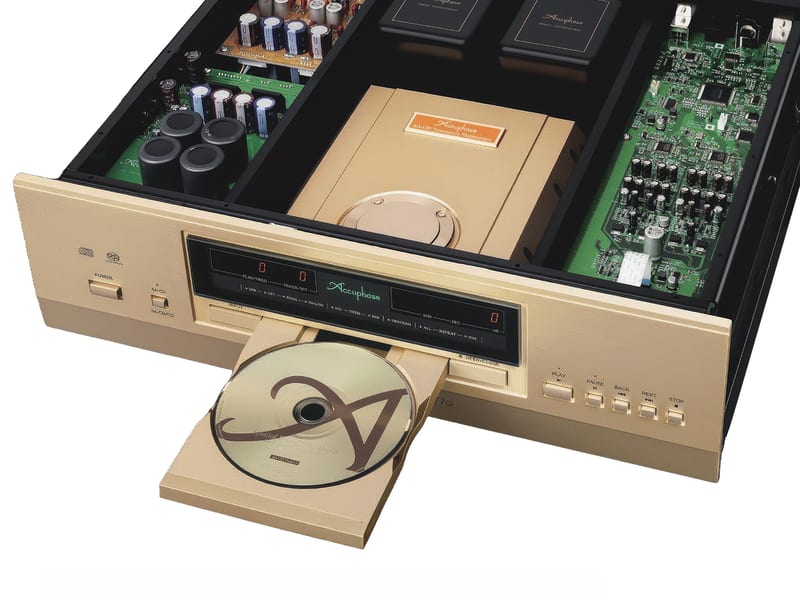
Accuphase emerged from the same philosophical tradition as McIntosh and Marantz: build no compromise components that prioritize musical truth over marketing specifications. The Accuphase DP-80 transport and DC-81 processor, introduced in 1986, established the company's approach to digital playback. The separate transport and processor configuration reflected Accuphase's recognition that digital signal processing and analog conversion demanded different engineering approaches.
The Accuphase DP-90 transport, manufactured from 1992 to 2000, became one of the most respected CD transports of its era. Its complementary DC-91 processor demonstrated how proper digital-to-analog conversion should sound. The DP-90's construction, with 8mm solid aluminum chassis capable of absorbing any vibration, set standards for physical integrity that remain relevant today.
When SACD arrived in 1998, Accuphase adapted their approach to the new format. The DP-900 transport and DC-901 processor incorporated ESS chips with Accuphase's proprietary Multiple Double Speed DSD (MDSD) processing, which utilized multiple converters within each chip to achieve superior linearity. The DP-950 and DP-1000, marking the company's 50th anniversary, represented the current expression of this philosophy, with each channel using dedicated DAC chips incorporating eight parallel converters.
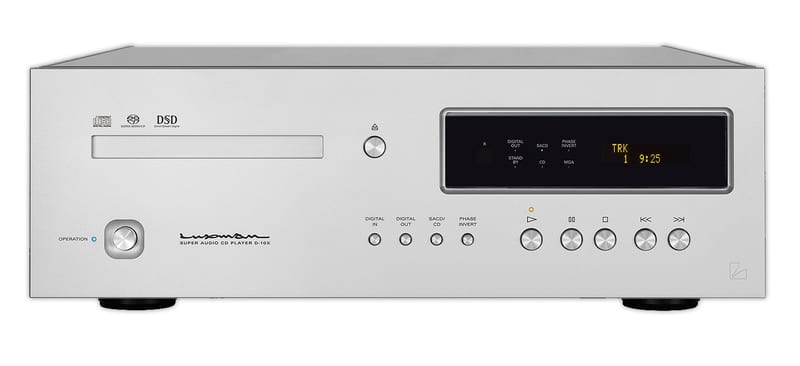
Luxman took a different approach to their flagship digital playback. Rather than defaulting to the well-established ESS or AKM chips, Luxman partnered with ROHM to develop and utilize the BD34301EKV DAC chip in their D-07X SACD player. This bespoke approach reflects Luxman's philosophy that optimal implementation requires close collaboration with semiconductor manufacturers. The D-07X operates in true dual-monaural configuration, with matched pairs of ROHM chips handling left and right channels independently. The DA-07X standalone DAC carries forward similar design principles, demonstrating that chip selection extends beyond the obvious choices.
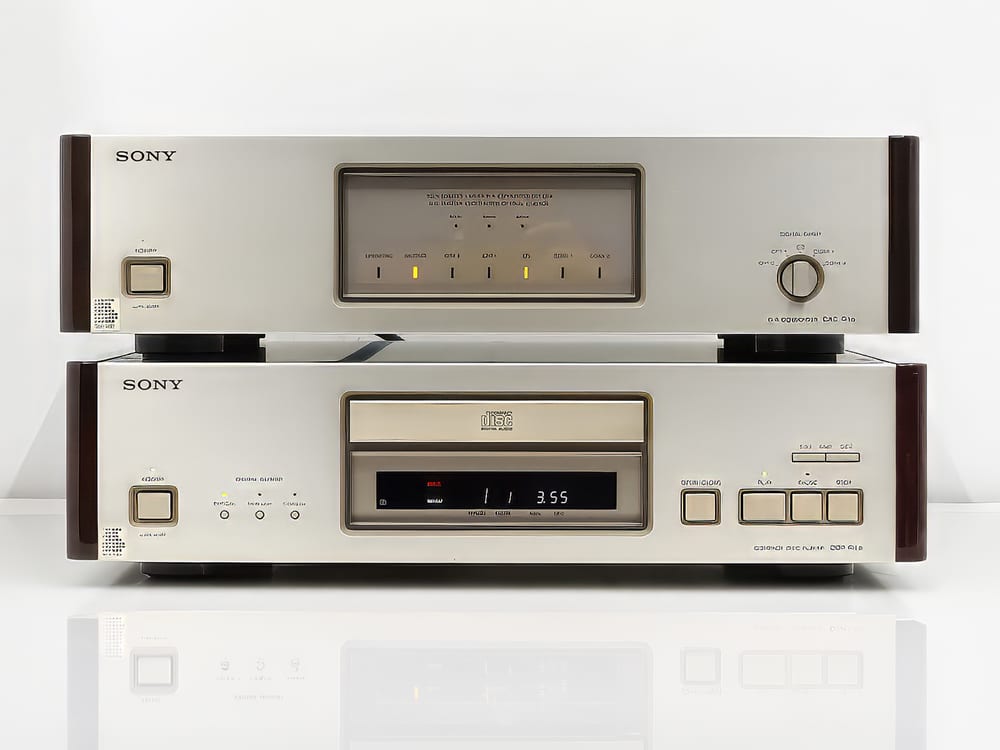
Sony, despite their role in creating the CD format, lagged in high-end consumer players until the late 1980s. The Sony CDP-X5000 represented their statement in traditional CD playback, with exceptional specifications including 0.003% THD and carefully designed analog output stages. However, it was the Sony CDP-R1 and DAS-R1 combination, released in 1987, that established Sony's reference credentials.
The Sony CDP-R1/DAS-R1 became the reference combination in Japan for many years. The separate transport and processor configuration allowed each component to be optimized for its specific function. The DAS-R1 processor achieved legendary status in recording studios and mastering facilities, where its combination of accuracy and musicality made it a preferred reference. Today, modified versions of the DAS-R1 remain in use in serious audio systems worldwide, with upgrades including low-jitter clocks and refined analog output stages.
McIntosh entered the CD market with the MCD7000 in December 1985, just three years after the format's introduction. The American manufacturer's approach emphasized build quality and system integration, with McIntosh's characteristic meters and styling distinguishing their products from Japanese competitors. The MCD7005, introduced in 1987, refined the formula, while later models like the MCD7007 and MCD7008 extended the product line through the 1990s. For McIntosh enthusiasts, these players offered seamless integration with the company's amplifiers and preamplifiers.
The Separate Transport Concept
As digital playback matured, a consensus emerged that the CD transport and the digital-to-analog converter should be separate components. This recognition followed from the understanding that each function demanded different engineering priorities.
The transport's sole responsibility became accurate data retrieval: spinning the disc at precisely the correct speed, tracking the laser across the data surface, and delivering the raw digital signal to the output without corruption. The less processing the transport performed on the signal, the better. This philosophy gave rise to transports that emphasized mechanical precision above all else.
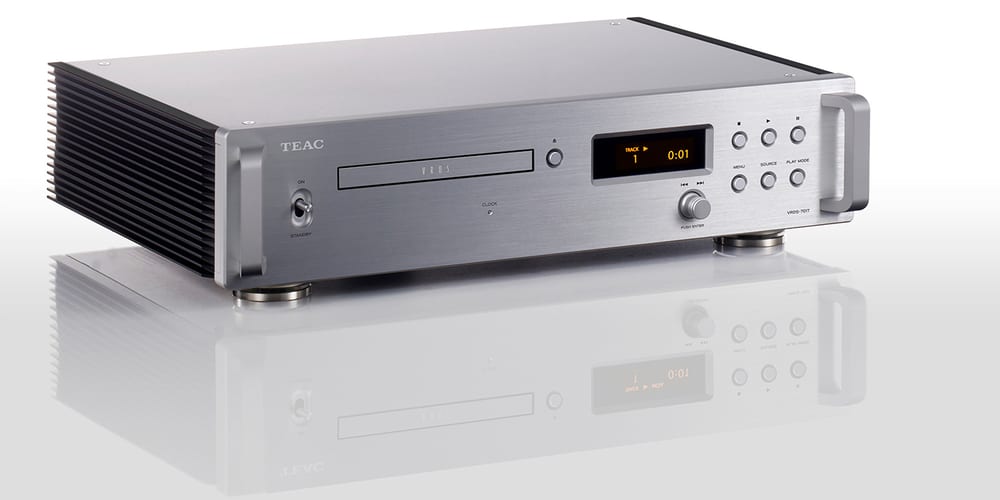
Esoteric, the luxury division of Teac, developed the VRDS (Vibration-Free Rigid Disc-Clamping System) mechanism that represents the state of the art in CD transport design. By clamping the disc to a rigid aluminum platter with extreme precision, the VRDS mechanism eliminates disc vibration that could affect data retrieval. The mechanism's mass and rigidity also help isolate the disc from external vibrations.
The Esoteric VRDS-NEO transport mechanism appears in various forms across their product range, from the more affordable models to the statement-level Grandioso P1. Each iteration refines the mechanical design further, with high-precision ball bearings, refined clamp geometries, and sophisticated motor control. The Esoteric K-01, combining the VRDS mechanism with sophisticated digital processing, became a reference for those seeking the best possible CD playback.
CEC introduced the world's first belt-drive CD transport in 1991 with the TL 1. The belt-drive approach, borrowed from turntable design, decouples the motor from the disc mechanism, reducing vibration and motor noise that could affect data retrieval. The TL 1 received immediate praise for its ability to reproduce music at the highest level, and subsequent models including the TL 0 and TL 0X refined the concept further.
The CEC TL 0, in particular, achieved legendary status among those seeking the ultimate in CD transport performance. Reviewers consistently praised its ability to present music with exceptional flow and naturalness, characteristics often attributed to analog sources. The TL 0's successors, including the TL 0 3.0, continue the belt-drive tradition, demonstrating that the concept remains relevant despite the format's age.
Theta Digital's Data series transports established another benchmark for separate transport performance. The Data Basic, Data II, and Data III transports each incorporated Theta's expertise in digital signal processing while maintaining focus on accurate data retrieval. The Theta Data II could spin both CDs and LP-sized laserdiscs, while the Data Basic focused solely on CD performance.
Studio and Broadcast Reference Players
Professional applications demanded CD players that prioritized accuracy and reliability above all else. The resulting products often achieved sonic qualities that consumer equipment struggled to match, simply because professional requirements aligned with audiophile preferences.
The Studer A725 CD player represented the Swiss manufacturer's entry into professional digital playback. Studer, known for their recording equipment used in broadcast and studio environments worldwide, approached CD playback with the same engineering philosophy applied to their tape machines. The A725 became a reference in professional circles, with its combination of precision and musical engagement demonstrating that these qualities need not conflict.
Philips developed the LHH2000 specifically for broadcast applications, recognizing that the emerging CD format required reference players in studio environments. Working with broadcasters like NOS in the Netherlands, Philips created a system where the transport and processor could be placed for optimal operation. The LHH2000's separate components allowed flexible installation in equipment racks while maintaining the isolation between digital processing and analog conversion that the highest quality playback required.
The Pacific Microsonics Model 2, while primarily known as a studio converter, represents a reference point for all digital playback discussions. Developed by engineers with deep professional audio experience, the Model 2 demonstrated that conversion accuracy and musical engagement could coexist. Its HDCD decoding capability added utility in recording studios where the encoding format was used for enhanced quality control. Reference Recordings, known for their demanding productions, used Pacific Microsonics converters extensively, cementing the company's reputation for accuracy.
The Linn Achievement
Linn Products approached CD playback from a unique perspective, recognizing that the format's potential remained unrealized in most implementations. Their first CD player, the Karik, introduced in 1993, demonstrated that significant improvements remained possible over a decade after the format's introduction.
However, it was the Linn Sondek CD12 that truly established the Scottish manufacturer as a digital reference. When introduced in 1999, the CD12 was judged by many reviewers as the best CD player ever made. Its distinctive loading mechanism, unusual industrial design, and exceptional musical performance created a product that transcended the CD format category.
The CD12 demonstrated several principles that have become accepted wisdom in high-end digital playback. The importance of power supply quality received particular attention, with Linn's approach to power treatment influencing subsequent designs throughout the industry. The CD12's ability to let music communicate rather than merely transmit information established a benchmark that subsequent Linn products, including the Akurate CD and Majik CD, worked to achieve at lower price points.
Linn's approach evolved with their Klimax DS series, which extended their digital expertise to network streaming while acknowledging that CD playback remained relevant. The recognition that digital audio excellence transcended any single format characterized Linn's mature philosophy.
The Naim Approach
Naim Audio established their digital credentials with products that reflected their broader design philosophy: systems that communicate music rather than merely reproduce it. The Naim CDS3, introduced in 2002, became their flagship CD player, with the CDS3/555PS combination offering exceptional musical performance when driven by Naim's proprietary power supply.
The Naim CDX2 and CDX, positioned below the CDS3, extended the company's digital expertise to more accessible price points. The CD555, as Naim's ultimate CD player, combined the CDS3's transport mechanism with multiple 555PS power supplies, demonstrating that the most significant improvement in Naim's digital playback came from power supply quality.
Naim's approach to digital playback emphasized the importance of system synergy, recognizing that a CD player designed to work optimally within the Naim system might underperform when integrated with competitors' components. This philosophy extended to their NAC CD5 and CD5si players, which offered entry points into Naim's approach to musical reproduction.
The German Precision Schools
German high-end manufacturers developed distinct approaches to CD playback that reflected broader cultural attitudes toward engineering precision.
Burmester, founded by Dieter Burmester, introduced belt-drive CD players that brought turntable design principles to digital reproduction. The Burmester 001 CD player, with its proprietary belt-drive system, demonstrated that the lessons learned from analog playback could inform digital design. The 001 became a reference in Burmester's product range, with its combination of technical excellence and musical engagement reflecting the company's broader philosophy.
Burmester's Reference Line incorporated the 808 CD player, a statement component that demonstrated the ultimate expression of their design approach. The company's attention to build quality, with hand-craftsmanship and premium materials, established standards that influenced competitors throughout the industry.
T+A, the German manufacturer, approached CD playback with their characteristic attention to engineering detail. The T+A PDP 3000 HV SACD player demonstrated how sophisticated digital processing could enhance format playback, with selectable digital filters allowing users to optimize for different recordings.
The American Contribution
American manufacturers brought distinctive perspectives to CD playback that often emphasized dynamics, sound-staging, and system integration.
Mark Levinson, despite being primarily known for amplifiers and preamplifiers, developed the No. 30 and No. 31 digital processors that established benchmarks for conversion quality. Their approach to power supply design, with multiple regulated supplies and extensive filtering, influenced subsequent designs throughout the industry.
Krell, known for their powerful Class A amplifiers, developed CD players that emphasized dynamics and authority. The Krell KPS series demonstrated that digital sources could deliver the same emotional impact expected from the best analog playback.
Theta Digital's Jade transport, introduced in 1997, incorporated the company's expertise in digital signal buffering. The Theta approach to jitter reduction, implemented through intensive digital signal processing, established new standards for how digital signals should be prepared before conversion.
Super Audio CD and the High-Resolution Era
The introduction of Super Audio CD in 1999 by Sony and Philips brought higher resolution audio to consumers, along with new challenges in player design. The SACD format's direct stream digital (DSD) encoding required different approaches to conversion and output stage design.
Sony's SCD-1, the first SACD player, demonstrated the format's potential while establishing design principles that subsequent players would follow. Its massive construction and top-loading mechanism reflected the importance Sony placed on the format's success. The separate transport and processor configuration, similar to approaches established in the CD era, allowed optimization of each function.
EMM Labs, founded by Ed Meitner, became a reference in SACD playback with their CDSA and XDS1 players. The EMM Labs approach combined accurate DSD conversion with musical engagement, demonstrating that technical excellence and emotional communication could coexist. The XDS1, available in standard and Signature Edition versions, became a reference for those seeking the best possible SACD playback.
The EMM Labs CDSD transport and DCC2 DAC combination established benchmarks that influenced subsequent designs throughout the industry. Modified versions of the EMM Labs components remain in use in serious audio systems worldwide, demonstrating that the fundamental design principles remain relevant.
Esoteric's approach to SACD combined their VRDS transport mechanism with sophisticated digital processing. The Esoteric K-01, K-03, and K-05 players each represented different points in the trade-off between cost and performance, with the VRDS mechanism providing the foundation for accurate disc playback.
The Accuphase DP-950 and DP-1000 demonstrated how traditional engineering excellence could be applied to the SACD format. Their MDSD processing, utilizing multiple converters in parallel, showed that the format's potential remained unrealized in most implementations.
Denon's DCD-2000AE represented a more accessible approach to SACD playback, with careful attention to both SACD and CD performance. The combination of Denon's engineering expertise and premium components established benchmarks for the format at moderate prices.
The Current State and Ongoing Development
Modern CD and SACD players continue to evolve, incorporating network streaming capabilities while maintaining focus on disc playback. The recognition that disc playback remains relevant, particularly for those with extensive CD and SACD collections, has kept the category vital despite competition from streaming services.
Manufacturers like Accuphase, Esoteric, and Luxman continue to develop new players that push the format's boundaries while acknowledging its mature status. The combination of disc playback with network streaming, as seen in products like the Esoteric K-01 and Accuphase DP-1000, reflects the reality that contemporary systems must accommodate multiple digital sources.
The separates concept has returned in some modern implementations, with transports and DACs again being sold as separate components. The recognition that the best performance requires dedicated components, each optimized for its specific function, reflects lessons learned over four decades of digital audio development.
The Lesson of Implementation
Throughout the history of CD and SACD playback, one principle emerges repeatedly: implementation matters more than architecture. The same chip, whether TDA1541 or ESS9038, can produce vastly different results depending on surrounding circuitry.
Power supply quality, clock precision, analog output stage design, mechanical isolation, and physical construction all contribute to ultimate performance. Manufacturers who recognized this principle — whether Marantz with their TDA1541-based players, Accuphase with their ESS-equipped converters, or Linn with their CD12 — consistently produced players that set benchmarks for musical communication.
The studio and broadcast reference players, developed for professional applications where accuracy was paramount, often achieved musical qualities that consumer equipment struggled to match. The alignment between professional requirements and audiophile preferences reflects the fundamental truth that accurate reproduction and musical engagement need not conflict.
As the CD format enters its fifth decade, its legacy continues through the players that remain in use and the lessons they established. The principles of careful implementation, attention to supporting circuitry, and focus on musical communication over specifications will inform digital audio design for generations to come. Whether spinning CDs in a vintage Marantz CD-94 or exploring SACDs in a modern Accuphase DP-1000, the goal remains unchanged: to let music communicate with the clarity, dynamics, and emotional impact that the original performance possessed.
Capturing every meaningful contribution within the audio industry is neither practical nor necessary; the companies, designers, and products highlighted here are representative rather than exhaustive, standing in for a far broader body of work that collectively shapes the craft and its ongoing evolution.
This is the second article in the Hi-Fi History series. Part 1 covers Milestones in High-Fidelity Audio from the 1950s to the present day.
Questions about CD & SACD History
What was the first commercially available CD player? +
The Sony CDP-101, launched on October 1, 1982, was the world's first commercially available CD player, priced at 168,000 yen in Japan. Philips introduced their first player just weeks later. These early players were built by the engineers who co-developed the CD standard itself, and they remain highly regarded by collectors who argue that first-generation digital implementation sounds uniquely right.
What made those original players special was their direct relationship with the format's development. The implementation closely matched the theoretical ideal, because the same people who defined the standard also designed the hardware. This principle — that understanding the format at a fundamental level produces better results — has been validated repeatedly throughout the history of digital audio.
Why did high-end manufacturers separate CD transports from DACs? +
As digital playback matured, manufacturers recognized that the transport (responsible for accurate data retrieval from the disc) and the DAC (responsible for digital-to-analog conversion) demanded fundamentally different engineering priorities. Separating them allowed each component to be optimized independently.
The transport requires mechanical precision, vibration isolation, and clean power to the laser assembly. The DAC requires ultra-low-jitter clock signals, pristine power supply regulation, and a carefully designed analog output stage. Companies like Esoteric with their VRDS mechanism, Accuphase with their DP-90/DC-91 combination, and Theta Digital with their Data series transports pioneered this approach and demonstrated its sonic advantages.
What is the VRDS transport mechanism? +
VRDS stands for Vibration-Free Rigid Disc-Clamping System, a transport mechanism developed by Esoteric, the luxury division of Teac. It clamps the CD to a rigid aluminum platter with extreme precision, eliminating disc vibration that could affect data retrieval. The mechanism's mass and rigidity also isolate the disc from external vibrations.
The VRDS-NEO mechanism appears across Esoteric's product range, from their more affordable models to the statement-level Grandioso P1. Each iteration refines the mechanical design with high-precision ball bearings, refined clamp geometries, and sophisticated motor control. It is widely considered the state of the art in CD transport design.
Is SACD better than CD, and does it still matter? +
SACD offers genuine improvements in resolution through its Direct Stream Digital (DSD) encoding, which uses a fundamentally different approach to digital audio than CD's PCM format. However, as with CD, implementation matters more than format. A well-implemented CD player can outperform a poorly implemented SACD player musically.
Manufacturers like Accuphase, Esoteric, EMM Labs, and Luxman continue developing SACD players, and the format remains relevant for listeners with extensive disc collections. The lessons established by SACD development — particularly around DSD conversion and high-resolution output stage design — have influenced digital audio broadly, even as streaming grows to dominate casual listening.