


"As long as we are concerned with the realistic reproduction of sound, the original sound must stand as the criterion by which the reproduction is judged!"
In a world where genuine neutrality often carries a stratospheric price, Lipinski Sound monitors stand apart as an extraordinary reality check. Whether passive or active, every model delivers master-grade transparency, timbral fidelity, and spatial realism that normally demand five-figure sums, yet somehow, they do not. These are monitors you buy once and keep forever because there is simply nowhere left to upgrade.
The Designer: Andrew Lipinski
The brain behind them, Andrew Lipinski (Andrzej Lipiński), is not just another audio designer. He is a rare combination of musician, Tonmeister, and recording engineer who designs from the console outward. A Warsaw-born graduate of the Academy of Music, where he finished summa cum laude in sound engineering, Lipinski built his reputation on high-resolution recordings of Górecki, Kilar, Penderecki, and other great names of modern European music.
His hearing was officially certified by the U.S. National Bureau of Standards, where he achieved a perfect phonographic evaluation score. Fewer than one in a thousand reach that level, and he surpassed several respected industry icons. Out of frustration with monitors that blurred the micro-dynamics and spatial depth he spent his career capturing, Lipinski began designing his own. By 2003, working from his Bethesda, Maryland studio, Lipinski Sound was born as a quest for truth in sound rather than a commercial project.
Engineered for Precision
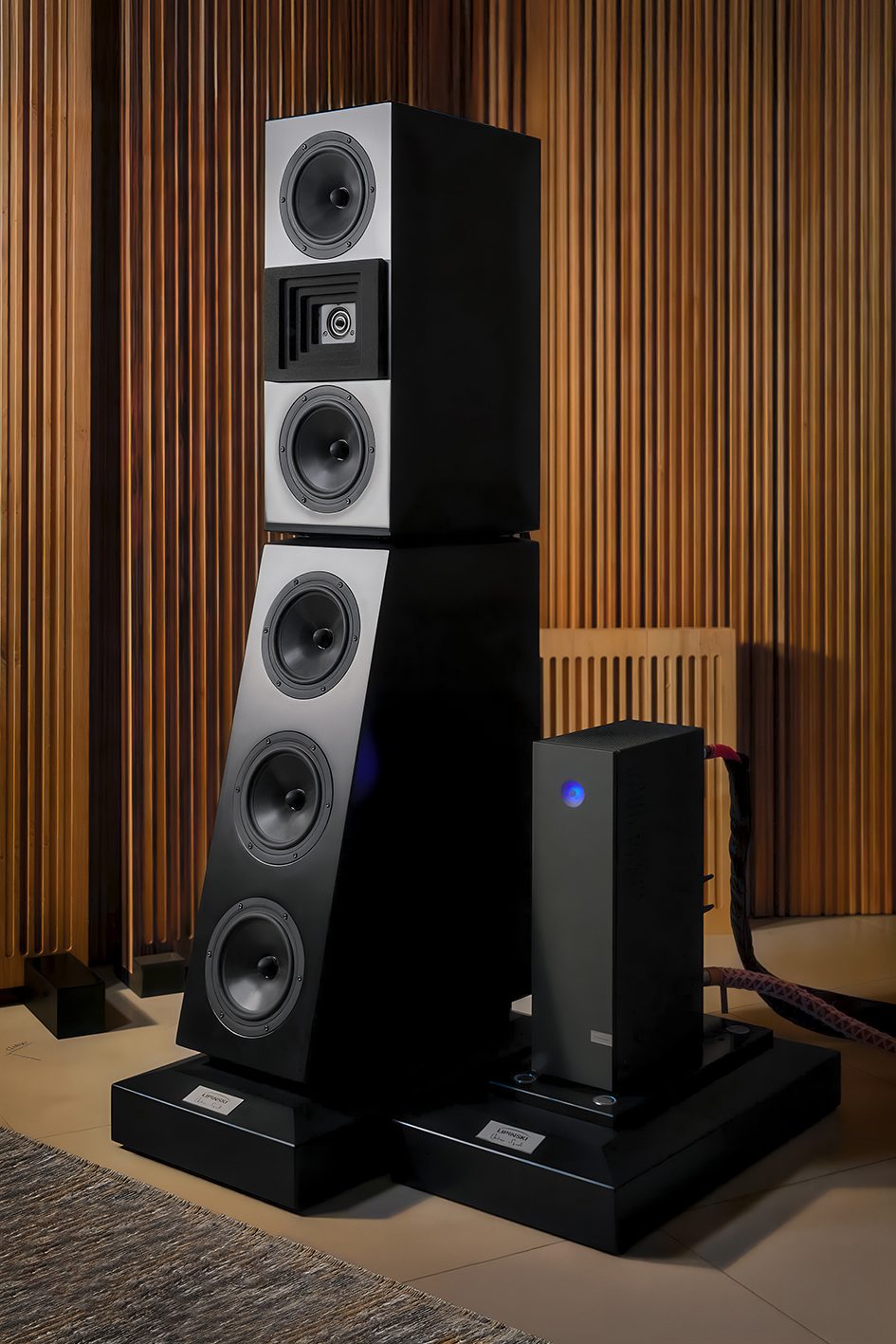
The early L-707 quickly gained a reputation among engineers. This sealed MTM design used proprietary glass-fiber woofers and a carefully voiced ring-radiator tweeter, refined through extensive anechoic testing. Lipinski's design philosophy is simple and uncompromising: no tweeter grilles to avoid comb filtering, no integrated circuits, and no sonic shortcuts.
In active versions, the Class A Lipinski Square™ amplification topology employs discrete, low-feedback op-amps with no capacitors, coils or resistors in the direct signal path. Each unit is built to strict mechanical and electrical tolerances, resulting in frequency linearity within ±0.5 dB, extremely low distortion, and superb phase accuracy.
The result is sound that does not editorialize. Dynamics unfold naturally, timbres stay pure, and transient impact is unaltered. The soundstage is holographic and precise, with imaging that reveals the exact position, depth, and texture of every instrument. Resolution extends to the finest details without ever becoming harsh or fatiguing - clarity and musicality in perfect balance.
Our Experience
"As the founder of love cable and Tonmeister, having spent decades voicing and evaluating truly expensive systems, I can say this with certainty: the very first notes from a pair of Lipinski monitors told me everything I needed to know. Within seconds it was clear that this was not about image, luxury, or status, but about music itself. The emotional honesty, timing, and coherence were on a level that even far costlier systems often fail to achieve. What struck me most was the absence of any coloration or artifice. No fireworks, no smoky warmth, just the real thing. That moment changed the way I think about what 'reference quality' really means."
- Noël Coquet, Tonmeister and official Lipinski Sound representative
Trusted by the Finest Ears in the Industry
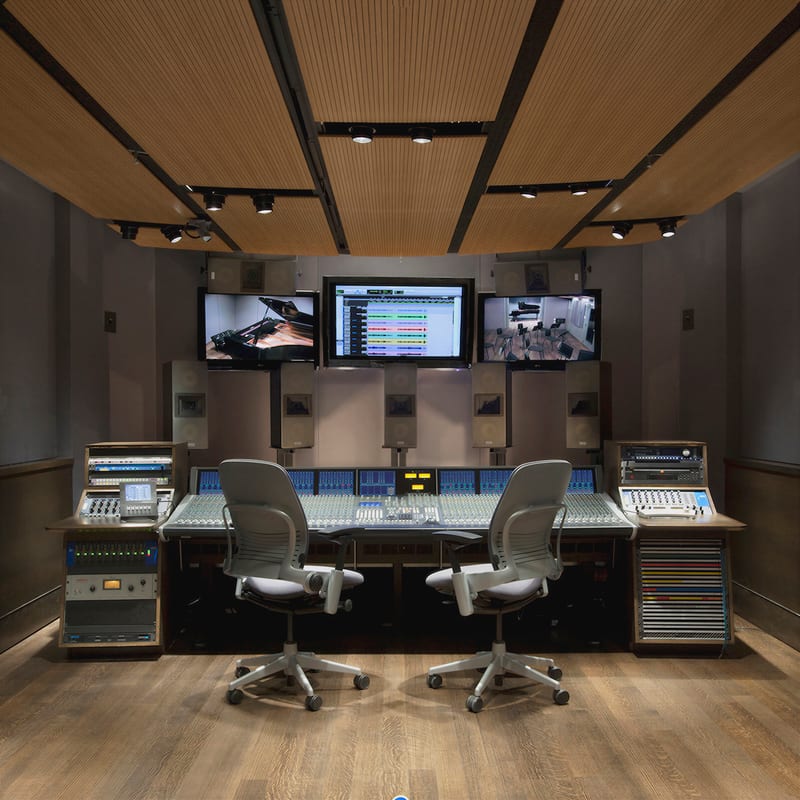
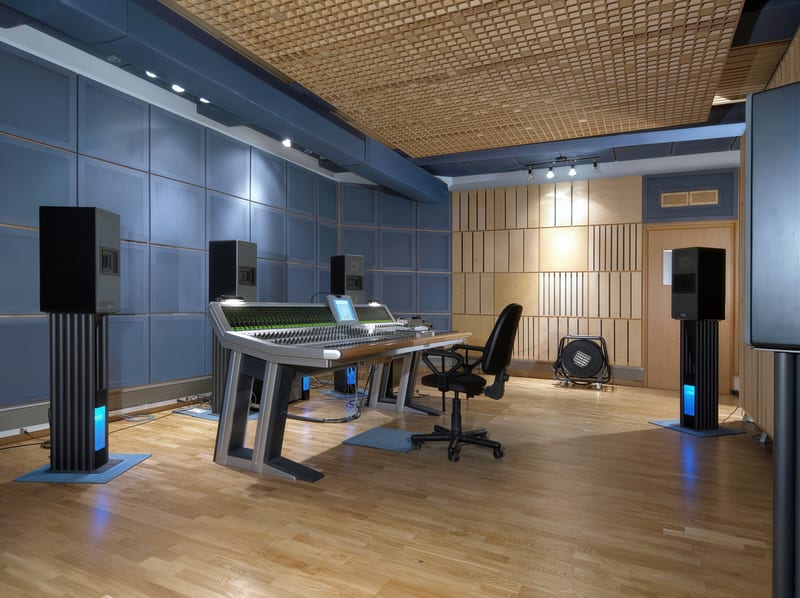
Lipinski monitors have become trusted tools for some of the most demanding ears in professional audio. Engineers and producers who have worked with Steely Dan, Prince (who owned the Lipinski Signature, located in the famous Vault), Chick Corea, Beck, Dire Straits, Miles Davis, and Sheryl Crow rely on them every day.
They are found in Universal Music Mastering, Warner Brothers Mastering Burbank, Dolby Laboratories in Tokyo and Stockholm, and Mobile Fidelity Sound Lab, which uses them exclusively for audiophile reissues. Even the Sibelius Center in Finland selected Lipinski after direct comparisons with the biggest names in monitoring, including ATC, PMC, and B&W.
Mastering legends such as Doug Sax, Bob Ludwig, and Alan Silverman have praised their low fatigue, tonal integrity, and astonishing translation accuracy. Many describe their imaging and coherence as so natural that you forget there are speakers in the room - a truly black background against which every detail emerges with startling clarity and natural decay.
From Studio Reference to Listening Icon
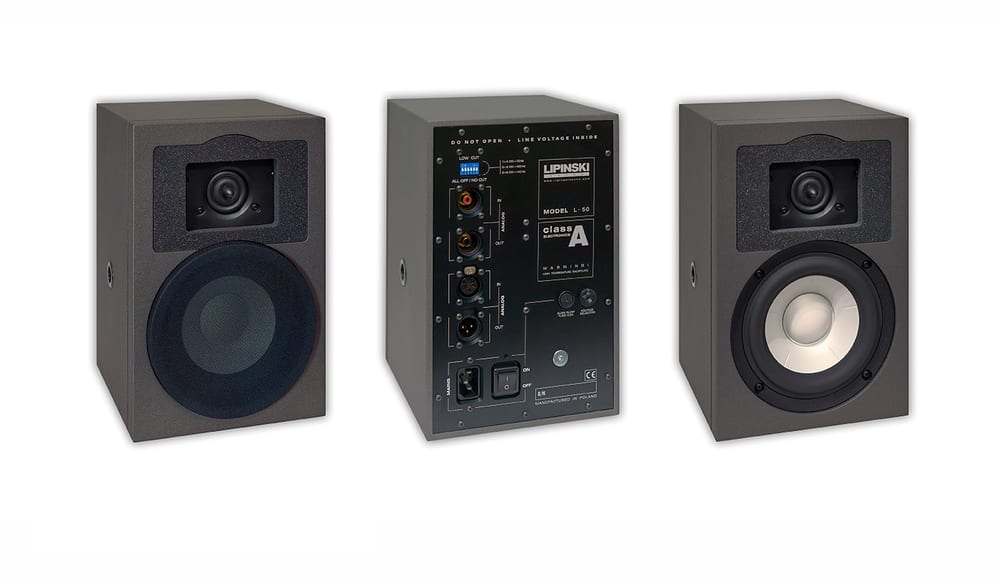
After winning the trust of mastering engineers, Lipinski monitors are now finding a place in high-end listening rooms. Models like the L-70SE powered monitor, L-707SE Signature, and L-50 Class A mini-monitor bring the same studio-grade precision and sealed-box speed into the home.
Their balance and transient control allow them to disappear completely, leaving only the performance suspended in space. The presentation is neutral yet deeply musical - pace, rhythm, and timing (PRaT) are conveyed with an effortlessness that makes extended listening sessions feel natural rather than analytical. Bass is tight and extended without bloat, midrange is lush yet transparent, and treble has the right amount of air and sparkle without sibilance or harshness.
Real Engineering, Unreal Value
In a market where price often defines expectation, Lipinski Sound is a welcome exception. These monitors deliver the tonal accuracy, harmonic purity, and imaging depth of systems costing many times more, and they do so without marketing showmanship or unnecessary luxury. Every detail exists for sonic purpose, not for decoration.
For those who care more about truth than trends, and for whom music is the only standard that matters, Lipinski Sound remains one of the few genuine bargains in all of high-end audio.
Questions about Lipinski Sound
What makes Lipinski Sound monitors different from other studio monitors? +
Lipinski Sound monitors are engineered with a singular focus on signal integrity and sonic truth. Every design decision is driven by measurable and audible accuracy. The monitors feature no tweeter grilles (eliminating comb filtering effects), no unnecessary integrated circuitry in the signal path, and carefully implemented discrete Class A amplification in active models.
A defining aspect is exceptionally tight driver matching to within ±0.5 dB. This precision directly contributes to transparency, timbral fidelity, and spatial coherence. Whether passive or active, Lipinski monitors reproduce a stable, believable soundstage with precise localization and natural harmonic structure.
The outcome is frequency linearity within ±0.5 dB, extremely low distortion, and phase accuracy that preserves the full spatial and timbral integrity of the original recording. These monitors do not editorialize - they reveal.
Where can I buy Lipinski Sound monitors? +
Lipinski Sound monitors are primarily available through direct sales, ensuring controlled product delivery and proper system integration.
In the Netherlands, Belgium, Germany, and France, distribution and client support are handled by love cable / Tonmeister, offering consultation, system matching, and comprehensive after-sales service. In Italy, VDM Sound Group provides tailored guidance and integration expertise.
For international sales: Noël Coquet - +31 6 30 48 73 38 - [email protected]. For the United States: Lukas Lipinski - +1 (917) 209-9269 - [email protected].
Which studios and engineers use Lipinski monitors? +
Lipinski monitors are established reference tools in major mastering, recording, and post-production environments worldwide. Universal Music Mastering Hollywood, Warner Brothers Mastering Burbank, Dolby Laboratories in Tokyo and Stockholm, and Mobile Fidelity Sound Lab (which uses them exclusively for audiophile reissues) all rely on Lipinski monitoring systems.
Engineers associated with Steely Dan, Prince (who owned the Lipinski Signature in the famous Vault), Chick Corea, Beck, Dire Straits, Miles Davis, and Sheryl Crow rely on them daily. The brand is trusted by professionals spanning legacy analog recordings to modern digital productions.
The Sibelius Academy in Finland selected Lipinski after direct comparison with established manufacturers. Increasingly, these monitors appear in ultra-high-end audiophile systems and private listening rooms worldwide - functioning as uncompromising reference transducers valued for reproducing recordings without editorializing.
What Lipinski Sound models are available for home listening? +
The L-50, the compact entry point, operates as a full Class A active monitor delivering performance well beyond its size and price. A dedicated powered subwoofer is in development, transforming it into a full-range 3-way reference system.
The core of the lineup is the L-707SE, expandable in passive form to Grand or Signature configurations. The active L-700SE system mirrors this modularity with full Class A amplification across all variants.
All models feature sealed-box loading for superior transient response and phase behavior, extremely tight tolerances, and a signal path engineered for maximum transparency. While established in professional environments, they are increasingly found in high-end audiophile systems worldwide.