


"The goal is proper bridging, not matching."
Understanding Impedance
Impedance is the opposition a circuit presents to alternating current. It combines resistance with the frequency-dependent effects of capacitance and inductance. In audio, impedance governs how signals transfer between components and how cables interact with the systems they connect.
The concept is often misunderstood. Impedance matching, which works in high-frequency RF applications, is not the goal in audio. Audio operates in a voltage-transfer mode where the objective is to deliver signal from a source to a load without loss or distortion.
Understanding this distinction resolves much confusion about impedance in audio cables. The goal is proper bridging, not matching. This article extends the treatment in Signal Integrity, focusing on the practical numbers and edge cases that arise across different kinds of audio interface.
Voltage Transfer vs Power Transfer
Audio circuits operate as voltage-transfer systems. The objective is to deliver a voltage from source to destination with minimal loss and flat frequency response. Power transfer, where impedance matching maximizes power delivery, applies to different applications.
In a voltage-transfer system, the ideal configuration is a low source impedance driving a high load impedance. The source drives the load without being loaded down. Signal voltage arrives at the destination with minimal loss across the frequency range.
This configuration appears in line-level audio everywhere. Source outputs present low impedance, typically under 200 Ω. Destination inputs present high impedance, typically 10 kΩ or more. The ratio between them, the bridging ratio, determines how cleanly the signal transfers.
The Bridging Ratio
The bridging ratio describes the relationship between source and load impedance. In a properly designed system, load impedance is at least ten times source impedance. For demanding applications, one hundred times or higher is preferable.
When the bridging ratio is adequate, the signal divides between source and load predictably. The load receives most of the signal voltage. Frequency response remains flat because neither impedance is changing with frequency in a way that affects the division.
When the bridging ratio is too low, the source and load act as a voltage divider with frequency dependence. If source impedance rises at high frequencies, and load impedance is reactive, the result is treble roll-off or boost with accompanying phase shift. This distortion is embedded at the interface and cannot be corrected downstream.
Cable Impedance in Audio Context
Cables introduce their own impedance into the signal path. The primary parameters are capacitance, inductance, and resistance. Each affects signal transfer differently.
Capacitance creates a low-pass filter with source impedance. As frequency increases, capacitive reactance decreases, shunting high frequencies to ground. A source impedance of 1 kΩ driving 200 pF per metre over 5 metres places the −3 dB point near 160 kHz, typically acceptable. Higher source impedance or longer runs push the corner lower.
Inductance affects transient accuracy and interacts with load impedance. While typically small in interconnects, inductance can matter in longer runs or with certain cable geometries.
Resistance causes voltage loss, usually negligible at line level. The exception is very high resistance in long cable runs or from degraded connectors.
For analog interconnects, the goal is low capacitance, low inductance, and low resistance. Geometry and materials determine these values.
Loudspeaker Cable Impedance
Loudspeaker cables operate in a different regime. The source is a power amplifier with very low output impedance, often under 1 Ω. The load is a loudspeaker whose impedance varies dramatically with frequency, typically from 4 Ω to 20 Ω or higher.
Cable resistance directly affects damping factor. Amplifier output impedance divided into loudspeaker impedance gives the damping factor. Cable resistance adds directly to amplifier output impedance, reducing damping. Longer runs and smaller conductors increase this effect.
Cable inductance becomes significant at high frequencies in speaker cables. Loudspeaker impedance includes reactive components that interact with cable inductance. Closer conductor spacing reduces inductance but must be balanced against capacitance effects.
The practical guideline is simple: use the shortest practical length with conductors appropriately sized for the distance. For runs exceeding 4 metres, increase wire gauge to maintain damping factor.
Phono Cartridge Loading
Phono cartridges present unique impedance challenges. Moving-coil cartridges produce very low output voltage and present an inductive source impedance. The cartridge's inductance combined with cable capacitance creates resonance that affects frequency response.
Manufacturers specify optimal load capacitance for each cartridge. This includes tonearm wiring, cartridge leads, and interconnect cable. Exceeding the specified load capacitance shifts the resonance peak lower in frequency, altering tonal balance and transient accuracy.
Moving-magnet cartridges are less sensitive to load capacitance but still benefit from specified loading. The specified resistance and capacitance values optimize performance for the cartridge's design parameters.
Digital Interconnect Impedance
Digital interconnects require specific characteristic impedance matching. The goal is to prevent signal reflections that corrupt the waveform and introduce jitter.
S/PDIF requires 75 Ω characteristic impedance. Deviation causes reflections that close the eye pattern, reducing timing margins and potentially causing bit errors. The cable, connectors, and termination must all maintain 75 Ω impedance.
AES/EBU uses 110 Ω balanced transmission. The differential impedance must remain consistent throughout the cable and connector chain. Any discontinuity creates reflections.
USB audio operates at 90 Ω differential impedance. While USB includes error correction that masks some impedance variation, consistent impedance improves reliability and reduces jitter.
Digital clock cables use 50 Ω or 75 Ω characteristic impedance depending on the application, and the two follow different engineering lineages rather than representing old versus new. 75 Ω clock cables share the impedance of S/PDIF and word-clock distribution - the broadcast and audio lineage, optimized for low attenuation - which simplifies system design where word clock and S/PDIF travel together. 50 Ω clock cables follow the RF and instrumentation lineage used for 10 MHz reference distribution. The correct choice is dictated by the equipment's clock interface, not by era. Both impedance values require consistent termination and short cable runs to minimize jitter from reflections. For a full treatment of clock impedance and why fast edges behave as transmission lines, see Word Clock Impedance.
Master Clock: The 50 Ohm Exception
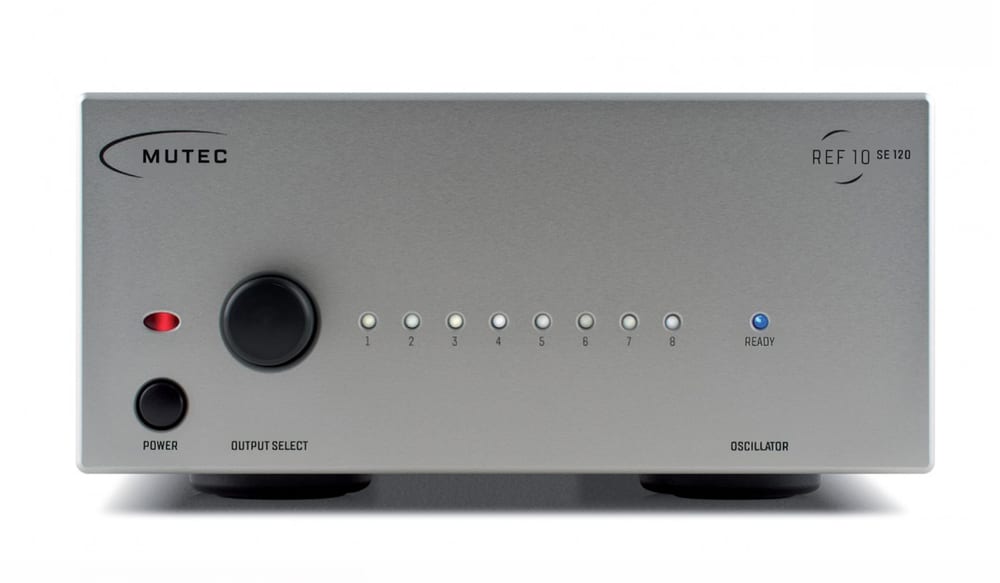
The master clock represents an exception in digital audio design, specifically utilizing 50 Ω characteristic impedance rather than the more common 75 Ω standard. This deviation stems from the master clock's fundamental role as a timing reference distributed to multiple destination devices simultaneously. The lower 50 Ω impedance allows for greater signal drive capability and improved fan-out performance when splitting the clock signal to multiple receivers.
Additionally, 50 Ω systems historically offered more robust jitter performance in early digital audio equipment, where clock distribution circuits were optimized for this impedance standard. Modern master clocks maintain this impedance convention to ensure backward compatibility with legacy digital audio equipment while providing the cleanest possible timing reference for high-fidelity audio playback systems.
The practical consequence is straightforward: a 50 Ω clock cable is not interchangeable with a 75 Ω S/PDIF cable, and a 75 Ω clock cable is not automatically a drop-in replacement for a 50 Ω reference distribution. The end-to-end characteristic impedance of the clock chain must remain consistent with the equipment's specification.
Questions about Impedance
Does cable impedance matter for analog interconnects? +
For analog interconnects, characteristic impedance matching is not the requirement it is for digital cables. The goal is low capacitance, low inductance, and consistent resistance. These parameters affect frequency response and transient accuracy more than characteristic impedance matching.
However, consistent geometry matters. Irregular geometry creates inconsistent capacitance along the cable length. This produces frequency-dependent behavior that affects signal transfer. Quality cable design maintains geometry consistently throughout the length.
How does cable capacitance affect phono playback? +
Cable capacitance combines with phono cartridge inductance to create resonance. The resonance frequency and Q factor affect high-frequency response and transient accuracy. Exceeding the manufacturer's specified load capacitance shifts resonance lower, typically adding brightness that does not match the cartridge's intended character.
Keep total load capacitance within specification by selecting cables with appropriate capacitance and accounting for tonearm wiring capacitance in the total.
What damping factor should I aim for? +
Damping factor describes how well an amplifier controls loudspeaker driver motion. It is calculated as loudspeaker impedance divided by amplifier output impedance plus cable resistance. Higher numbers indicate better control.
A damping factor above 20 is generally adequate for most listening. Below 10, the bass may sound looser or less controlled. Cable resistance directly reduces damping factor, so shorter runs and larger conductors help maintain control. For most domestic installations with runs under 3 metres, standard speaker cables provide adequate damping. Longer runs require attention to conductor size.
Why does the master clock use 50 Ω instead of 75 Ω? +
The master clock's role as a timing reference distributed to multiple destination devices simultaneously favours 50 Ω characteristic impedance. The lower impedance allows for greater signal drive capability and improved fan-out performance when splitting the clock signal to multiple receivers.
Additionally, 50 Ω systems historically offered more robust jitter performance in early digital audio equipment, where clock distribution circuits were optimized for this impedance standard. Modern master clocks maintain this convention for backward compatibility and because it remains the cleanest reference for distribution.