


The story of the digital-to-analog converter begins not as a separate component, but as an afterthought embedded within the first Compact Disc players of 1982. When Philips and Sony collaborated to bring the CD to market, the DAC was considered merely a functional necessity, a bridge between the digital data stored on disc and the analog signal required by amplifiers and speakers. The original Audio CD standard called for 16-bit resolution at 44.1kHz sampling rate, which provided approximately 65,000 possible amplitude steps per sample. While this represented a theoretical dynamic range of 96dB, the early implementations fell considerably short of this ideal.
The first generation of CD players employed relatively simple DAC architectures, most notably the 14-bit Philips TDA1540, which used noise shaping to achieve effective 16-bit performance. These early converters suffered from numerous limitations: component speed constraints, clock instability, and resistor network precision that could not keep pace with the theoretical demands of 16-bit audio. The consequence was a sound that audiophiles immediately criticized for lacking the warmth and naturalness of vinyl. Jitter, the irregular timing of digital data transmission, caused overlapping musical information in high frequencies, resulting in narrowed soundstages and a harsh, clinical character that many dismissed as "digital sound."
Ken Ishiwata at Marantz recognized these limitations early and began optimizing the Philips CD100 player as early as 1982. The result was the Marantz CD-45, which featured a revamped power supply and improved conversion stage. The CD-63 later made Marantz a benchmark in CD player design, demonstrating that the same basic chip technology could yield dramatically different results depending on implementation. This philosophy, that execution matters more than specifications, would become a recurring theme in high-end digital audio.
The Emergence of Dedicated Converters
The 1990s marked a decisive turning point as a niche market for external converters emerged. Rather than replacing CD players entirely, music lovers discovered that they could use their existing digital outputs while entrusting the conversion process to dedicated external DACs. This approach recognized a fundamental truth: the quality of digital-to-analog conversion depended not only on the conversion chip itself but on the entire surrounding circuitry.
Into this emerging market came products that would become legendary. The Meridian 518 and 628 offered sophisticated upsampling algorithms that moved digital images further away from the sampling frequency, reducing the demands on analog output filters. Wadia pioneered the use of digital filtering and innovative power supply designs that addressed one of the fundamental weaknesses of early CD playback. The Theta Digital series brought professional studio techniques into the home environment, with designs that prioritized clock stability and analog output stage quality.
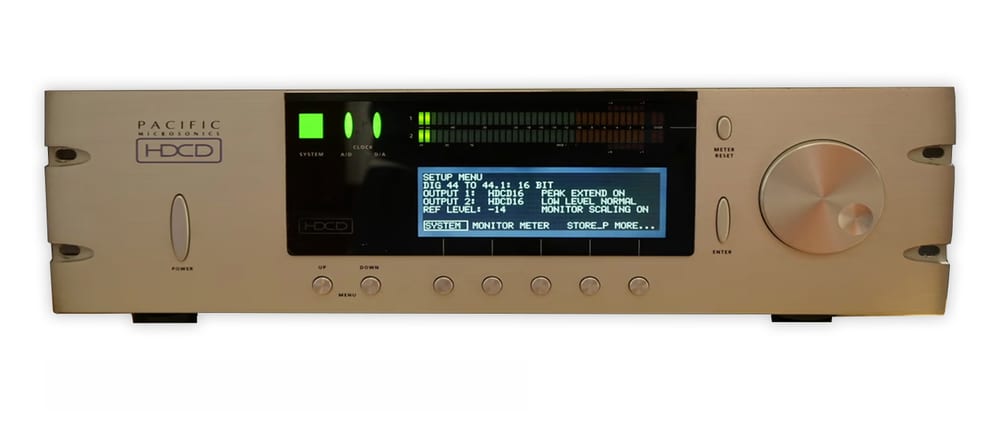
Yet it was the Pacific Microsonics Model 2 that represented perhaps the most significant reference point of this era. Developed by Pacific Microsonics, a company founded by engineers with deep roots in professional audio, the Model 2 was originally designed as a studio reference converter. Its significance extended beyond its professional applications, however, as it demonstrated what was possible when conversion precision was elevated to the highest priority.
The Model 2 utilized a sophisticated multi-bit architecture that prioritized linearity and noise performance above all other considerations. Unlike the increasingly popular delta-sigma converters that would dominate the subsequent decades, the Model 2 took the approach of direct conversion, processing digital data with minimal intermediate stages. The result was a converter that, by modern standards, offered modest resolution by today's measures (24-bit/96kHz maximum), yet set benchmarks for transparency and musical coherence that many argue have not been surpassed.
What distinguished the Model 2 was not merely its conversion architecture but its holistic approach to digital-to-analog conversion. The clock circuit received particular attention, recognizing that timing accuracy at the conversion stage was as important as the conversion itself. The power supply design acknowledged that clean, stable voltage would affect the smallest details in the reconstruction process. The analog output stage was designed with the same care expected of a dedicated linestage amplifier.
The Model 2 also incorporated HDCD (High Definition Compatible Digital) decoding, which offered enhanced resolution from specially encoded discs. While HDCD would never achieve widespread adoption, the technology demonstrated that there was considerable musical information beyond the standard CD format that could be extracted with appropriate converter design. Reference Recordings, a label known for their demanding recordings, used Pacific Microsonics converters extensively for their productions, further cementing the Model 2's reputation as a reference-standard converter.
Understanding DAC Architectures
The world of digital-to-analog conversion divides broadly into two camps: resistor ladder architectures and delta-sigma modulation. Understanding the fundamental differences between these approaches illuminates much about why different converters sound different, and why the same conversion chip can yield such varied results in different implementations.
The R-2R Ladder Approach
The resistor ladder, often called R-2R or binary-weighted architecture, represents the more direct approach to digital-to-analog conversion. A network of precisely matched resistors, arranged in a ladder configuration with values of R and 2R, converts digital codes directly into corresponding voltage levels. Each bit in the digital word controls a switch that either includes or excludes its corresponding resistor from the network, with the combined effect determining the output voltage.
The elegance of the R-2R ladder lies in its conceptual simplicity and its direct relationship between digital code and analog voltage. There are no intermediate stages, no modulation processes, no oversampling filters. The digital word is converted to an analog voltage in a single parallel process that preserves the exact relationship between the digital data and the resulting waveform. This direct conversion approach tends to produce a sound that many describe as more natural, more organic, more "analog-like" in its presentation of musical information.
However, the R-2R ladder places extraordinary demands on component precision. A 16-bit DAC requires resistor matching to better than 0.0015% tolerance to achieve true 16-bit linearity. As resolution increases to 20-bit or 24-bit, these demands become even more stringent. Temperature drift, current-induced heating, and the non-ideal behavior of electronic switches all introduce errors that manifest as distortion or noise in the output signal.
The classic implementation of the R-2R ladder appears in the Philips TDA1541 series, particularly the highly regarded TDA1541A. This chip, used extensively in Marantz CD players from the mid-1980s through the 1990s, demonstrated that with careful selection and matching, the R-2R architecture could achieve excellent performance. The TDA1541A S1 and S2 variants, identified by their crown and double-crown markings respectively, represented the highest-performing examples, selected from production for superior performance specifications.
Philips complemented the TDA1541 with their Dynamic Element Matching (DEM) circuit technology, which cycled through multiple current sources to reduce conversion errors by factors of four to five. This technique addressed one of the fundamental weaknesses of multi-bit conversion by ensuring that any errors were spread across the audio frequency range rather than concentrated at specific frequencies.
Modern R-2R implementations include offerings from MSB Technology, which developed their proprietary discrete ladder DAC modules using sign-magnitude architecture. The MSB approach utilizes a fully balanced design implemented with discrete components rather than integrated circuits, allowing for optimization of each element while maintaining the direct conversion benefits of the ladder approach. Their Hybrid and Prime DAC modules represent current-state-of-the-art implementations of R-2R principles.
PS Audio's DirectStream DAC took a different approach to ladder architecture, implementing a discrete resistor-based ladder DAC with no oversampling and no digital filtering. This non-oversampling (NOS) philosophy holds that any digital processing, however sophisticated, inevitably alters the original signal in ways that reduce musical information. The DirectStream instead uses brute-force conversion at the native sample rate, allowing the analog output stage to perform any necessary filtering.
The Delta-Sigma Alternative
Delta-sigma modulation represents the dominant architecture in modern DAC chips, and for good reason: it is more manufacturable, more stable, and more easily scaled to higher resolutions than resistor ladder approaches. Understanding delta-sigma conversion requires accepting a different philosophical approach to digital-to-analog conversion.
Rather than converting digital codes directly to voltages, delta-sigma converters first modulate the input signal into a high-frequency bitstream. This one-bit stream, operating at frequencies far above the audio band (typically at 64 or 128 times the sampling rate), contains the audio information encoded in its average value over time. A digital filter then removes the high-frequency noise shaping, leaving an analog signal that requires only a simple low-pass filter to reconstruct the audio waveform.
The genius of delta-sigma conversion lies in its handling of quantization noise. By pushing noise energy out of the audible frequency range through feedback and noise shaping, the converter achieves excellent performance in the audio band even when the fundamental resolution of each sample is modest. Modern delta-sigma DACs typically operate at one-bit or very low multi-bit resolution internally, with the sophisticated digital signal processing doing the heavy lifting that resistor matching would otherwise require.
The first delta-sigma, or "bitstream," converters appeared in the late 1980s with Philips' SAA7320 and SAA7321 chips. These early implementations were criticized for their analytical, sometimes harsh character compared to the multi-bit converters they sought to replace. However, subsequent generations of delta-sigma chips, including those from ESS Technology, AKM, and Texas Instruments, achieved considerable improvements in musicality while maintaining the manufacturing advantages of the architecture.
ESS Technology, in particular, established itself as the dominant force in high-performance delta-sigma conversion. Their Sabre series of DAC chips, beginning with the ES9018, achieved remarkable specifications that seemed to promise unprecedented performance. The 32-bit architecture of later Sabre chips, combined with HyperStream modulation and Time Domain Jitter Elimination, represented significant advances in converter design. Manufacturers across the price spectrum adopted ESS chips, from budget-conscious Chinese audio brands to high-end manufacturers including Accuphase, which utilizes ESS chips in their DP-950 and DP-1000 converters with their Multiple Double Speed DSD (MDSD) processing that takes advantage of the multiple converters within each ESS chip.
AKM, the Japanese semiconductor manufacturer, offered their own line of premium converters that found favor with manufacturers prioritizing musicality. The AK4497 and AK4499 chips in particular achieved reputations for their balanced character, combining the technical virtues of delta-sigma conversion with a presentation that many found more engaging than the ESS offerings.
Luxman represents an interesting case study in chip selection philosophy. Rather than defaulting to the well-established ESS or AKM offerings, Luxman partnered with ROHM to develop and utilize the BD34301EKV DAC chip in their flagship D-10X SACD player. This bespoke approach reflects Luxman's philosophy that the optimal chip depends on the specific implementation, and that close collaboration with the semiconductor manufacturer can yield results that off-the-shelf solutions cannot match. The BD34301EKV operates in a dual-monaural configuration within the D-07X, with matched pairs of the ROHM chips handling left and right channels independently. Luxman's implementation includes a specially developed I/V conversion system that optimizes the interface between the DAC output and the analog circuitry that follows. The DA-07X standalone DAC carries forward similar design principles, incorporating circuit techniques developed for the flagship player into a more accessible form factor.
The delta-sigma architecture does present certain challenges that affect sound quality. The oversampling and digital filtering process creates information that was not present in the original recording, raising questions about the authenticity of the resulting waveform. The high-frequency noise that the architecture generates must be removed by analog filtering, which can introduce phase shifts that affect transient response and sound-staging. These issues are not insurmountable, and excellent delta-sigma converters address them through careful design, but they represent fundamental characteristics of the architecture that affect how music is ultimately presented.
Hybrid Approaches and FPGA Implementations
Recognizing that neither pure ladder nor pure delta-sigma architecture offers a complete solution, several manufacturers have developed hybrid approaches that combine elements of both architectures.
Chord Electronics, under the guidance of designer Rob Watts, developed an entirely different paradigm for digital-to-analog conversion. Rather than relying on off-the-shelf DAC chips, Chord implementations use field-programmable gate arrays (FPGAs) to implement sophisticated digital signal processing algorithms. The proprietary WTA (Watts Transient Aligned) filtering, combined with 2048-times oversampling and Pulse Array modulation, creates a conversion process that Chord claims preserves more musical information than conventional approaches.
The Chord DAVE (Digital to Analog Veritas in Eternum) represents the culmination of this approach, with extensive FPGA-based processing that handles digital filtering, upsampling, and conversion in an integrated system. The Hugo series offers more accessible implementations of the same philosophy, while the M Scaler provides standalone upsampling that can enhance the performance of any DAC with appropriate inputs.
dCS (Data Conversion Systems), the British manufacturer long associated with professional converters, applies their extensive experience in both professional and consumer markets to their DAC designs. The Ring DAC architecture used in dCS products operates on a principle similar to ladder conversion but with unique implementation details. Multiple current sources are switched at high speed to create an output that combines the benefits of multi-bit conversion with the noise-shaping capabilities derived from oversampling.
The dCS Scarlatti, Paganini, Debussy, and Bartok series each implement the Ring DAC with varying levels of sophistication, from the flagship Scarlatti with its separate word clock input to the more accessible Bartok with its integrated network streaming capabilities. All share the dCS approach to digital filtering and upsampling, which allows users to select from multiple filter options to match their preferences and system characteristics.
Berkeley Audio Design, founded by Michael Pflaumer who co-founded Pacific Microsonics, carries forward the philosophy established by the Model 2 into modern implementations. The Alpha DAC series utilizes proprietary algorithms and carefully selected components to achieve performance levels that many consider comparable to or exceeding converters costing considerably more. The Alpha DAC Reference Series, in particular, represents the current expression of Berkeley's approach to conversion, with attention to every aspect of the signal path from digital input to analog output.
The Supporting Circuitry: Where True Performance Lives
Here we arrive at the crux of the matter: the DAC chip itself, whether ladder or delta-sigma, represents only a portion of what determines a converter's ultimate performance. The supporting circuitry, including the power supply, clock circuit, and analog output stage, often matters more than the conversion architecture or chip selection. This observation, recognized by designers from the earliest days of digital audio, has only become more clearly understood as the industry has matured.
The Power Supply
The importance of the power supply to DAC performance cannot be overstated. Every stage of the conversion process, from the digital input circuits through the conversion chip to the analog output stage, requires clean, stable power to function optimally. Noise on the power supply, whether from the AC mains, switching regulators, or the digital processing circuits themselves, can modulate the audio signal and introduce distortions that are clearly audible even when they do not appear in technical measurements.
Linear power supplies, with their transformer, rectifier, and capacitor stages, have long been preferred over switching supplies for audio applications. The continuous, smooth delivery of current from a linear supply introduces less high-frequency noise than the pulse-width modulation of switching designs. However, not all linear supplies are equal, and the quality of the transformer, the rectifier design, and particularly the filtering capacitors all contribute to ultimate performance.
Many high-end converters implement extensive power supply regulation, with multiple stages of regulation ensuring that each circuit receives optimally conditioned power. Separate windings on transformers for digital and analog circuits prevent interference between sections. Local regulation at each critical circuit node further isolates sensitive stages from noise that might propagate through shared power supply connections.
The trend toward battery power in high-end converters reflects the recognition that the cleanest power is power that is completely isolated from the AC mains. Battery supplies eliminate all mains-borne interference while providing the low impedance that audio circuits require. The tradeoff is convenience and runtime limitations, but for those seeking the ultimate in power quality, battery power remains a compelling option.
The Clock Circuit
Digital audio relies on precise timing to reconstruct the analog waveform from digital samples. The clock circuit establishes this timing, determining when each sample is converted and thus directly affecting the accuracy of the reconstructed signal. Any uncertainty in clock timing, measured as jitter, translates directly into distortion of the audio waveform.
Jitter manifests as timing variations in the clock signal, which causes samples to be converted at slightly incorrect times. The effects are most apparent on high-frequency content, where timing errors create intermodulation products that obscure fine details and constrict soundstage width and depth. The debate over audibility of jitter continues, but few serious listeners question that excessive jitter degrades sound quality.
High-performance converters employ multiple strategies to minimize jitter. The most fundamental is the use of high-quality clock oscillators with minimal phase noise. Temperature-compensated crystal oscillators (TCXOs) and oven-controlled crystal oscillators (OCXOs) provide greater stability than standard crystals, particularly over varying operating conditions. Some manufacturers use multiple oscillators optimized for different sample rates, recognizing that no single design performs equally well across all frequencies.
Re-clocking circuits place a high-quality local oscillator between the incoming digital signal and the conversion stage. By extracting the audio data from the incoming signal and re-transmitting it synchronized to the local clock, the converter becomes independent of any jitter present in the source signal. This approach requires careful design to ensure that the data extraction process itself does not introduce artifacts, but when properly implemented, it allows the converter to perform at its best regardless of the quality of the source equipment.
The most sophisticated implementations use FIFO (First In, First Out) buffering to completely isolate the input and output clock domains. The incoming data is written into a buffer using the source clock, then read out using the local clock. This complete isolation eliminates all timing dependencies between source and converter, but requires sufficient buffer depth to accommodate any frequency differences between the two clocks.
The Philosophy of Clock Placement
One of the most consequential developments in high-end DAC design concerns where the clock circuit should be located relative to the conversion element. The traditional approach placed the clock within the DAC itself, accepting whatever jitter came from the source transport or computer input. The DAC would use a phase-locked loop (PLL) to synchronize to the incoming signal, with the quality of the PLL determining how much of the source jitter would pass through to affect the conversion process.
The recognition that clock placement fundamentally affects performance has led to a consensus among serious designers: the clock should be as close to the DAC conversion chip as physically possible. This principle recognizes that the shortest electrical path between clock and converter produces the lowest jitter at the conversion point. Any distance, whether measured in centimeters or meters of cable, introduces phase shifts and potential interference that degrade timing accuracy.
The implementation of this philosophy takes various forms depending on the converter architecture. In some designs, the clock oscillator is mounted on the same circuit board as the DAC chip, connected by the shortest possible traces. In more sophisticated implementations, the clock circuit occupies a separate section of the circuit board but is connected through carefully controlled impedance pathways designed to preserve signal integrity. The goal in every case is minimizing the electrical distance between the timing reference and the conversion element.
Modern high-performance DACs often incorporate multiple clock frequencies on board, with dedicated oscillators for different sample rates. This approach avoids the performance compromises that rate multiplication or division introduce. The 44.1kHz family (44.1, 88.2, 176.4, 352.8kHz) and the 48kHz family (48, 96, 192, 384, 768kHz) each receive their own optimized oscillator, ensuring that no frequency conversion is required at the conversion stage.
Some manufacturers have pushed this philosophy to extremes, developing dedicated clock modules that can be positioned millimeters from the DAC chip. MSB Technology's Femto clock series exemplifies this approach, with their Femto 140 and Femto 33 oscillators providing reference timing with vanishingly low phase noise. The modular design allows the clock to be integrated into the DAC housing while maintaining the close proximity that the design philosophy demands.
The trend toward integrated network players and streamers has further emphasized the importance of internal clock quality. When the DAC must accept data from network interfaces, USB inputs, or wireless connections, the internal clock becomes the only timing reference that matters. Manufacturers have responded by implementing increasingly sophisticated internal clock circuits, recognizing that the days of relying on external transports for timing reference have largely passed.
External Clocks and Word Clock Synchronization
For systems that still rely on external sources, whether CD transports, network bridges, or computer-based transports, the option of external clock synchronization remains relevant. External word clocks provide a reference timing signal that multiple components can share, theoretically ensuring that all digital processing occurs with identical timing references.
The external clock market ranges from affordable options like the SMSL G1, which provides a low-phase-noise 10MHz reference for components with appropriate inputs, to statement-level products like the Mutec REF 10 and Antelope Audio Isochrone 10MX. The latter represents the current state of the art in consumer clock technology, incorporating rubidium atomic frequency references that provide stability measured in parts per trillion rather than the parts per million of ordinary crystal oscillators.
The debate over whether external clocks provide audible benefits continues within the audiophile community. Manufacturers like dCS design their converters to perform optimally with or without external clock synchronization, with the internal clock being sufficiently refined that external references offer diminishing returns. The dCS approach acknowledges that the most critical clock is the one operating at the conversion point within the DAC itself.
The 10MHz reference clock standard has become increasingly common in high-end systems, providing a format that multiple manufacturers support. Esoteric's Grandioso G1 clock exemplifies the approach, with multiple output formats ensuring compatibility with various components. The philosophy behind 10MHz references is that the lowest frequency that still meets the conversion requirements produces the lowest jitter after the necessary rate multiplication within the receiving equipment.
However, some designers argue that external clocks, while potentially beneficial in certain system configurations, can never fully substitute for the ideal of having the clock immediately adjacent to the conversion element. The additional connectors, cables, and transmission circuitry that external clocks require introduce variables that internal clocks avoid entirely. For this reason, many of the most highly regarded converters feature no external clock input at all, instead focusing all design effort on the internal clock circuit.
The practical reality is that external clocks benefit systems where multiple converters must operate in tight synchronization, such as multichannel installations or studios requiring phase-accurate monitoring. For the typical two-channel enthusiast, the investment in external clocking may yield less return than equivalent investment in the DAC's internal clock quality or other aspects of system performance.
The Analog Output Stage
The analog output stage receives the raw conversion result and prepares it for delivery to the preamplifier. This stage includes the current-to-voltage conversion that follows most DAC chips, the analog filtering that removes any residual high-frequency content, and the output driver that must deliver the signal to the following equipment without degradation.
The design of the analog output stage significantly affects how the converter ultimately sounds. Even the most accurate digital conversion can be compromised by an analog stage that introduces its own coloration or distortion. The best implementations use simple circuits with minimal components in the signal path, recognizing that each element adds its own character to the result.
Class A operation, with its constant current draw and absence of crossover distortion, has long been favored for analog output stages. Zero-feedback designs further simplify the circuit by eliminating the distortion mechanisms that feedback can introduce. Discrete component designs, using individual transistors rather than integrated circuits, allow optimization of each circuit element for audio performance.
The output impedance of the analog stage affects how the converter interacts with the following preamplifier. Low output impedance ensures that the signal is delivered without loss or coloration, while proper impedance matching prevents interactions that might affect frequency response or transient behavior. Some designs incorporate volume control functionality within the DAC, using precision resistor networks or specialized volume control chips to maintain signal integrity while providing variable output levels.
A Survey of Current Approaches
The high-end DAC market encompasses a remarkable range of approaches, each reflecting different interpretations of what matters most in digital-to-analog conversion.
Accuphase, the Japanese manufacturer known for their meticulous engineering, implements delta-sigma conversion with ESS chips in their DP and DC series converters. The Accuphase approach emphasizes their original circuit topologies, including the MDS (Multiple Delta Sigma) configuration that uses multiple converters in parallel to reduce noise and improve linearity. The DP-1000 and DC-1000, flagship models marking their 50th anniversary, demonstrate the company's philosophy that even well-understood architectures can yield superior results through careful implementation.
Esoteric, the luxury division of Teac, approaches digital playback with their characteristic obsession over mechanical design. Their VRDS (Vibration-Free Rigid Disc-Clamping System) transports represent the state of the art in disc playback mechanism design, while their DAC implementations utilize proprietary algorithms and extensive oversampling. The Grandioso series represents Esoteric's highest expression, with discrete circuits and elaborate power supplies that reflect the cost-no-object philosophy.
MSB Technology offers both hybrid approaches using their proprietary ladder modules and more accessible implementations. Their Reference DAC, featuring multiple Hybrid DAC modules and the Femto 140 clock, demonstrates what is achievable when no compromise is considered too extreme. The Premier and Select DACs provide stepped-down implementations of the same philosophy, offering exceptional performance at reduced cost.
The Chord Electronics lineup, with their FPGA-based approach, occupies a unique position in the market. The DAVE, as the flagship, incorporates Rob Watts' most sophisticated algorithms, while the Hugo 2 and Hugo TT 2 offer similar capabilities in progressively more accessible packages. The M Scaler provides standalone upsampling that can enhance the performance of any compatible DAC.
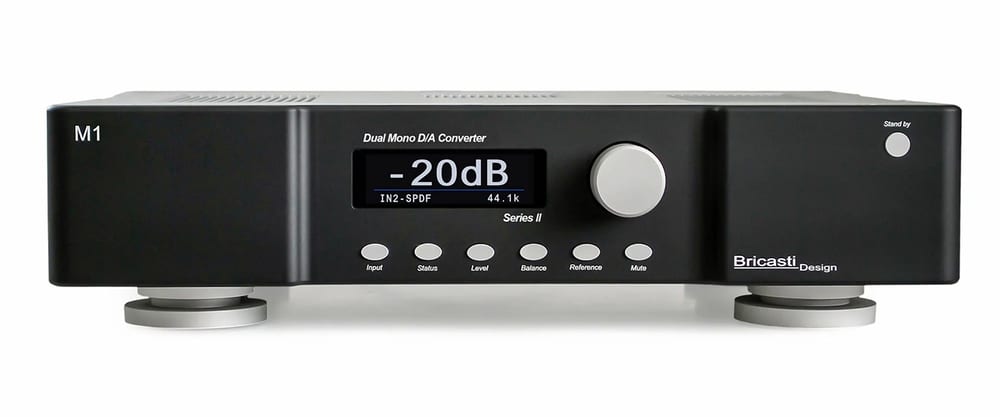
Bricasti Design, founded by former Mark Levinson designer Brian Zolner, applies professional studio design principles to consumer products. The M1 DAC achieved recognition for its musical presentation, while the subsequent M12 preamplifier and M15 amplifier demonstrate the company's expansion beyond converters. The Bricasti approach emphasizes precision and neutrality, allowing recordings to speak for themselves without adding character.
T+A, the German manufacturer, offers multiple DAC architectures in their Elektroakustik line. Their DAC 200 implements a sophisticated approach that allows selection between different digital filter options, acknowledging that different recordings may benefit from different processing approaches. The T+A philosophy recognizes that digital audio remains imperfect and that thoughtful design can address limitations in the source material.
Luxman's approach with their ROHM-based converters demonstrates that chip selection extends beyond the well-known names in semiconductor manufacturing. The BD34301EKV chip, developed specifically for Luxman applications, represents a departure from the ubiquitous ESS and AKM offerings. Luxman's engineering team worked closely with ROHM to optimize the chip's characteristics for audio applications, then implemented the converter with their own proprietary I/V conversion circuitry. The result challenges the assumption that the same chip performs equally well in all implementations.
Selecting and Evaluating DACs
Given the complexity of digital-to-analog conversion and the number of factors affecting ultimate performance, how should one approach the selection of a DAC? The answer lies in recognizing that specifications, while informative, tell only part of the story.
No DAC chip, regardless of its specifications, automatically guarantees musical performance. The same ESS Sabre chip that achieves mediocre results in a budget converter can achieve exceptional results in a well-designed implementation with careful attention to power supply, clock, and analog stage. Conversely, even the most carefully designed ladder DAC will underperform if its supporting circuits are inadequate.
The clock placement and quality deserves particular attention in the evaluation process. The consensus among serious designers holds that the clock must be as close to the conversion element as possible, with any distance potentially degrading performance. This principle suggests that evaluation should focus on the overall design philosophy rather than individual features, and that external clock inputs, while potentially useful, cannot substitute for excellent internal clock design.
The most important factor in DAC selection remains listening evaluation in the context of one's own system. A converter that excels with one amplifier and speaker combination may not be optimal with different equipment. The interactions between components in an audio system are complex, and the only reliable method of evaluation is extended listening in one's own environment.
This reality explains why the Pacific Microsonics Model 2, despite its modest specifications by modern standards, remains a reference point for many listeners. Its design philosophy, emphasizing overall system performance over individual component capabilities, produced a converter that communicated musical information in a coherent and engaging manner. The lessons from that design continue to inform converter development today, reminding us that the whole must be greater than the sum of its parts.
The modern enthusiast has access to more options than ever before, from affordable Chinese implementations using quality chips to statement pieces costing tens of thousands of euros. What matters most is finding a converter whose approach to conversion and whose overall implementation aligns with both the recordings one values most and the rest of one's system. Specifications provide a starting point, brand reputations offer guidance, but ultimately the ear must be the final judge.
Conclusion
The history of digital-to-analog conversion reflects the broader story of high-end audio: a continuous refinement of understanding, driven by the recognition that musical reproduction requires attention to every aspect of the signal path. From the first integrated CD players with their rudimentary converters to the sophisticated standalone designs of today, the industry has learned that the chip is not the thing.
The Pacific Microsonics Model 2 demonstrated this principle decades ago, showing that thoughtful implementation could produce converters that communicated musical information with coherence and engagement. That lesson remains relevant today, as manufacturers continue to explore ladder architectures, delta-sigma modulation, hybrid approaches, and entirely novel conversion methods. The emergence of specialized chips like the ROHM BD34301EKV used by Luxman demonstrates that innovation continues in chip development, even as the major semiconductor suppliers dominate the market.
What has become clear over the intervening decades is that the power supply, the clock circuit, and the analog output stage matter as much as, or perhaps more than, the conversion architecture or chip selection. The clock in particular has received renewed attention, with designers agreeing that proximity to the conversion element is essential for optimal performance. This recognition places responsibility on designers to address every aspect of their products, not merely to specify the latest chip generation.
For the enthusiast, this situation offers both challenge and opportunity. The challenge lies in recognizing that specifications do not tell the complete story, requiring careful evaluation that goes beyond technical measurements. The opportunity lies in the diversity of approaches available, each offering a different perspective on musical reproduction. Whether one prefers the directness of ladder conversion, the refinement of sophisticated delta-sigma processing, or the novel approaches offered by FPGA-based designs, there exists a converter that reflects those preferences.
What unites all approaches is the fundamental goal: to transform the binary data stored on CDs, computer files, or streaming services into a continuous analog waveform that recreates the experience of live music. That goal remains as elusive as ever, but the journey toward achieving it continues to yield remarkable products and musical experiences.
Capturing every meaningful contribution within the audio industry is neither practical nor necessary; the companies, designers, and products highlighted here are representative rather than exhaustive, standing in for a far broader body of work that collectively shapes the craft and its ongoing evolution.
Frequently Asked Questions
What is the difference between an R-2R ladder DAC and a delta-sigma DAC? +
An R-2R ladder DAC converts digital codes directly into analog voltages using a network of precisely matched resistors, producing what many describe as a more natural, organic sound. A delta-sigma DAC first modulates the input into a high-frequency bitstream and uses oversampling and noise shaping to achieve high resolution, offering easier manufacturing and greater stability.
Each architecture has distinct sonic characteristics, and the best implementations of either can achieve exceptional musical performance. The R-2R approach demands extreme component precision but preserves the direct relationship between digital code and analog voltage. Delta-sigma designs trade that directness for manufacturing consistency and the ability to push quantization noise out of the audible frequency range.
Why does the DAC chip alone not determine sound quality? +
The DAC chip is only one part of the conversion chain. The power supply, clock circuit, and analog output stage often matter as much as or more than the chip itself. The same ESS Sabre chip can produce mediocre results in a budget converter and exceptional results in a well-designed implementation with careful attention to every supporting circuit.
Clean, stable power prevents noise from modulating the audio signal. Low-jitter clocking close to the conversion element ensures accurate sample timing. A carefully designed analog output stage preserves the converted signal without adding coloration. These supporting elements collectively determine whether a chip achieves its theoretical potential or falls short of it.
What role does clock jitter play in DAC performance? +
Jitter is timing uncertainty in the clock signal that determines when each digital sample is converted to analog. Even small timing errors create intermodulation products that obscure fine details, constrict soundstage width and depth, and add a harsh or grainy character to high-frequency content.
High-performance DACs minimize jitter through temperature-compensated or oven-controlled crystal oscillators (TCXOs, OCXOs), re-clocking circuits, and FIFO buffering that isolates the input and output clock domains. The consensus among serious designers is that the clock should be as physically close to the DAC conversion chip as possible, with any electrical distance potentially degrading timing accuracy.
What is an FPGA-based DAC and how does it differ from chip-based designs? +
An FPGA-based DAC uses a field-programmable gate array to implement custom digital signal processing algorithms instead of relying on off-the-shelf DAC chips. Chord Electronics pioneered this approach with their proprietary WTA (Watts Transient Aligned) filtering and Pulse Array modulation, giving the designer complete control over the conversion process.
The advantage is flexibility: the designer can optimize filtering, oversampling, and modulation without being constrained by the fixed architecture of a commercial chip. The Chord DAVE and Hugo series demonstrate what this approach can achieve in preserving time-domain accuracy and musical information. The tradeoff is development complexity and cost, as the designer must create the entire conversion algorithm from scratch.