

"A well-designed system operating in a properly treated room will almost always reveal more musical information than an ultra-expensive system placed in a poor acoustic environment."
Introduction
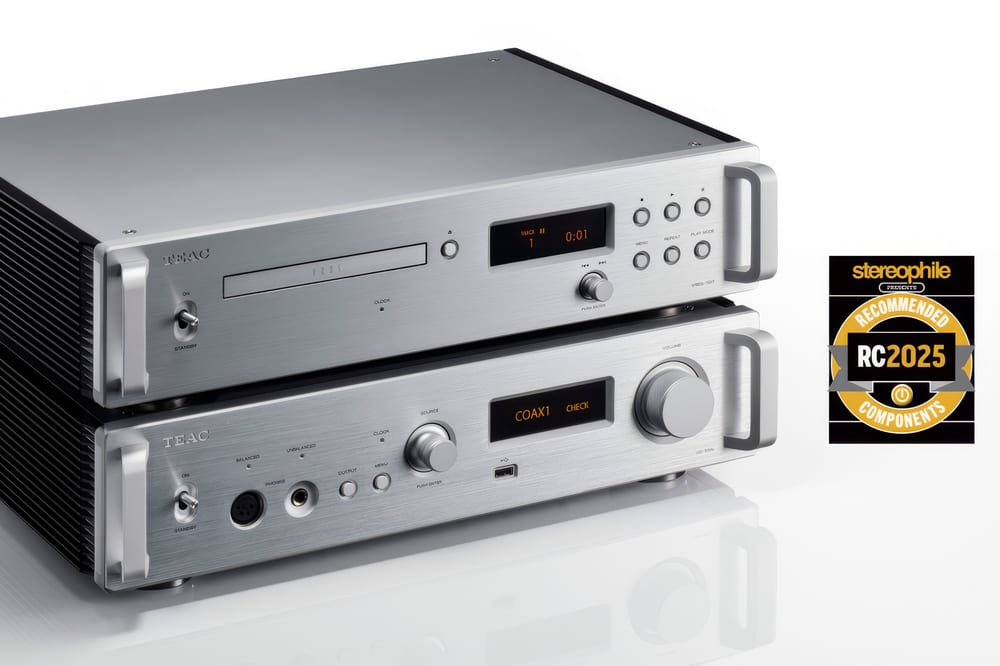
The TEAC UD-701N, VRDS-701T and CG-10M-X stack delivers the vast majority of what the finest digital front ends can achieve, at a remarkably sensible price.
There's no shortage of ways to reach this level of digital playback. Every brand with a credible engineering team has its own combination of DAC, transport, and clock that can get you close. What follows isn't the only path, but it's one we've actually built, listened to, and measured.
Built around the TEAC UD-701N network DAC (€3,698.99), the VRDS-701T transport (€2,398.99), and the CG-10M-X master clock (€1,699.00), this front end delivers a level of performance that approaches the state of the art for €7,796.98, and the remaining gap matters less than the price tag suggests.
Climb to Esoteric's flagship tier, consisting of the N-05XD, K-05XD, and G-05, built by the same engineering team on a more extreme version of this same platform, and you're paying roughly three to five times as much (€24,000-35,000+) for the final 10-15% in micro-detail and spatial refinement. That last increment is real, but it only surfaces in a room with the acoustic treatment to reveal it. For everyone else, it's an expensive way to chase a difference they won't hear.
Acoustics First, Equipment Second
Equipment can't fix acoustic problems. Poor room acoustics smear and mask micro-detail more thoroughly than any electronic component, including a flagship Esoteric stack, can recover. Reflections off walls, floors, ceilings, and furnishings arrive milliseconds after the direct sound, blurring transients, narrowing spatial precision, and burying low-level detail that is present on the recording.
When this acoustic smearing occurs, listeners often perceive a lack of resolution, transparency, or soundstage depth. The common reaction is to upgrade equipment, sometimes at enormous expense, in the hope of revealing more information. Yet no DAC, clock, transport, or amplifier can fully compensate for a room that is actively degrading the signal after it leaves the speaker.
A well-designed system operating in a properly treated room will almost always reveal more musical information than an ultra-expensive system placed in a poor acoustic environment. The room is effectively the final component in the playback chain, and often the most influential one.
Before investing in increasingly costly electronics, including the jump from the TEAC stack to the Esoteric tier, it is worth addressing the acoustic environment first. Reducing reflections, controlling resonances, and improving the direct-to-reflected sound ratio can unlock levels of clarity, focus, and micro-detail that no amount of equipment expenditure alone can guarantee. The principles are set out in Acoustical Basics.
The Room Steals What the Resistor Never Could
Micro-detail, the trailing edge of a cymbal, the breath before a vocal note, the faint harmonic bloom around a piano string, lives at very low signal levels and very short timescales. This is precisely the layer of performance that separates the TEAC stack from the Esoteric tier, and it is exactly the kind of information a poorly treated room destroys before it ever reaches your ears, no matter what sits upstream in the signal chain.
The mechanism is not mysterious. A first reflection off a side wall or ceiling arrives a few milliseconds after the direct sound, close enough in time and level that the ear's auditory masking system fuses the two into one smeared event rather than resolving them separately. This is ordinary psychoacoustic forward and backward masking, the same effect that lets a loud transient hide a quieter one occurring shortly before or after it. In an untreated room, every direct sound is followed almost immediately by a cluster of reflections doing exactly this to the low-level information riding underneath it. The decay tail you paid for in a recording, the one even the Esoteric stack could in principle reproduce with total fidelity, is masked at the listening seat by a wall.
Room modes compound the problem in the frequency domain. Below roughly 300 Hz, most rooms have standing-wave resonances that boost some frequencies by 10 dB or more and cancel others almost completely, and these modes ring on for hundreds of milliseconds after the source has stopped. That ringing is itself a form of temporal smearing: it fills in the silence that should follow a note, burying the next note's onset and the air around it. No clock upgrade, DAC upgrade, or transport upgrade changes how long a mode rings in your room.
This is the part audiophile marketing tends to skip: a signal chain is a cascade, and the weakest link sets the ceiling for everything resolved further along it. Once electronics are competently engineered, with low noise, low distortion, accurate frequency response, and properly implemented digital-to-analog conversion, further improvements often become incremental relative to the influence of the listening room.
The audible gap between the TEAC UD-701N, VRDS-701T, and CG-10M-X stack and the Esoteric N-05XD, K-05XD, and G-05 stack is real, but it sits at exactly the same low-level, short-timescale layer of detail that early reflections and modal ringing are already discarding. Spending €24,000 to €35,000+ chasing that last 10-15% from the electronics, while the room is actively masking it before it arrives, is solving the wrong stage of the chain.
The engineering-first response is to measure first: get an impulse response or a waterfall plot of your listening position, identify where reflections and modal decay are doing the damage, and address it with absorption, diffusion, and speaker and listener placement. These interventions are inexpensive relative to the Esoteric price premium and produce changes that are not subtle. Only after the room stops actively destroying the signal does it make sense to ask whether the jump to the Esoteric tier will be audible at all. Prejudice toward price as a proxy for quality skips this step entirely; an engineering approach starts there.
Why Your Ear Can't Hear What's Already Hidden
Here's the science behind the main point, explained without the engineering shorthand.
Masking is your ear's "loudest thing wins" rule. Imagine someone whispers a word, and a fraction of a second later someone shouts. You won't hear the whisper, not because your hearing is bad, but because your auditory system processes the loud sound first and the brief, quiet one gets swallowed. This is called masking, and it works both ways: a loud sound can hide a quieter sound that follows it (forward masking) or one that occurred just before it (backward masking). The window where this happens is small, just tens of milliseconds, but that's exactly the timescale of musical detail like a cymbal's shimmer or the breath before a singer's note.
A room recreates this whisper-and-shout problem on every single note. When a speaker plays a sound, you don't just hear it travel straight to your ears. You also hear copies of it bouncing off the nearest wall, the ceiling, and the floor, all arriving a few milliseconds later and on top of the original. To your ear, that's the loud sound followed almost instantly by near copies of itself, the exact recipe for masking. The quiet, delicate part of the note gets buried under its own echoes before you ever get a chance to hear it.
Room modes are a related but separate problem, and they're about ringing rather than echo. Picture a bathtub: slosh the water and it keeps sloshing back and forth for a while after your hand stops moving. A room does the same thing to certain bass notes, the ones whose wavelength matches the room's dimensions. The room rings at that frequency for a fraction of a second after the note has technically ended, smearing into whatever note comes next and filling in silences that should be there.
Put together, these two effects explain why upgrading equipment alone can disappoint. The Esoteric stack can absolutely deliver finer detail into the air of your room than the TEAC stack does. But if the room masks that detail with its own reflections and modal ringing, the improvement never makes it to your ears. The fix for that problem is acoustic, not electronic.
Shared Engineering DNA
This makes perfect sense when you consider that both brands share the same corporate parent and engineering DNA. TEAC's top-tier stack already borrows heavily from Esoteric's premium architecture: a fully discrete Delta Sigma FPGA DAC, a high-rigidity aluminum disc-clamping mechanism, and an OCXO master clock.
Esoteric simply takes these concepts to the extreme with massive multi-chassis isolation, heavy-inertia VRDS ATLAS transports, and ultra-low near-carrier phase-noise circuitry.
Even when paired with ultra-transparent monitors such as the Lipinski Sound full Class A monitors, which possess the resolution to reveal the Esoteric stack's blacker backgrounds and sharper transient attacks, that resolving power cuts both ways: it will just as readily expose what an untreated room is hiding. Pouring tens of thousands more into digital electronics often breaks logical system synergy unless the room has earned it first.
Separate In-Depth Technical Details
TEAC UD-701N
The TEAC UD-701N is built around a custom-developed TEAC ΔΣ (Delta Sigma) discrete DAC using FPGA circuitry with original algorithms rather than off-the-shelf chips. This fully balanced dual-mono design incorporates multiple toroidal transformers and separate power supplies for excellent channel separation and low noise. It supports high-resolution playback up to 22.5 MHz DSD and 384 kHz/32-bit PCM, with flexible user-selectable up-conversion options (2x/4x/8x Fs) and ΔΣ modulator settings (128x/256x/512x). Additional strengths include Roon Ready and Tidal Connect integration, extensive digital inputs, and a capable built-in preamplifier and headphone amplifier section.
"TEAC's UD-701N rendered my analog and digital content with a powerful, unprocessed, extra-solid this-is-it feel that made extended listening easy and something to look forward to. The 701N's engineering thoroughness was always evident, and its sound quality and user friendliness were up there with the best I know at any price."
Herb Reichert, Stereophile
"The TEAC UD-701N is a great natural-sounding unit that will provide plenty of dynamic range, a phenomenal sounding all-in-one box that we have no trouble recommending."
Ricky Kovacs, Moon Audio
"The TEAC UD-701N is truly an endgame system. Impressive with its black background and its ability to add pieces made this an easy recommendation. Big thumbs up."
Headphone.guru
CG-10M-X Master Clock Generator
The CG-10M-X Master Clock Generator is a high-precision 10 MHz OCXO (Oven-Controlled Crystal Oscillator) housed in a thermostatically controlled chamber for exceptional stability. It offers frequency-temperature stability within ±3 ppb and frequency accuracy within ±0.1 ppm, with four gold-plated BNC outputs delivering a clean 0.5 Vrms sine-wave signal. This allows synchronization of multiple components to reduce jitter and enhance overall timing accuracy throughout the digital chain.
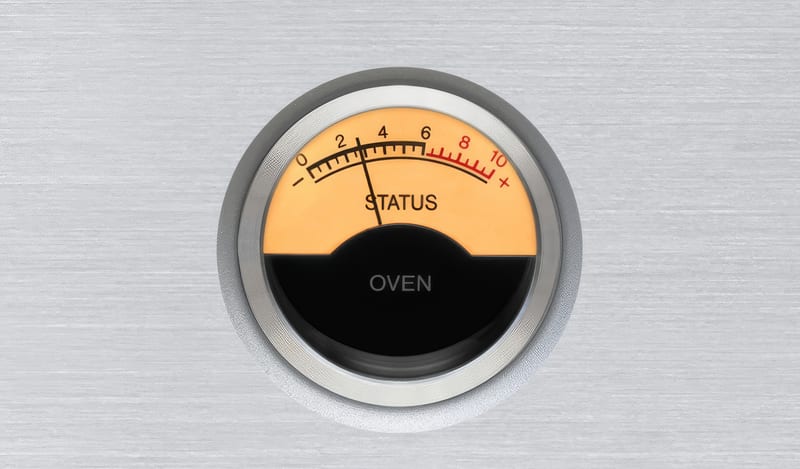
This is a different mechanism than clock recovery from an embedded data stream. Here, the transport and DAC each retain their own local oscillator circuitry; the CG-10M-X simply gives both a shared, ultra-stable reference for that circuitry to lock to, so they stay sample-synchronous with each other, rather than drifting independently. It complements local-master-clock design rather than replacing it.
The original CG-10M was already widely regarded as a benchmark of sensible engineering and real-world value. The CG-10M-X builds upon that foundation with a series of targeted refinements. According to TEAC, the design was revised with a clear focus on circuit and power-supply optimization: "Refined buffer amplifier circuit and power supply circuit for higher sound quality." TEAC also characterizes the sonic intent of the update as: "More open, natural and full sound." (Source: TEAC official announcement, CG-10M-X product information, 2024.) PhileWeb contextualizes the model as part of TEAC's incremental engineering evolution, describing it as "an X Edition model pursuing even higher sound quality" and noting improvements to core sections of the design, including the buffer amplifier circuit, power-supply circuit, and chassis structure.
VRDS-701T CD Transport (For Those Spinning CDs)
The VRDS-701T CD transport utilizes TEAC's proprietary VRDS (Vibration-Free Rigid Disc-Clamping System) with a high-mass aluminum turntable that firmly clamps the entire disc surface. This design minimizes rotational vibration and unwanted resonances, while the semi-floating sub-chassis mounting provides further isolation. As a 70th Anniversary model, it emphasizes mechanical precision and rigidity, delivering clean digital output via coaxial and optical connections along with support for external 10 MHz clock synchronization.
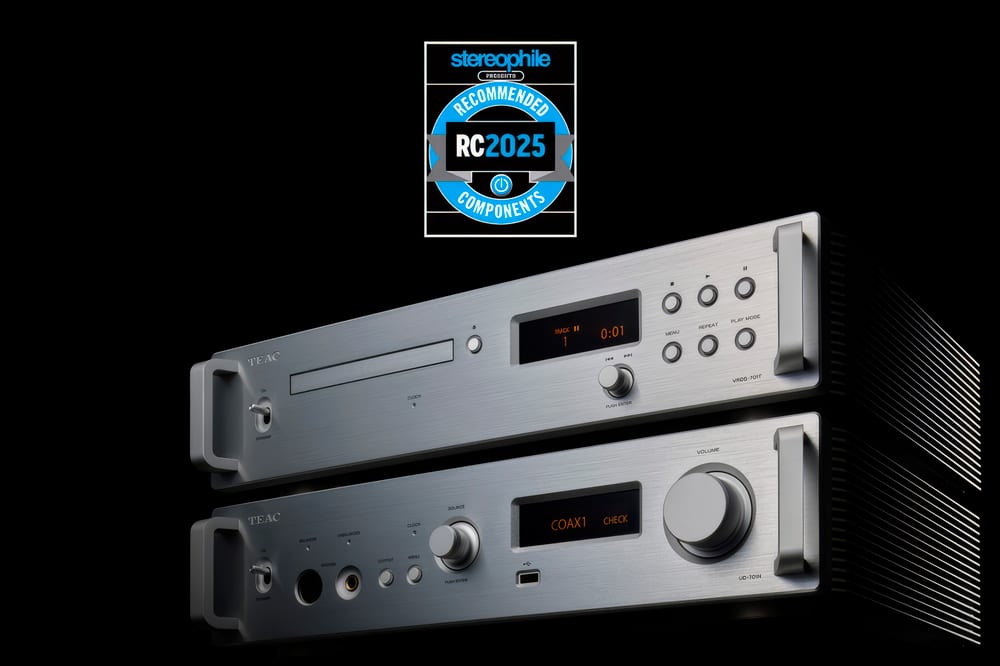
"The sound I am getting is stronger, denser, clearer, and more precisely focused than any digital playback I've had in my home, ever. I feel like I'm experiencing digital at some new, more exacting level of insight and engagement. The music sounds almost as visceral as analog. If there's a better-built, more highly resolving, more musically satisfying CD transport than the TEAC VRDS-701T, I have not encountered it."
Herb Reichert, Stereophile
"Who said CDs are dead? The VRDS transport mechanism is among if not the best in the business. I could easily live with a TEAC CD Player or Transport for the rest of my life. Details I hadn't heard before were suddenly brought to the front. The CD transports do not have coloration."
Cayla Menges, Moon Audio
Esoteric N-05XD, K-05XD, and G-05
On the Esoteric side, the N-05XD Network DAC builds on the same discrete DAC foundation as the UD-701N but elevates it with more robust power supplies using larger toroidal transformers and greater capacitance, along with enhanced chassis isolation and refined analog output circuitry. The result is improved dynamics, a lower noise floor, and greater overall refinement in the preamplifier and headphone sections.
The K-05XD SACD/CD player features the advanced VRDS ATLAS "ATLAS 05" mechanism, a significantly more sophisticated evolution of the VRDS design with higher rotational inertia, superior damping, and multi-chassis isolation. It incorporates Esoteric's Master Sound Discrete DAC and ultra-low phase-noise clock circuitry in a much heavier, mechanically inert chassis that provides tighter servo control, improved disc-reading stability, and noticeably blacker backgrounds.
The G-05 Master Clock Generator advances the OCXO concept with Esoteric's in-house Master Sound Discrete Clock module, achieving even tighter frequency precision and lower near-carrier phase noise through superior power regulation and isolation. Its optimized outputs deliver greater system-wide coherence when synchronizing high-end digital sources.
These technical refinements in the Esoteric lineup emphasize extreme mechanical rigidity and electrical purity, extracting incremental gains from the shared platform that often enter the realm of diminishing returns outside ideal listening conditions.
On Router vs. Streamer Switching and the Digital Hierarchy
A question that often arises in high-resolution digital systems is where exactly networking equipment fits into the performance hierarchy. As detailed in our in-depth exploration of The Digital Hierarchy, the answer is nuanced but logical.
In modern streaming setups, the chain runs: router/switch to streamer to DAC. The streamer sits closest to the digital-to-analog conversion stage and carries the most direct influence on overall system performance. Its electrical design, clock architecture, isolation strategy, and implementation quality matter significantly.
The switch or router, while upstream, can introduce unwanted high-frequency electrical noise into the system environment. Depending on the design of the streamer and DAC, some systems may be more susceptible to this noise than others.
Investing in a clean, low-noise network switch, or running the streamer in isolation mode, can yield audible improvements, but these gains diminish rapidly if the DAC itself is not up to par. Once a capable digital front end with local master-clock architecture and discrete DAC conversion is in place, the upstream network becomes a refinement layer rather than a fundamental bottleneck.
We consult on switch selection and network optimization as part of our system integration approach. Ensuring the complete signal chain minimizes unwanted electrical noise and supports stable clocking conditions within the DAC is essential for realizing its full potential. Please reach out for recommendations tailored to your setup.
Bottom Line
The TEAC UD-701N, VRDS-701T, and CG-10M-X stack delivers a level of performance that approaches the state of the art for a very attainable €7,796.98 and is the easy recommendation for the overwhelming majority of rooms.
The Esoteric N-05XD, K-05XD, and G-05 stack adds a further 10-15% of micro-detail, spatial precision, and refinement for €24,000 to €35,000+, but that gain only exists at the listening seat once the room has been measured and treated to control first reflections and modal ringing.
In practice, achieving the acoustic conditions required to fully realize that final step requires a level of room treatment and measurement precision that goes well beyond what is realistic in most domestic environments.
Acoustics first, equipment second: treat the room, confirm what it can resolve, and only then decide whether the Esoteric premium is worth paying. The TEAC components and pairing options are listed on the Pricelist.
Questions about the Digital Front End
Is the TEAC stack as good as Esoteric? +
The TEAC UD-701N, VRDS-701T, and CG-10M-X stack delivers the vast majority of what the finest digital front ends achieve, for €7,796.98. The Esoteric N-05XD, K-05XD, and G-05 stack - built by the same engineering team on a more extreme version of the same platform - adds a further 10 to 15% of micro-detail and spatial refinement for roughly €24,000 to €35,000+.
That last increment is real, but it only surfaces in a room treated well enough to reveal it.
Why does room acoustics matter more than upgrading the DAC? +
Micro-detail lives at very low signal levels and very short timescales - exactly what early reflections and modal ringing destroy before the sound reaches your ears. A first reflection arrives a few milliseconds after the direct sound and the ear fuses them through auditory masking; room modes below about 300 Hz ring for hundreds of milliseconds, smearing the silence between notes.
No DAC, clock, or transport upgrade changes how long a mode rings in your room. The room is effectively the final, and often most influential, component in the chain.
What is the CG-10M-X master clock and does it reduce jitter? +
It is a high-precision 10 MHz OCXO (oven-controlled crystal oscillator) with frequency-temperature stability within plus or minus 3 ppb. It gives the transport and DAC a shared, ultra-stable reference to lock their own local oscillators to, so they stay sample-synchronous rather than drifting independently.
This is different from recovering a clock from an embedded data stream - it complements local-master-clock design rather than replacing it, reducing jitter and improving timing accuracy across the chain.
Does the network switch or router affect sound quality? +
The streamer sits closest to conversion and carries the most direct influence. A switch or router is upstream and can introduce high-frequency electrical noise; a clean, low-noise switch or running the streamer in isolation mode can yield audible improvements, but the gains diminish rapidly if the DAC is not up to par.
Once a capable front end with local-master-clock architecture and discrete conversion is in place, the network becomes a refinement layer rather than a fundamental bottleneck. See The Digital Hierarchy for the full picture.
Should I treat my room or upgrade my electronics first? +
Acoustics first, equipment second. Measure the listening position - an impulse response or waterfall plot - find where reflections and modal decay are doing the damage, and address it with absorption, diffusion, and placement.
These interventions are inexpensive relative to a flagship electronics premium and produce changes that are not subtle. Only after the room stops degrading the signal does it make sense to ask whether a costlier front end will be audible at all.